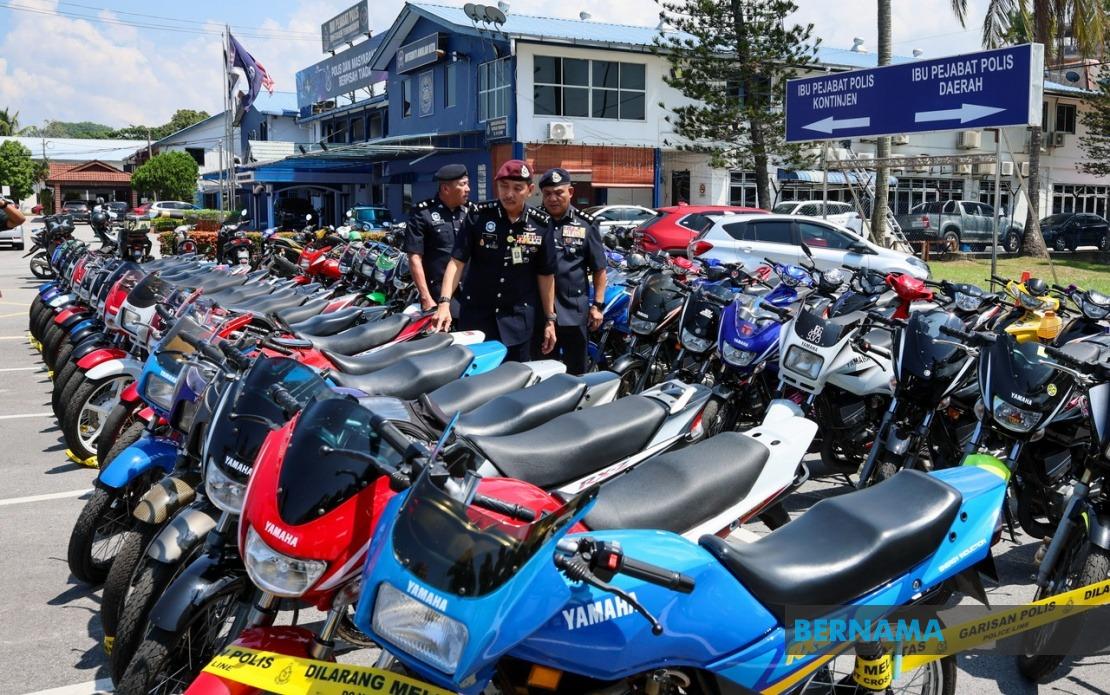
The safety concerns surrounding Malaysia's largest motorcycle gathering have intensified, with a prominent road safety expert calling for immediate implementation of a comprehensive risk management framework. Shahrim Tamrin, former board member of the Malaysian Institute of Road Safety Research (MIROS), issued the warning following the latest edition of the RXZ Members 8.0 programme, which drew more than 200,000 participants to the Gong Badak Motor Racing Circuit in Kuala Nerus over the weekend. The scale of this year's event—the largest since the gathering began in 2017—has brought safety management challenges into sharp focus.
The statistics underlying Tamrin's concerns paint a sobering picture of escalating danger. Over the four-day period from July 30 through the weekend, traffic police documented 46 road accidents involving motorcyclists, with 11 proving fatal. The severity distribution revealed that fatal accidents accounted for nearly a quarter of all incidents (23.91 per cent), while serious and minor accidents comprised the remainder. These figures come from Bukit Aman Traffic Investigation and Enforcement Department director Datuk Seri Muhammed Hasbullah Ali, whose statement yesterday made public the extent of the problem. The data takes on greater significance when viewed through a multi-year lens, revealing what Tamrin characterises not as isolated incidents but as a worsening pattern.
The trajectory of fatalities across three recent events illustrates Tamrin's concern with stark clarity. The RXZ Members programme recorded two deaths in 2024, a figure that climbed to five the following year and accelerated to 11 in 2026. This progression suggests that without intervention, the danger intensifies proportionally with attendance. Given that the event has grown from a niche gathering into a phenomenon attracting hundreds of thousands of riders nationwide, conventional policing approaches have reached their limits. The sheer volume of participants makes traditional traffic enforcement insufficient as a standalone safety measure.
Tamrin's proposed solution moves beyond reactive enforcement toward proactive event management. A comprehensive risk management plan should incorporate participant projections to anticipate crowd dynamics, coordinated planning of principal entry and exit routes to prevent bottlenecks, and designated rest areas positioned strategically throughout the gathering zones. The framework should include pre-positioned ambulance deployment points, an operational emergency response centre with real-time coordination capability, and a functioning communications infrastructure to disseminate safety information. Pre-event risk assessment would identify potential hazards before they materialise into casualties, allowing preventive measures rather than merely responding to tragedies.
The expertise Tamrin brings to this advocacy stems from his background at MIROS, an institution dedicated to systematic study of road safety factors. His recommendations reflect evidence-based practice rather than ad hoc reactions. Critically, he emphasises that treating the RXZ Members programme as a large-scale event requiring professional risk management represents a conceptual shift. The gathering's scale and social significance within Malaysia's motorcycle culture demands that safety planning match the sophistication applied to other major national events, from festivals to sporting competitions.
Beyond the event itself, Tamrin advocates for structured post-event analysis that would generate actionable intelligence for future iterations. A comprehensive safety audit should document accident locations, timing patterns, underlying causes, characteristics of affected riders, and motorcycle-related factors contributing to incidents. Critically, this analysis should assess whether enforcement activities and safety measures actually reduced risks or merely created an illusion of intervention. Publishing audit findings before the next edition would enable evidence-based improvements rather than assumptions, breaking the cycle whereby each year repeats previous mistakes because lessons remain uncodified.
The role of motorcycle condition and maintenance emerges as an underappreciated safety factor in Tamrin's analysis. Most Yamaha RXZ motorcycles in active use today are between 20 and 35 years old, having changed ownership multiple times and often undergone modifications or restoration work. Documentation issues frequently accompany these machines, complicating registration and insurance verification. Tamrin proposes that the Road Transport Department (JPJ) review facilitated re-registration pathways for roadworthy older motorcycles, subject to rigorous inspection at the Computerised Vehicle Inspection Centre (Puspakom). However, this approach must include safeguards: machines modified in ways compromising safety should be either restored to original specifications or barred from registration, ensuring all roadgoing motorcycles maintain valid road tax and insurance coverage.
Enforcement of noise and emission standards represents another dimension that Tamrin highlights. Local residents near the Gong Badak circuit have lodged complaints about excessive noise and smoke pollution during the gathering. This enforcement gap extends beyond environmental concerns to reflect broader accountability for the event's social impact. The recommendation to tighten standards sends a signal that the programme must operate within parameters respecting neighbouring communities, not merely prioritising participant enjoyment.
Tamrin also identifies a critical gap in operational safety training among those coordinating group movements during the event. Police and JPJ should collaborate with RXZ clubs and programme organisers to train marshals and group leaders in safe convoy protocols, reducing accidents arising from inadequate formation discipline or unsafe overtaking during group rides. Similarly, travel advisory systems modelled on mechanisms employed by highway concessionaires during festive seasons could inform participants of peak travel periods, recommend alternative routes, and suggest rest stops. Such information, widely disseminated through digital channels and at gathering venues, would allow individual riders and groups to make informed decisions that collectively reduce collision risk.
The implications of Tamrin's framework extend beyond the RXZ Members programme itself. Malaysia hosts numerous large-scale motorcycle gatherings and road-oriented events. Establishing professional risk management protocols for one high-profile event could establish templates and best practices applicable across the sector. The economic and social costs of motorcycle fatalities—measured in lost productivity, medical expenses, grief, and family disruption—justify investment in prevention. Furthermore, the international reputation Malaysia cultivates around road safety affects both tourism and foreign investor confidence in the nation's governance capacity.
For policymakers and authorities, Tamrin's advocacy presents a practical roadmap translating concern into concrete action. The recommended steps are operationally feasible, requiring coordination rather than enormous expenditure, and grounded in established event management principles. The challenge lies in sustaining commitment between gatherings, when media attention fades and institutional memory weakens. Success requires embedded responsibility within relevant agencies, adequate resourcing, and accountability mechanisms ensuring that recommendations translate into implemented measures rather than remaining aspirational documents filed and forgotten.
Ultimately, the RXZ Members programme represents both a challenge and an opportunity for Malaysian road safety governance. The gathering's scale and the deaths it has produced demand that safety management evolves from ad hoc responses to systematic planning. Tamrin's proposals offer a coherent framework through which the event can continue as a celebrated expression of motorcycle culture while substantially reducing the human cost currently extracted each year. Whether authorities embrace this systematic approach will signal Malaysia's commitment to reconciling enthusiasm for road-based activities with professional management of the inherent risks.

