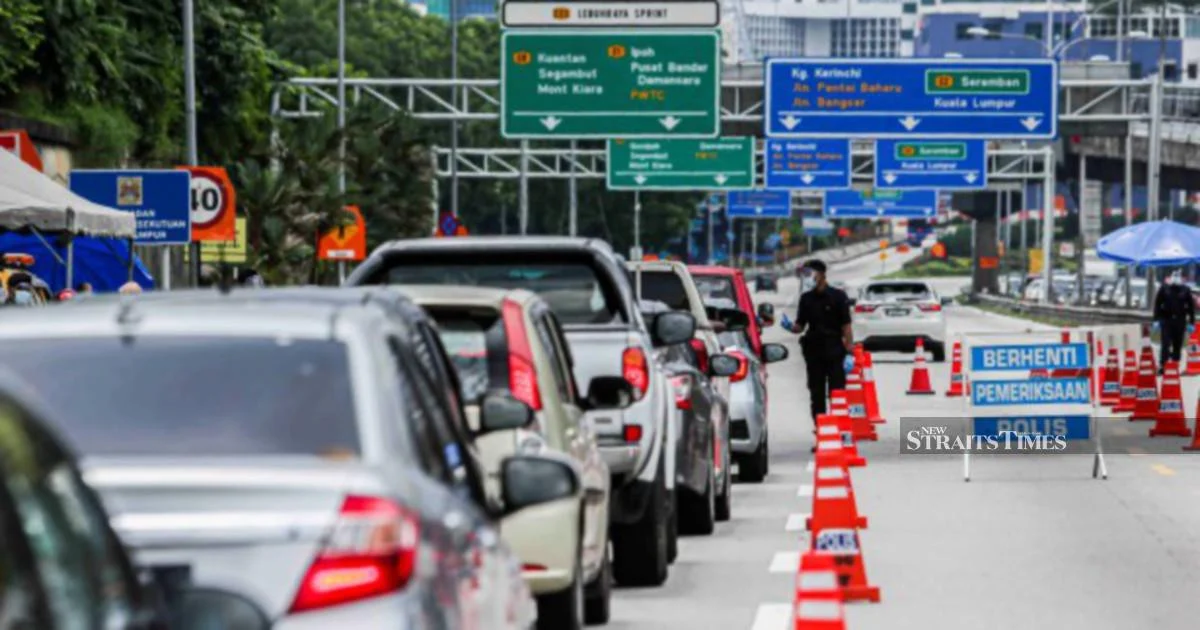
Malaysian motorists face significantly higher penalties for traffic violations under proposed amendments to the Road Transport Act 1987, with the government planning to increase maximum compound fines to RM500 for over 700 categories of road offences. The increase, which requires parliamentary approval, represents a substantial jump from existing penalty structures and signals the government's intent to strengthen enforcement mechanisms across the nation's roads.
The Road Transport Act 1987 (Act 333) currently establishes the legal framework governing traffic enforcement in Malaysia, but the penalty provisions have remained largely static relative to inflation and the rising cost of living. The proposed amendments would modernise these penalties to reflect contemporary economic conditions and align them with the severity of various traffic infractions. By consolidating the fine structure around a RM500 ceiling, authorities aim to create a more standardised and comprehensive approach to compound issuance across Malaysian jurisdictions.
Compound fines, distinct from court-imposed penalties, represent the most common enforcement tool used by traffic police and road authorities nationwide. These administrative penalties allow enforcement officers to issue immediate fines to motorists without requiring court proceedings, providing efficiency and convenience to both the authorities and drivers who wish to settle matters quickly. The current system permits officers flexibility in applying fines within prescribed ranges, but the proposed amendments would elevate the maximum threshold significantly, potentially affecting millions of journeys undertaken daily across Malaysian roads.
The scope of this increase encompasses an exceptionally broad range of traffic violations, from minor infractions such as improper parking or lane discipline to more serious offences involving safety breaches. By establishing RM500 as a standardised maximum for over 700 separate offence categories, the legislation would create a simpler, more transparent framework that drivers can readily understand and anticipate. This standardisation addresses longstanding complaints about inconsistent penalty application and provides clearer deterrence messaging to road users across different states and enforcement jurisdictions.
For Malaysian drivers, the financial implications are considerable. A motorist accumulating multiple compound fines—whether for excessive speeding, failure to comply with traffic signals, or safety equipment violations—could face substantially elevated costs. Regular commuters and professional drivers operating commercial vehicles would be particularly affected, potentially impacting household budgets and business operational costs across the country. The cumulative effect of higher fines may influence driving behaviour, particularly among repeat offenders who currently weigh the cost-benefit of violations.
The timing of these amendments reflects broader government initiatives to improve road safety nationwide. Malaysia's traffic fatality rates remain among the highest in the region, with over 6,000 deaths recorded annually in recent years. Authorities view enhanced financial penalties as a complementary strategy to public awareness campaigns and infrastructure improvements, operating on the principle that elevated economic consequences deter high-risk driving behaviours. By making violations costlier, the government hopes to reinforce safer driving cultures and reduce accident statistics.
State-level implications vary across Malaysia's diverse jurisdictions. Peninsular Malaysia's densely populated urban corridors in Selangor, Kuala Lumpur, and Johor would likely see the most frequent application of enhanced penalties given their traffic volumes. East Malaysian states like Sabah and Sarawak, with different enforcement capacities and road conditions, may experience variable implementation patterns. The uniformity offered by standardised national penalties could reduce disparities between states while creating challenges for jurisdictions with lower average incomes where fines may represent significant financial burdens relative to local economic conditions.
The parliamentary process for these amendments remains ongoing, with transport ministry officials presenting technical details to lawmakers examining the legislation. Opposition voices have raised concerns about the regressive nature of fixed-penalty systems, arguing that uniform fines disproportionately affect lower-income drivers while remaining insignificant to wealthy motorists. Advocates for the increases counter that progressively higher penalties are necessary to achieve meaningful behavioural change among habitual traffic offenders who have become desensitised to existing fine levels.
International precedent suggests that penalty escalation can effectively reduce traffic violations when accompanied by consistent enforcement and public communication. Countries including Australia, Singapore, and South Korea have implemented tiered penalty structures with elevated maximum fines, yielding measurable improvements in compliance rates. However, effectiveness depends critically on enforcement frequency and consistency—high penalties applied sporadically may prove less effective than moderate penalties enforced reliably. Malaysian authorities will need to ensure adequate resources for traffic enforcement to maximise the deterrent effect of increased compound fines.
The amendments also raise questions about penalty collection and revenue allocation. Compound fines constitute significant income streams for state and federal governments, with traffic enforcement budgets partly funded through collected penalties. Increased fines might generate higher revenues, theoretically enabling greater enforcement capacity and road safety improvements. However, the public perception that fines serve primarily as revenue-raising mechanisms rather than genuine safety interventions could undermine community acceptance and compliance.
Business interests, particularly in transportation and logistics sectors, have expressed concerns about potential cost implications. Commercial vehicle operators facing higher penalties for safety-related infractions such as overloading or equipment failures may pass increased compliance costs to consumers. Ride-hailing services and courier companies operating in congested urban areas could face substantial cumulative penalty expenses if drivers face repeated fines. These sectors have called for transitional periods and clearer guidance on enforcement priorities.
The proposed RM500 maximum represents a carefully calibrated policy instrument intended to balance road safety imperatives with practical economic considerations for motorists and enforcement authorities. If parliamentary approval proceeds, implementation will likely occur in phases, allowing time for public communication campaigns explaining the new penalty structure and its safety rationale. Success ultimately depends on complementary investments in public awareness, consistent enforcement, and genuine commitment to using revenues for road safety initiatives rather than general treasury purposes.