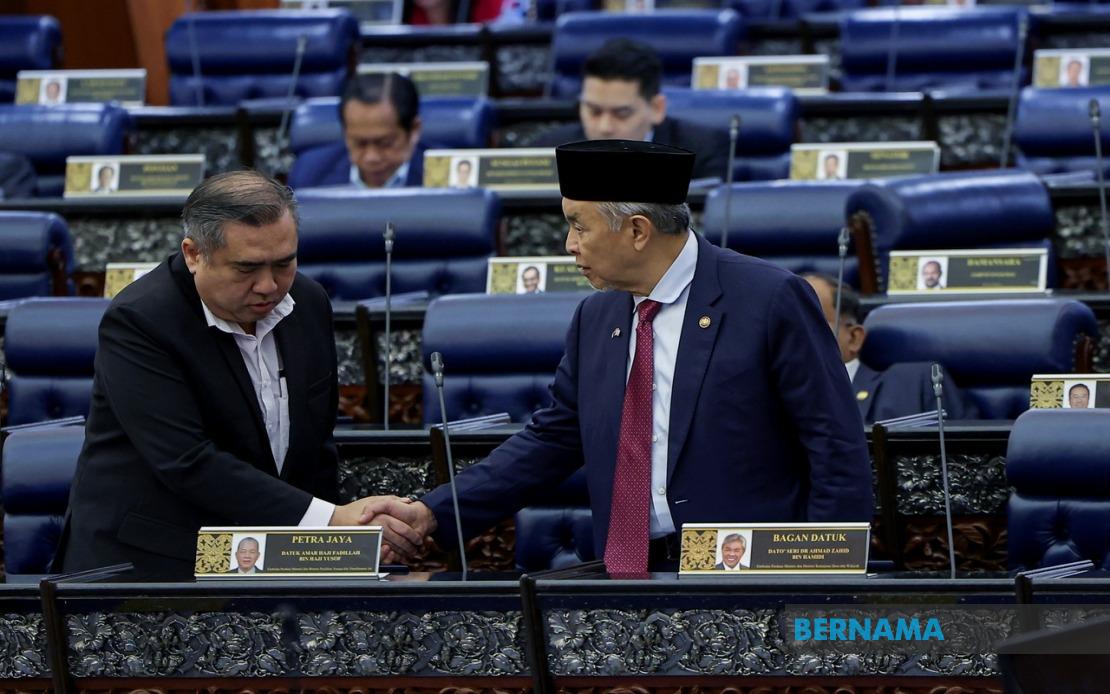
Transport Minister Anthony Loke has tabled the Road Transport (Amendment) Bill 2026 for first reading in Parliament, marking a major overhaul of Malaysia's traffic enforcement framework. The legislative initiative, which will proceed to second reading during the current parliamentary session, seeks to strengthen the regulatory apparatus and enforcement mechanisms underpinning the Road Transport Act. This comprehensive revision reflects growing government concern over persistent traffic safety issues and the need for deterrent-based penalties to encourage better road discipline across the nation.
At the heart of the proposed amendments lies a systematic recalibration of financial penalties across a broad spectrum of traffic offences. The Bill prescribes an increase in minimum fines from RM300 to RM500 for multiple violations, including the failure to display a vehicle registration number, operating a motor vehicle without a valid driving licence, exceeding speed limits, non-compliance with vehicle construction and equipment standards, disregarding traffic control devices, and participation in illegal street racing. This escalation in base penalties represents the government's attempt to shift enforcement from deterrence through detection alone to a more punitive approach that raises the financial consequences of non-compliance.
Particularly severe consequences are reserved for driving with a suspended licence. Clause 13 proposes substantially harsher penalties for this category of offence, increasing the maximum imprisonment term from one year to three years and raising the fine threshold from RM5,000 to a range of RM3,000 to RM10,000. This recalibration reflects the enhanced danger posed by individuals who continue operating vehicles despite formal suspension of their driving privileges, suggesting the legislature views such conduct as a grave threat to public safety warranting custodial sentences comparable to more serious crimes.
Illegal street racing emerges as a focal point of legislative attention under the proposed amendments. Clause 15 introduces a new offence framework that penalises racing or speed-testing on public roads with fines ranging from RM2,000 to RM10,000, imprisonment of up to two years, or both for first-time offenders. Repeat offenders face significantly heavier consequences, with fines between RM5,000 and RM20,000 coupled with a mandatory minimum jail sentence of five years or more. This bifurcated penalty structure indicates official recognition of street racing as a persistent social menace that demands escalating intervention, particularly given the prevalence of such activities in urban centres across Malaysia and their documented links to fatal accidents.
The Bill extends operational authority to law enforcement personnel across multiple agency levels. Police officers and road transport officers receive expanded powers to control traffic flow, redirect vehicles, and presumably exercise greater discretion in enforcement situations. These enhanced powers must be understood within the broader context of traffic management challenges facing Malaysia's congested urban thoroughfares and the need for field-level flexibility in responding to congestion and safety incidents. However, the expansion of police discretion inevitably raises questions about consistency in application and potential for discriminatory enforcement, concerns that regulatory and civil society observers will likely scrutinise during parliamentary debates.
Compounding authorities also face upward revision. Clause 37 proposes increasing the maximum amount for compoundable offences from RM300 to RM500, allowing enforcement officers to resolve violations through negotiated settlements without formal prosecution. While this provides administrative convenience for lower-level infractions, the doubling of compound amounts effectively tightens financial pressure on motorists and may prove consequential for lower-income road users who previously found the RM300 threshold manageable. The practical equity implications of this adjustment warrant careful monitoring as implementation proceeds.
False statements in road transport matters attract extraordinarily severe sanctions under the proposed Clauses 28 and 28(a). Making false declarations or providing fraudulent information could result in fines reaching RM200,000 or imprisonment spanning ten years. This punitive calibration suggests the government views documentary fraud in transport licensing and vehicle matters as comparably serious to major criminal enterprises, possibly reflecting concerns about organised document fraud networks that have historically undermined licensing and registration integrity. The severity of these provisions may prove challenging to implement fairly without clear jurisprudential guidelines.
Ministerial regulatory powers expand significantly through Clause 22, which transfers Section 66 of Act 333 to authorise the Transport Minister to prescribe fees governing the issuance of entry permits for foreign motor vehicles. This delegation of fee-setting authority to the executive removes formal parliamentary oversight from a revenue-generating function and suggests future flexibility in managing foreign vehicle flows, potentially responding to cross-border transportation pressures and revenue considerations. The absence of parliamentary approval for individual fee adjustments may streamline administration but reduces transparency regarding cost structures imposed on foreign operators.
Micromobility vehicles, encompassing motorcycles, scooters, and similar conveyances, receive dedicated regulatory attention through new detention and disposal procedures. This reflects contemporary urban challenges related to unregulated micro-transport services and parking violations involving these increasingly prevalent devices. The formalisation of seizure and disposal mechanisms suggests the government intends to enforce compliance more aggressively against operators who violate parking and operational restrictions, a development significant for burgeoning food delivery and ride-sharing platforms dependent on such vehicles.
A new arrestable offence of obstructing or assaulting enforcement officers strengthens legal protections for road transport personnel and police. This addition acknowledges the physical confrontations that enforcement officers periodically encounter during field operations and seeks to elevate assault against them to the level of arrestable offences warranting potential remand detention. Such provisions expand the state's coercive capacity in managing public order incidents but also introduce criminal responsibility for actions previously prosecuted under simpler frameworks, potentially affecting the behaviour of motorists during roadside enforcement encounters.
For Malaysian motorists and transport operators, these amendments represent a material shift toward stricter enforcement and heightened financial consequences for violations. The compounding of fines across multiple categories will increase the cost of non-compliance, while extended prison sentences for serious breaches signal governmental resolve to address entrenched safety problems through criminal deterrence. Regional operators engaged in cross-border commerce will face new regulatory considerations regarding foreign vehicle permits and associated fees. Civil society organisations focused on traffic safety will likely welcome the enhanced penalties, while those concerned with proportionality and equity implications will scrutinise implementation to ensure fairness across socioeconomic groups and geographical regions.