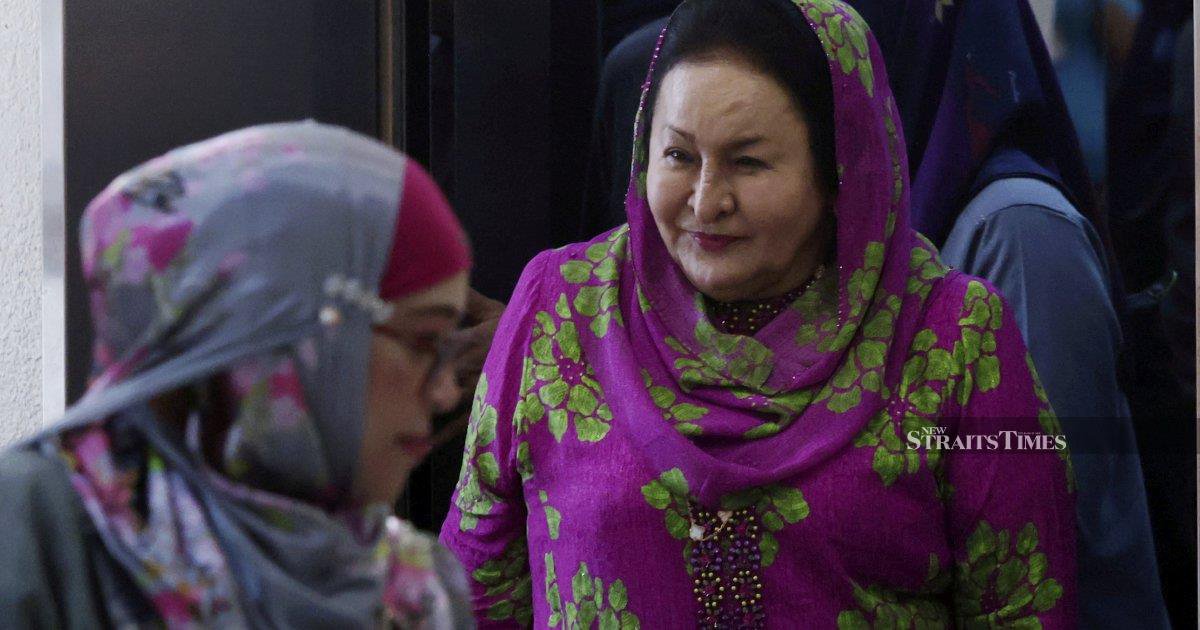
Datin Seri Rosmah Mansor has successfully obtained a conditional stay of execution that will allow her to postpone paying RM67.46 million to Global Royalty Trading SAL, a Lebanese jewellery company, while she pursues her case through the appellate system. The stay order, granted by the courts in Kuala Lumpur, suspends the immediate enforcement of a judgment against her, a significant procedural development in a case that has drawn sustained public attention given her prominence and the substantial sum in question.
The mechanism of a stay of execution in Malaysian civil law provides defendants with a critical window during the appeals process, preventing creditors from recovering judgment amounts while legal challenges remain pending. In this instance, the conditional nature of the stay indicates that the court has imposed specific requirements that Rosmah must satisfy to maintain the suspension of payment obligations. These conditions typically relate to financial guarantees, asset security, or other protective measures designed to safeguard the creditor's interests should the appeal ultimately fail and the judgment be upheld.
Global Royalty Trading SAL's judgment against Rosmah represents a substantial financial claim arising from what appears to be a high-value jewellery transaction. The Lebanese company's decision to pursue recovery through Malaysian courts suggests an established contractual or commercial relationship, though the underlying circumstances of the dispute remain subject to ongoing legal proceedings. The magnitude of the claim underscores the scale of transactions that have characterised various aspects of Rosmah's activities, which have become the subject of considerable judicial scrutiny over several years.
Rosmah's decision to appeal indicates her contestation of the judgment's merits, suggesting she disputes either the underlying liability or the quantum of damages awarded. The appellate process in Malaysian courts typically involves a comprehensive review of the trial judge's findings of fact and law, with the Court of Appeal having the authority to uphold, overturn, or modify the original judgment. This stage of litigation can consume considerable time, often stretching across multiple years as parties submit written submissions and await hearing dates.
The granting of a stay pending appeal is not automatic in Malaysian jurisprudence. Applicants must generally demonstrate a serious issue to be tried, suggesting that the appeal contains arguable points of law or fact, and must satisfy the court that the balance of convenience favours suspension of the judgment. The fact that Rosmah has succeeded in obtaining the stay suggests the court found her appeal arguments sufficiently compelling to warrant allowing the matter to proceed without immediate financial enforcement against her.
This development occurs against the backdrop of Rosmah's broader legal entanglements in recent years. Her involvement in various proceedings—both as a defendant in criminal cases and as a party to civil disputes—has made her a recurring figure in Malaysian courtrooms. Each legal development involving her carries implications for how high-profile figures navigate the judicial system and the outcomes they can expect when substantial claims are pursued against them through formal legal channels.
For Global Royalty Trading SAL, the stay represents a temporary setback in its efforts to recover the judgment sum. However, the conditional stay should not be interpreted as an indication that the company's ultimate prospects are weak. Rather, it reflects established legal principles that balance the interests of appellants with the protection of creditors' rights during the appeal period. The company retains the right to challenge any conditions imposed by the court that it considers insufficiently protective of its financial interests.
The jewellery industry transactions that underpin this dispute exemplify the cross-border commercial relationships that characterise contemporary international commerce. Lebanese jewellery companies have historically maintained significant trading relationships across the Middle East and Asia, and pursuing disputes through different jurisdictions is a recognised aspect of international commercial practice. The involvement of Malaysian courts in resolving such disputes underscores the country's role as a hub for commercial litigation in Southeast Asia.
Procedurally, the appeal process will now move forward with Rosmah's legal team preparing comprehensive written submissions challenging the trial judgment. Global Royalty Trading SAL will have the opportunity to file respondent submissions defending the judgment, and both parties may participate in oral hearings before appellate judges. The Court of Appeal's eventual decision will either vindicate Rosmah's position or sustain the judgment against her, though the outcome remains uncertain at this stage of proceedings.
The stay order's conditional nature means that Rosmah must remain vigilant about her compliance obligations. Any breach of the conditions imposed could result in the court lifting the stay, immediately exposing her to enforcement action. This creates ongoing administrative and legal requirements that must be carefully managed throughout the appeal process, adding to the complexity of her legal portfolio.
The case also carries broader implications for how Malaysian courts treat applications from high-profile individuals facing substantial judgments. The court's willingness to grant a conditional stay demonstrates that access to appellate procedures remains available regardless of the applicant's public profile, provided they can satisfy the legal criteria. Conversely, the imposition of conditions indicates that such access does not come without safeguards protecting judgment creditors' interests.
Looking ahead, the appeal's progression through the Malaysian court system will likely consume the next phase of this dispute. Depending on the complexity of issues involved and the court's docket, resolution could take between 18 months and several years. During this period, the RM67.46 million sum remains suspended from enforcement, though neither party can consider the matter resolved until appellate judgment is delivered.

