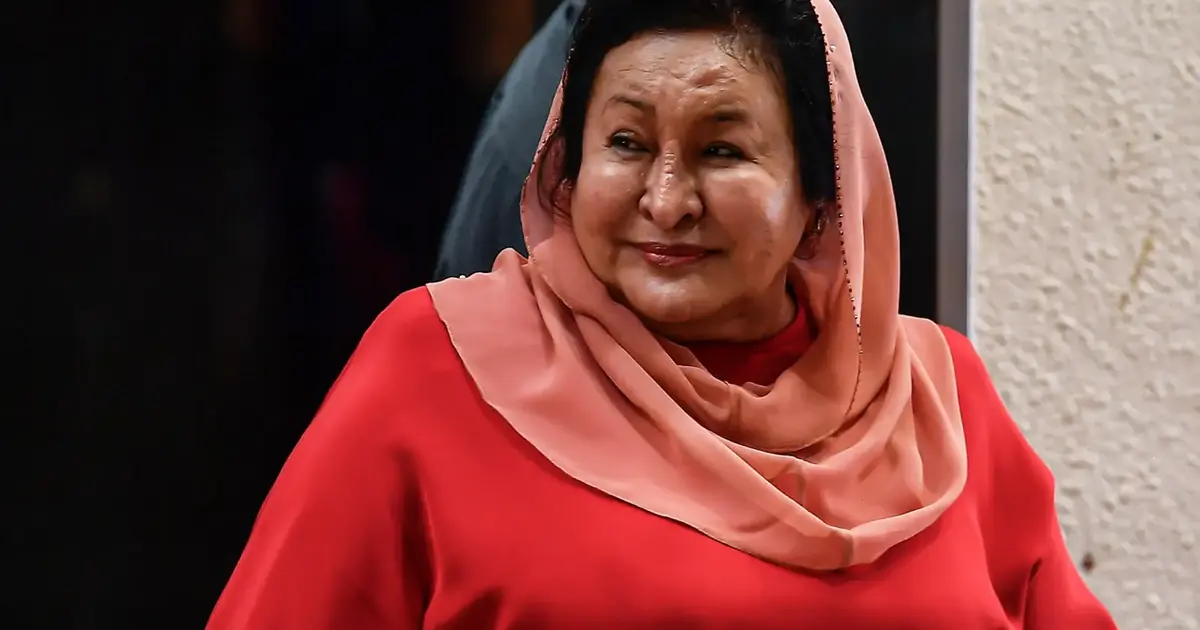
Rosmah Mansor, wife of former Prime Minister Najib Razak, is mounting a fresh legal challenge to her conviction in the solar hybrid project corruption case by attempting to adduce new evidence at the appellate stage. At the heart of her strategy lies a significant contention: that Rayyan Radzwill Abdullah, a key prosecution witness, was subjected to pressure and coercion when he delivered testimony that implicated her in the graft scheme.
The former First Lady's move to introduce additional evidence represents a critical juncture in a legal battle that has stretched across multiple years and court levels. Her legal team argues that the circumstances surrounding Rayyan's testimony warrant fresh examination, suggesting that the witness's account may not have been given freely or voluntarily during the original trial proceedings. This assertion strikes at the foundational credibility of the prosecution's case, which relied heavily on the witness's statements to establish her culpability in the controversial solar energy initiative.
The solar hybrid project controversy has remained one of the most contentious episodes from Malaysia's political landscape of recent years. The initiative, which involved substantial government expenditure, became the subject of intensive investigation following revelations about its financing structure and the flow of funds. Rosmah's involvement in the scheme attracted particular scrutiny, leading to her prosecution on charges of corruption and abuse of power. Her conviction at the trial court level sent shockwaves through Malaysian politics, given her prominence as the spouse of a former premier who himself faces serious criminal allegations.
The appeal mechanism now being utilised represents a standard feature of Malaysia's legal system, allowing defendants to challenge conviction judgments on various grounds, including questions about the reliability and admissibility of evidence. However, seeking to adduce evidence at the appellate stage, rather than during the original trial, faces significant procedural hurdles. Courts typically apply strict criteria when evaluating applications to introduce fresh evidence at appeal, requiring that such material satisfy tests of relevance, availability, and impact on the case's outcome.
Rayyan Radzwill Abdullah's role as a prosecution witness placed him in a pivotal position during Rosmah's trial. His testimony apparently traced financial pathways and documented interactions that the prosecution argued demonstrated her involvement in the graft arrangement. If Rosmah's legal team can convincingly establish that this witness laboured under duress or suffered improper influence, it could fundamentally undermine the evidentiary foundation upon which her conviction rests. The implications would extend beyond her individual case, raising broader questions about witness reliability in high-profile prosecutions.
The Malaysian judiciary has increasingly recognised the importance of protecting witness integrity and ensuring that testimony is freely given. International legal standards, to which Malaysia's courts frequently refer, emphasise that confessions or statements obtained under pressure carry substantially diminished probative value. If Rosmah's appeal successfully demonstrates that Rayyan was improperly pressured, it could establish grounds for either acquittal or a new trial conducted under conditions where witness testimony remains uncompromised.
The timing of Rosmah's appeal efforts also reflects the broader political climate in Malaysia. Since the fall of the Najib administration in 2018, numerous high-ranking officials have faced corruption charges, creating a complex landscape where questions about prosecutorial zeal and fair trial procedures have become increasingly prominent in public discourse. Some observers view her legal challenges as part of a wider pattern of contestation around the application of anti-corruption laws, while others maintain that the judiciary must be allowed to function independently of political considerations.
For Southeast Asian observers and Malaysian readers, the case carries implications beyond its immediate legal dimensions. It touches upon fundamental questions about the robustness of institutional checks, the independence of prosecutorial processes, and the reliability of evidence in high-stakes corruption cases. Countries across the region grapple with similar challenges in their efforts to combat graft while maintaining confidence in judicial systems. How Malaysian courts handle Rosmah's appeal will send signals about the standards applied in complex corruption prosecutions and the weight accorded to procedural protections for defendants.
The path forward in the appellate process remains uncertain. The court system must weigh the substantive arguments that Rosmah's legal team will present regarding witness coercion against the procedural framework governing the admission of fresh evidence at appeal stage. Judges will need to assess whether the evidence she seeks to introduce meets the threshold for admissibility and whether it could have reasonably altered the outcome of the original trial. These determinations will require careful examination of the circumstances surrounding Rayyan's testimony and any documentation or other evidence that might substantiate claims of improper pressure.
Rosmah's sustained legal efforts demonstrate the capacity of even high-profile defendants to mobilise sophisticated appellate strategies within Malaysia's legal system. Whether her contentions regarding witness coercion will ultimately succeed remains an open question, but the appeal itself underscores the adversarial nature of corruption prosecutions and the multiple stages through which such cases proceed. The coming months will likely see detailed legal arguments and possibly new evidence presentation that could reshape understanding of the solar hybrid project affair and the integrity of the prosecution's case against her.

