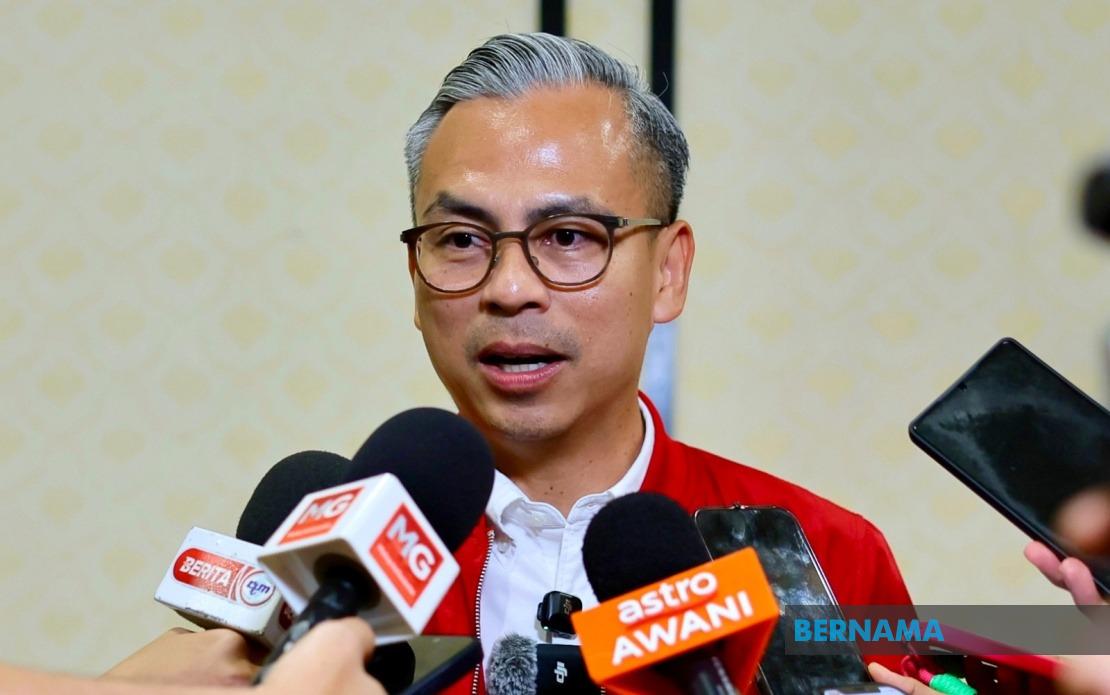
Communications Minister Datuk Fahmi Fadzil has announced that Radio Televisyen Malaysia stands ready to facilitate a televised dialogue between Johor Menteri Besar Datuk Onn Hafiz Ghazi and Dr Maszlee Malik, the Pakatan Harapan candidate contesting the Puteri Wangsa state assembly seat, should both parties accept the invitation. The offer represents an attempt to inject greater transparency into the state election campaign through a structured, broadcast platform that could reach voters statewide.
Speaking in Muar, Fahmi indicated that RTM TV1 would accommodate the engagement at a time and location agreeable to both participants, with Johor Bahru suggested as a possible venue. The Communications Minister and PH director of communications framed the proposed interaction not as a confrontational political contest but rather as a substantive exchange centred on Johor's development trajectory and governance priorities over the coming five years. This distinction is significant, as it signals an attempt to elevate the discourse beyond partisan point-scoring.
The minister's announcement arrives amid ongoing debate within political circles regarding pre-election protocols. Some quarters have called on Pakatan Harapan to formally declare its own Menteri Besar candidate before committing to any public debate with the incumbent administration. Fahmi's intervention appears designed to deflect such criticism by demonstrating PH's confidence in its candidate and willingness to engage in open dialogue regardless of whether the party has yet publicly named its preferred chief minister.
Fahmi emphasised that the capacity to engage respectfully with opposing viewpoints and withstand public scrutiny represents a fundamental prerequisite for effective leadership. His comments underscore a broader PH narrative that contemporary governance demands leaders capable of absorbing criticism and responding constructively, a quality he suggests should be central to voters' assessment of candidates. This framing subtly contrasts an openness to dialogue with any implied unwillingness to engage, though he stopped short of directly challenging Onn Hafiz to accept the RTM platform.
The minister additionally praised Dr Maszlee for his proactive engagement with forty-one youth representatives to explore the state's developmental aspirations and future direction. This reference to the candidate's grassroots mobilisation efforts serves to reinforce PH messaging that younger, more dynamic leadership approaches are being brought to bear in this election cycle, potentially resonating with younger voters who comprise an increasingly significant electoral bloc.
The Puteri Wangsa constituency presents a multi-cornered contest that extends beyond the traditional two-party framework dominant in Malaysian state politics. In addition to Dr Maszlee representing Pakatan Harapan and Barisan Nasional's Teow Chia Ling, voters will encounter candidates from Parti Bersama Malaysia—Nicholas Paul Vincent—MUDA's Rashifa Aljunied, and independent contender Wang Wee Seong. This fragmented field creates complex dynamics that could significantly influence outcomes, particularly if younger voters are persuaded to support either MUDA or the newer Parti Bersama Malaysia.
Parallel to developments in Puteri Wangsa, Onn Hafiz faces a more concentrated challenge in his own Machap seat, where he confronts a straight fight against Nor Hafiz Roslan of Pakatan Harapan. The contrast between Onn Hafiz's two-candidate contest and the broader multi-cornered races elsewhere in Johor reflects the inconsistent nature of opposition consolidation across the state, a structural advantage Barisan Nasional will likely seek to exploit.
With polling day scheduled for July 11 and early voting permitted on July 7, the state election campaign has entered its final fortnight. Fahmi used this timeframe to appeal particularly to younger voters, acknowledging that mid-July scheduling may present logistical obstacles for some electors while nonetheless urging them to prioritise their civic responsibility. His emphasis on youth participation reflects broader recognition within Pakatan Harapan that generational shifts in voter demographics could determine electoral outcomes across several marginal seats.
The Communications Minister's RTM initiative sits within a wider context of media management in Malaysian electoral cycles. State broadcasters have historically been perceived as platforms favourable to the ruling coalition, making Fahmi's offer to provide RTM airtime for a substantive debate between opposition and government candidates noteworthy. Whether this reflects genuine institutional evolution or tactical positioning ahead of a state election that opposition parties perceive as competitive remains subject to interpretation.
The broader significance of this offer extends beyond the immediate Johor election. If Onn Hafiz accepts and a meaningful televised dialogue occurs, the precedent could influence public expectations regarding leader accountability and media engagement in future Malaysian electoral campaigns. Conversely, if the invitation is declined or ignored, it provides ammunition for opposition messaging about incumbent reluctance to face scrutiny. Either outcome will likely shape narrative construction around leadership qualities and democratic participation in the coming weeks.

