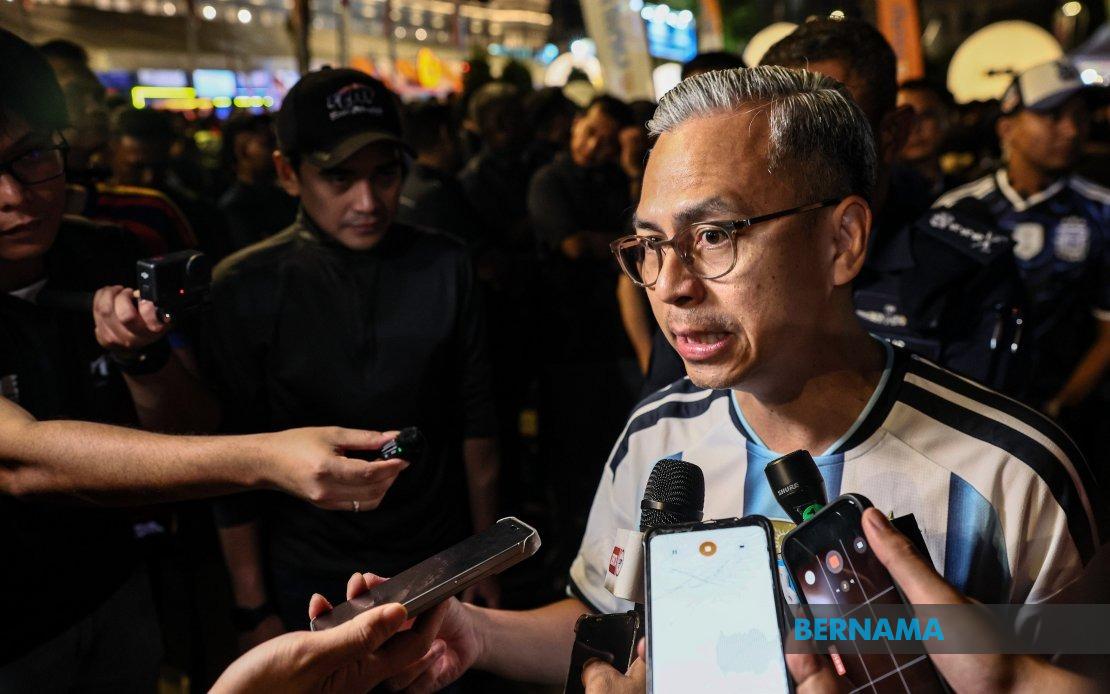
Radio Televisyen Malaysia will pursue broadcasting rights for several additional premier sporting competitions in the wake of its triumphant free-to-air transmission of the entire 2026 FIFA World Cup, according to Communications Minister Datuk Seri Fahmi Fadzil. The minister made the announcement following his attendance at the Unity Merdeka x RTM World Cup 2026 programme at Dataran Merdeka, signalling the government's commitment to expanding public access to world-class sporting content through the national broadcaster.
Fadzil revealed that Broadcasting Director-General Ashwad Ismail had briefed him on RTM's plans to secure multiple additional tournaments, though specific details of these acquisitions remain forthcoming. The broadcaster is expected to formally unveil the identities and schedules of these competitions at a later date, though no timeline has been confirmed. This strategic expansion reflects confidence in RTM's ability to deliver large-scale international sporting events to Malaysian audiences, building momentum from the World Cup coverage that reached households across the nation.
The Communications Ministry intends to conduct a thorough review of the 2026 World Cup broadcast performance once final viewership metrics become available. While the overall transmission was deemed successful, Fadzil acknowledged that certain technical difficulties emerged during the initial phases of coverage. However, he emphasised that the technical team quickly identified and remedied these issues, ensuring that subsequent broadcasts maintained broadcast quality standards. This methodical approach to post-event analysis reflects lessons learnt from previous major sporting broadcasts and demonstrates RTM's commitment to continuous improvement in its technical infrastructure.
Fadzil highlighted the World Cup coverage as an opportunity for RTM to explore and implement emerging broadcast technologies. Significantly, he pointed to the expansion of television viewing capabilities to mobile devices and smartphones as a priority area. This technological evolution is particularly relevant for Malaysian audiences, where smartphone penetration is exceptionally high and mobile viewing habits continue to reshape consumption patterns. By integrating multi-platform broadcasting infrastructure, RTM can reach younger demographics and urban populations who increasingly prefer consuming content through handheld devices rather than traditional television sets.
Broadcasting Director-General Ashwad took a collaborative rather than competitive stance toward Malaysia's broader media landscape. He articulated a vision where the state broadcaster serves as a unifying force within the media industry, facilitating partnerships with private and independent media organisations to ensure Malaysians receive quality sporting content regardless of which outlet provides it. This philosophy represents a departure from traditional siloed approaches where broadcasters guard exclusive rights jealously and competitors avoid partnerships.
Ashwad's comments underscore a significant philosophical shift in how state institutions view their role in the digital age. Rather than emphasising RTM's exclusivity or competitive advantage, he framed broadcasting rights acquisitions as serving a broader public interest mandate. The director-general stressed that major sporting events of national interest should transcend institutional rivalries and commercial competition, positioning the issue as one of democratic access to content that matters to Malaysians. This perspective aligns with global trends toward shared broadcasting arrangements for events like the Olympics and World Cup, where multiple networks collaborate to maximise audience reach.
The collaborative model that Ashwad describes would extend far beyond World Cup coverage to encompass other significant international sporting events. This approach could benefit Malaysian audiences substantially by ensuring that major competitions remain available on free-to-air platforms rather than being sequestered behind paywalls or subscription services. For a nation where income inequality remains a concern, maintaining free access to premium sporting content serves an important social equity function, allowing lower-income households to participate in shared national viewing experiences.
The successful World Cup broadcast represents a notable achievement for RTM, validating the public broadcaster's capacity to handle logistically complex international sporting productions. Managing global football tournament coverage requires sophisticated technical infrastructure, coordinating with international broadcasters, securing proper rights, managing commentary in multiple languages, and maintaining consistent broadcast quality across extended periods. RTM's ability to execute this successfully suggests the broadcaster possesses the operational capabilities and technological systems necessary to handle future major sporting events.
For Malaysia and the Southeast Asian region, RTM's expansion into additional sporting broadcasts carries broader implications. Public broadcasters throughout Southeast Asia face increasing competition from streaming services, private channels, and digital platforms. RTM's commitment to acquiring premium sporting content through a collaborative rather than combative approach could establish a model that other regional broadcasters adopt. Furthermore, strong free-to-air sporting coverage strengthens social cohesion by creating shared viewing experiences across demographic and socioeconomic lines, a particularly valuable function in an era of fragmenting media consumption.
The timing of this announcement reflects calculations about RTM's strategic positioning in Malaysia's evolving media ecosystem. With younger audiences increasingly migrating to digital platforms and international competition growing fiercer, securing high-profile sporting events provides the public broadcaster with compelling reasons for audiences to remain connected to traditional broadcasting infrastructure. The planned expansion also signals government confidence in the state broadcaster's future, despite the sector-wide pressures affecting traditional television globally.
Communications Ministry officials will need to carefully balance the financial investment required for acquiring additional sporting rights against budgetary constraints and competing governmental priorities. Securing broadcasting rights for world-class sporting events involves substantial licensing fees, and RTM will require sufficient allocation to compete effectively with private broadcasters and international streaming services. However, the ministry's willingness to pursue multiple acquisitions suggests that policymakers view sporting content as a strategic investment in the public broadcaster's relevance and reach.
Looking forward, the success of the World Cup coverage and subsequent acquisition announcements will provide important indicators of RTM's trajectory. If the broadcaster successfully acquires and delivers quality coverage of multiple additional major sporting events, it could reinvigorate public confidence in the state broadcaster and demonstrate that public institutions remain capable of delivering contemporary, high-quality content to Malaysian audiences. Conversely, if acquisition plans stall or technical difficulties re-emerge, it could reinforce perceptions that private competitors have surpassed public broadcasters in capability and reach. The coming months will prove telling for Malaysia's public broadcasting future.

