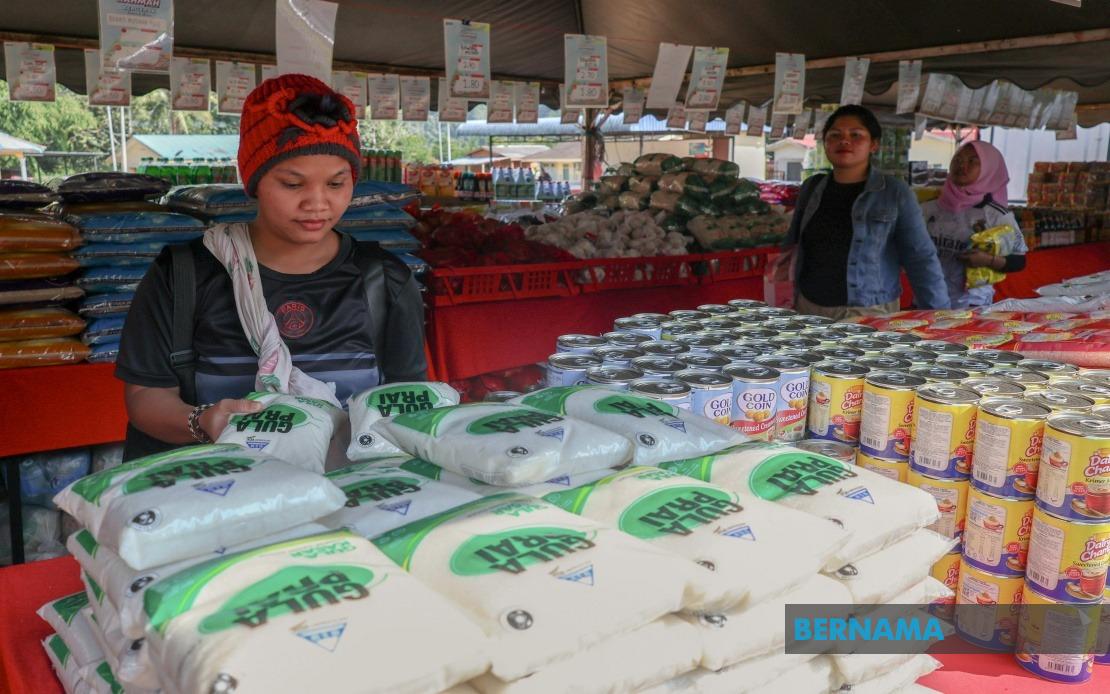
The Domestic Trade and Cost of Living Ministry has reported substantial progress in its Essential Goods Distribution Programme, which aims to bring price parity between urban and rural consumers for a range of controlled staples. Speaking in the Dewan Rakyat, the ministry detailed how the initiative has narrowed the cost-of-living gap that has historically disadvantaged residents in remote areas, where geographical isolation and logistical challenges previously forced consumers to pay premium prices for essential commodities.
The programme's impact is particularly evident in peripheral regions. In Pulau Libaran, Sabah, liquefied petroleum gas cylinders that once commanded RM39 have been brought down to the controlled price of RM26.60, representing a 32 percent reduction. Equally significant are adjustments to cooking oil, where packet prices have fallen from RM3.50 to RM2.50. These price corrections reflect the ministry's commitment to ensuring that distance from major distribution hubs does not translate into disproportionate household expenses for families already struggling with modest incomes.
The scale of intervention is considerable. With a RM250 million allocation for the current year, the programme extends to 1.03 million residents spread across six states: Sabah, Sarawak, Terengganu, Kelantan, Pahang and Kedah. This geographic spread underscores recognition that price disparities are not confined to a single region but represent a systemic challenge across Malaysia's peripheral territories. The delivery infrastructure supporting this effort spans 212 distribution zones, 828 individual distribution areas, and 1,532 points of sale, indicating a multi-layered logistical framework designed to penetrate even the most isolated settlements.
Sabah, as one of the most geographically dispersed states, receives the largest individual allocation at RM107.3 million, covering 78 zones and reaching 492,566 residents through 587 retail outlets. For Libaran specifically, an allocation of RM1.76 million serves just under 18,000 residents through nine points of sale across eight distribution areas. These figures reveal how the ministry has tailored resource distribution according to population density and geographic difficulty, recognising that delivering goods to sparsely populated regions requires proportionally greater investment.
Implementing such a programme across fragmented terrain presents substantial operational challenges. The ministry has addressed these by establishing standardised operating procedures for delivery networks and creating monitoring committees at both federal and state levels. These governance mechanisms are designed to prevent supply chain leakages—a persistent problem in previous subsidy and price-control initiatives—while ensuring that allocated resources actually reach their intended beneficiaries rather than being diverted to secondary markets.
Evaluation data collected through the Programme Outcome Evaluation Committee has produced encouraging results. Respondents in surveyed areas indicated that the initiative directly ameliorated their cost-of-living pressures and expressed support for its continuation. This feedback is significant beyond mere satisfaction metrics; it suggests that rural households perceive tangible relief in their monthly expenses for non-discretionary items, thereby preserving purchasing power for other necessities.
The programme's scope covers seven essential commodity categories: sugar, wheat flour, packet cooking oil, white rice, liquefied petroleum gas, RON95 petrol, and diesel. This selection reflects government assessment of which items consume the largest share of rural household budgets and where price disparities were most acute. By controlling prices on these fundamentals, the initiative addresses the structural disadvantage that remoteness previously imposed on daily living costs.
For Malaysian policymakers and regional observers, the programme demonstrates one approach to managing price equity across vastly different economic geographies. Southeast Asian nations with similar topographies and settlement patterns—particularly Indonesia and the Philippines—face analogous challenges in serving dispersed populations. The mechanisms developed in Malaysia, particularly the committee-based monitoring structure and the tiered distribution network, offer potential templates for other developing economies grappling with rural-urban cost-of-living disparities.
However, sustainability remains an open question. With annual allocations in the hundreds of millions and the programme now embedded across multiple states, long-term budgetary commitment becomes crucial. The ministry's reliance on surveyed satisfaction as a primary evaluation metric also warrants supplementation with more rigorous data on actual price compliance, supply consistency, and the programme's macroeconomic effects on inflation and retailer margins in participating regions.
The programme's effectiveness in Sabah also highlights how targeted federal investment can address regional inequities. Sabah and Sarawak, as Malaysia's largest and most geographically challenging states, have traditionally received policy attention focused on infrastructure or administrative capacity. This price-stabilisation initiative represents a different genre of intervention—one directly touching household finances rather than institutional frameworks. As these two states contemplate their economic futures, such cost-of-living protections become increasingly valuable both for immediate welfare and for attracting and retaining populations in remote areas.
Looking forward, the ministry's commitment to continuing and potentially expanding the programme depends on demonstrating sustained impact beyond initial implementation phases. Rural communities require not merely temporary price relief but durable solutions to structural disadvantages. Whether the Essential Goods Distribution Programme evolves into a permanent feature of Malaysia's social safety net or functions as a cyclical intervention during periods of elevated inflation will signal important messages about government priorities regarding regional equity and the lived experiences of citizens in remote Malaysia.

