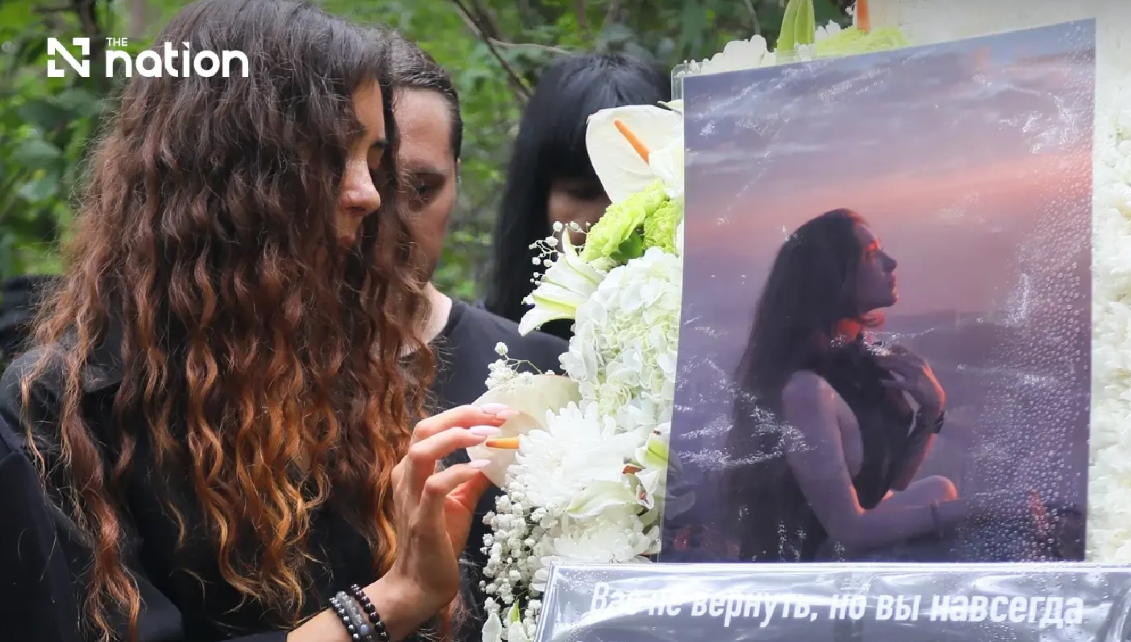
Sharina Nazimova gathered with Thai and international mourners at a Buddhist memorial ceremony in Huai Yai subdistrict, Bang Lamung district on Thursday to honour her children Diana and Roman, whose deaths have gripped the region. The solemn gathering also commemorated three members of a Thai family allegedly killed by the same perpetrators, with representatives from provincial authorities, law enforcement and civil servants attending to pay their respects. The dual tragedy, which has captured attention across Southeast Asia and Russia, underscores the vulnerability of foreign visitors in popular tourist destinations and raises difficult questions about safety and criminal investigation practices in Thailand.
The ceremony reflected the family's Buddhist faith, with monks chanting traditional prayers and performing merit-dedication rituals for all five victims. Mourners stood in respectful silence, pressed their palms together in the wai gesture, and reflected on the lives lost. The spiritual dimension of the service—conducted according to Thai Buddhist customs—represented an attempt by the family to find peace and closure through practices unfamiliar in their home country, demonstrating both their adaptation to Thai culture and their determination to honour their loved ones according to local traditions.
White carnations, lilies and roses formed a floral arrangement at the memorial site, each bloom symbolising purity, respect and a gentle passage from life. The colour choice carries particular significance in Thai culture, where white flowers traditionally mark solemn occasions and spiritual ceremonies. The thoughtful selection of flowers reflected the universal language of grief that transcends nationality and language barriers, allowing mourners of diverse backgrounds to participate in a shared expression of sorrow and remembrance.
Among the deeply personal touches was a cup of coffee placed at the memorial—Diana's preferred beverage. This intimate gesture, seemingly small in scale, carried profound emotional weight for attendees. The coffee cup transformed the formal ceremonial space into something more intimate and human, reminding observers that behind the crime statistics and media headlines were real individuals with everyday preferences and habits. Such details often prove most affecting to those mourning, as they anchor abstract loss in concrete memory.
Nazimova struggled visibly with emotion throughout the proceedings, drawing comfort from relatives, friends and strangers who had followed the case and felt compelled to attend. Her expressions of gratitude toward the Thai government, police force and civil society proved significant in a context where international crime investigations can easily become sources of friction between nations. By publicly acknowledging the efforts of Thai institutions and the compassion of ordinary Thais, she extended an olive branch that positioned the investigation and grieving process as a collaborative endeavour rather than a source of blame.
The Russian mother's appreciation for the Thai public's response held particular importance given the international dimensions of the tragedy. Thailand's tourism-dependent economy and reputation rest significantly on visitor safety perception. Crimes targeting foreigners inevitably attract scrutiny from international media and raise questions about security standards. Nazimova's measured words, expressing strength drawn from Thai kindness, helped mitigate potential diplomatic tensions and shifted the narrative from systemic failure toward community resilience and institutional responsiveness.
The family's Buddhist practice, maintained by Nazimova who had raised Diana and Roman as a single parent, provided a framework for processing grief within Thai cultural and spiritual contexts. This choice also reflected the siblings' apparent integration into Thai society, suggesting they had moved beyond the status of temporary tourists to develop deeper connections with local communities. Their faith tradition created a bridge between Russian and Thai mourning practices, allowing the ceremony to serve as a site of cultural fusion during profound tragedy.
Police had arrested Thana "Pong" Kerdthong, 43, and Thongchai "Thong" Srinil, 39, on July 31 following an intensive manhunt in Wang Sombun district, Sa Kaeo province. Investigators allege the suspects posed as police officers beside a roadside location, restrained Diana and Roman, and transported them to a wooded area. The stated motivation was motorcycle theft, a crime pattern that highlights the risks faced by travellers in remote areas and raises questions about criminal sophistication and predatory targeting of perceived vulnerable foreigners.
The suspects' accounts of events have diverged significantly, with police indicating that neither's statements have been fully accepted pending verification against forensic evidence and investigative findings. This cautious approach to their testimonies reflects professional investigative standards, though the delay in establishing definitive facts has prolonged uncertainty for grieving families. The pair subsequently guided investigators to burial locations, leading to discovery of both the Russian siblings' remains and those of the Thai family members, expanding the scope and severity of the alleged crimes.
The expanded investigation revealing additional victims demonstrates a pattern of violence that extends beyond a single opportunistic crime. The presence of the Thai family among the casualties suggests the suspects may represent a more serious and systematic threat to community safety than an isolated incident. This revelation has intensified scrutiny on how such perpetrators evaded detection prior to their arrest, and whether systemic gaps in law enforcement communication or community reporting mechanisms allowed dangerous individuals to operate unchecked.
Those attending the memorial service expressed determination that the justice system would proceed swiftly and comprehensively, delivering accountability for all five victims and closure for their bereaved families. This sentiment reflects broader regional concerns about crime investigation standards and the international criminal justice process. The case has become emblematic of safety challenges facing both Thai citizens and foreign visitors, with successful prosecution potentially serving as a deterrent and signal of institutional competence.
The memorial service represented more than ceremonial closure for the family; it served as a public statement about the value placed on all five victims, regardless of nationality. By conducting the service in Thailand according to local traditions and publicly acknowledging Thai support, Nazimova transcended national boundaries and claimed shared humanity. The gathering affirmed that grief knows no borders and that communities can demonstrate compassion even when tragedy involves foreign nationals and complex criminal circumstances.

