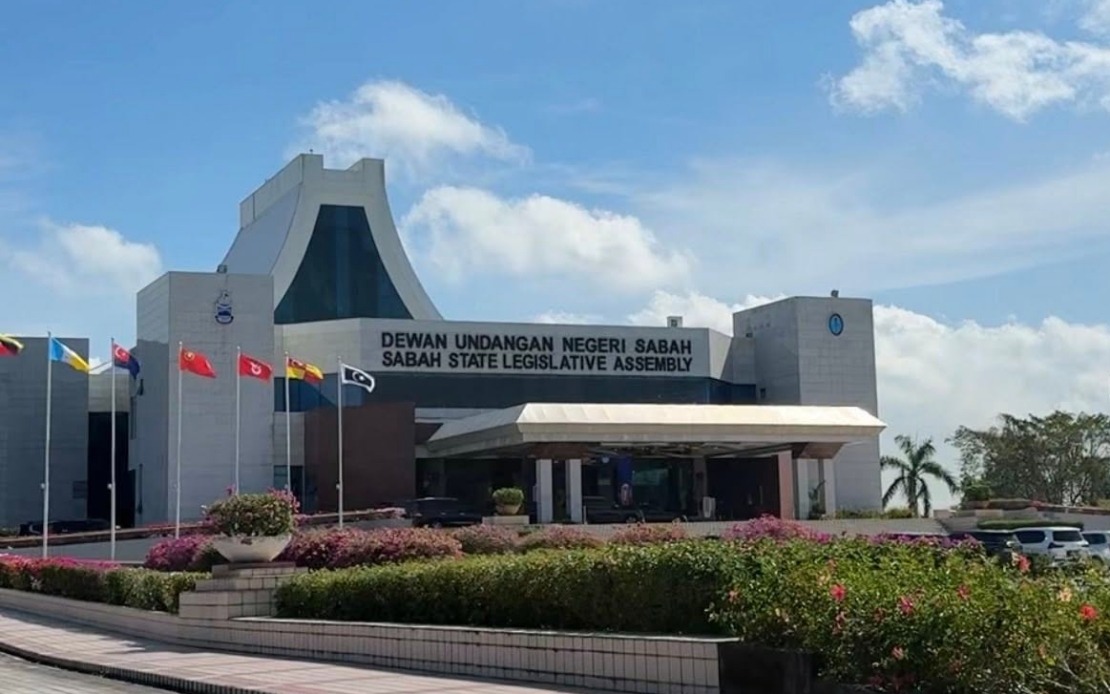
The Sabah Legislative Assembly has passed the Muslim Succession Bill 2026 and the Native Courts Bill 2026, representing a watershed moment in the state's efforts to modernise its legal infrastructure around Islamic and customary matters. The bills were presented and championed by Datuk Dr Mohd Arifin Arif, the state's minister for local government, housing and Islamic affairs, who oversaw their passage through the assembly following separate parliamentary debates. The Muslim Succession Bill proceeded after deliberation amongst five assemblymen and was affirmed under the chairmanship of state assembly speaker Datuk Seri M Kadzim Yahya, while the Native Courts Bill advanced through a more extended discussion involving twelve legislative members, with deputy speaker Datuk Richard Wong We Kong presiding over proceedings.
The Muslim Succession Bill 2026 addresses what has long been a gap in Malaysia's legislative landscape. According to Mohd Arifin, the enactment represents the first dedicated legislation specifically designed to govern how Muslim estates are managed and distributed under the jurisdiction and powers of the Syariah Courts across the country. This is a significant development for a nation where Islamic law intersects with civil law in matters affecting the majority-Muslim population, yet prior frameworks lacked comprehensive codification in this particular domain. The bill's introduction signals growing recognition that Islamic inheritance practices require systematic legislative oversight to protect heirs and ensure compliance with Islamic principles.
The legislative framework rests on four fundamental pillars that Mohd Arifin identified during tabling. First, the bill seeks to establish a more systematic and transparent legal architecture governing how Muslims transfer and manage their assets after death. This represents a departure from what may have previously been ad-hoc or inconsistently applied procedures. Second, the legislation aims to protect the rights and interests of all heirs and other parties with legitimate stakes in an estate, recognising that inheritance disputes frequently arise when succession procedures lack clarity or enforcement mechanisms. Third, it commits to streamlining estate administration in ways that remain consistent with syariah principles, ensuring that religious requirements are not compromised in the pursuit of efficiency. Fourth, the bill strengthens compliance and enforcement mechanisms to prevent estate assets from being misappropriated, concealed, or distributed without proper authorisation.
For Malaysian readers, the implications of this bill extend beyond Sabah's borders. Succession and inheritance remain deeply contentious matters within Malaysian Muslim communities, where disputes over property distribution frequently end up in both civil and syariah courts. The establishment of a clear, systematic framework in Sabah could eventually serve as a model for other states seeking to address similar gaps. Moreover, for Muslim business owners and individuals with significant assets, the bill offers greater legal certainty regarding how their estates will be managed, which has implications for estate planning and wealth preservation strategies across the region.
The Native Courts Bill 2026 addresses an equally pressing need for modernisation in Sabah's customary justice system. The existing legislation governing native courts has remained in force since 1992, meaning it has operated for more than three decades without substantial revision. Sabah's indigenous communities—comprising Kadazan-Dusun, Murut, and various other groups—have customary legal traditions that historically predated Malaysia's federal system. However, the legal framework governing how these customs are administered through formal courts had become increasingly disconnected from contemporary judicial practices and the evolving expectations of native communities.
Mohd Arifin emphasised that the new bill is not designed to erase or diminish native traditions, but rather to revitalise the customary justice system whilst preserving its cultural authenticity. The legislation represents a delicate balance: modernising procedures and institutional structures without undermining the roots, identity, and distinctiveness of Sabah's indigenous customs. This is a critical consideration for any jurisdiction attempting to reconcile traditional legal systems with contemporary governance standards. The bill recognises that customary law remains highly relevant to native communities and should not be treated as a relic of the past, but as a living legal tradition requiring thoughtful reformation.
Structurally, the Native Courts Bill 2026 introduces a clearer institutional hierarchy, establishing three distinct tiers: the Native District Court at the foundation, the Native High Court as an intermediate appellate body, and the Native Court of Appeal as the apex customary judicial body. This pyramidal structure brings coherence to what may previously have been a less systematised arrangement. Such reorganisation can reduce confusion about jurisdictional boundaries, clarify pathways for appeal, and enhance public confidence in the customary justice system by making it more transparent and predictable.
A particularly progressive element of the new bill involves the creation of a Native Judicial Appointments Advisory Committee. This mechanism introduces meritocratic principles to judicial selection, moving away from a system where appointments were primarily determined by administrative position or political patronage. The committee will assess potential judges based on transparency, professional qualifications, practical experience, demonstrated knowledge of customary law, and personal integrity. This represents a meaningful step toward ensuring that customary courts are presided over by individuals genuinely equipped to adjudicate complex matters of native custom, rather than merely individuals occupying high administrative rank.
For Southeast Asian observers, Sabah's legislative moves reflect a broader regional trend toward recognising and formalising indigenous legal systems within modern state structures. Countries across Southeast Asia—including the Philippines, Indonesia, and Thailand—have grappled with comparable questions about how to accommodate traditional justice mechanisms within contemporary legal frameworks. Sabah's approach, emphasising modernisation without cultural erosion, could offer valuable lessons for other jurisdictions managing similar tensions between traditional authority and formal state law.
The passage of both bills also highlights the particular governance challenges facing Malaysian states with significant indigenous populations. Unlike peninsular Malaysia, where Islamic law and civil law operate within a relatively established institutional relationship, Sabah must simultaneously manage Islamic law, federal civil law, state law, and customary legal traditions. The successful navigation of these four overlapping legal systems requires sophisticated legislative drafting and political consensus, which these two bills demonstrate.
For practitioners working within Sabah's legal system—whether syariah court judges, native court magistrates, or estate administrators—these bills will fundamentally reshape operational procedures. Training programmes, revised administrative protocols, and updated judicial precedents will all be necessary to ensure smooth implementation. The bills' complexity suggests that their transition from legislation to practical operation will require substantial preparatory work from Sabah's relevant government agencies.
Looking forward, the passage of these bills positions Sabah as a jurisdiction willing to undertake comprehensive legal reform even in areas touching upon religious and cultural sensitivities. The state government's willingness to modernise whilst respecting the foundational principles underlying these legal systems suggests a mature approach to governance. For Malaysian citizens and businesses, particularly those operating in Sabah or with estates and interests in the state, these legislative changes carry practical consequences that will shape legal outcomes in inheritance and customary matters for years to come.

