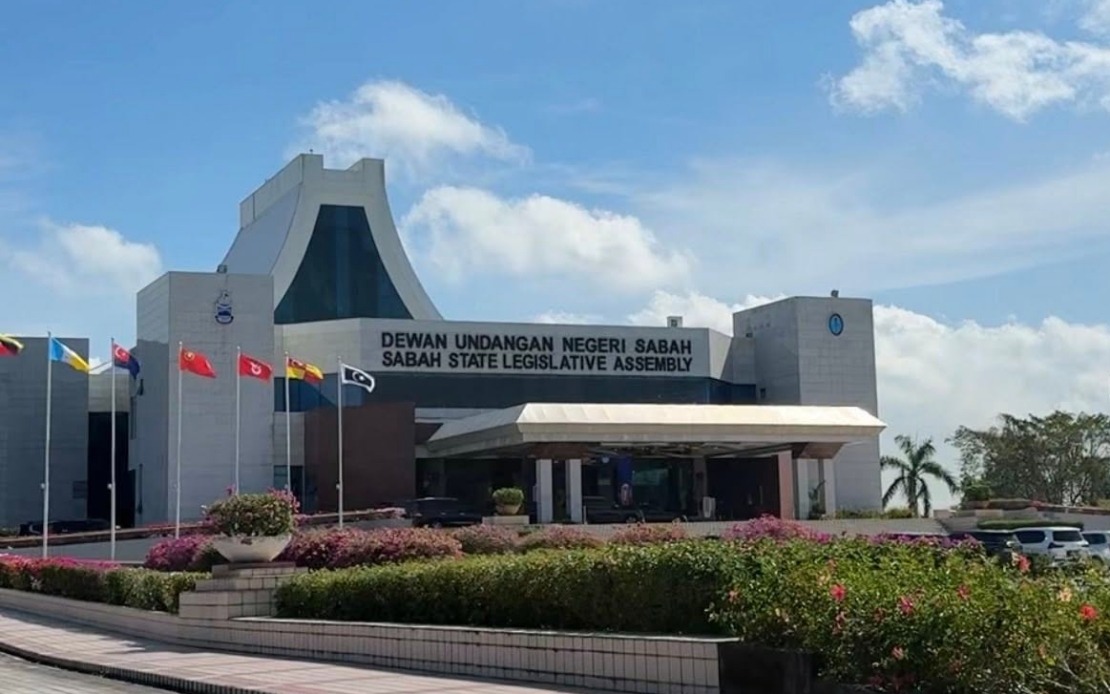
Datuk Seri Wilfred Madius Tangau, the GRS assemblyman for Tamparuli, has initiated a push for constitutional reform to accord Sabah's Native Court the formal legal status it currently lacks. Speaking during debate on the Native Court Bill 2026 in the state legislative assembly, Madius highlighted a fundamental inequity in how the judicial system treats indigenous customary law compared to religious courts. Presently, the Native Court operates in a diminished capacity, classified merely as a tribunal by the Civil Court rather than holding the constitutional standing enjoyed by the Syariah Court—a disparity that has long troubled advocates for indigenous justice systems.
The assemblyman's proposal represents more than a technical legal adjustment; it addresses a long-standing grievance rooted in Sabah's distinctive constitutional arrangement under the Malaysia Agreement 1963. That foundational document recognised Sabah's unique position within the Malaysian federation, granting the state certain powers and protections that reflect its diverse indigenous heritage. Madius framed his initiative within this historical context, arguing that elevating the Native Court's status would honour commitments made during the original federation agreement. For many Sabahans, particularly indigenous communities whose customary laws predate Malaysia's formation, this recognition carries profound symbolic and practical significance.
Critically, Madius was careful to clarify that his proposal does not seek to blur jurisdictional boundaries or create institutional overlap. He explicitly stated that Tamparuli is not advocating for the Native Court to encroach upon functions performed by either the Civil Court or the Syariah Court. Rather, the thrust of the amendment aims at according appropriate constitutional recognition to a distinct judicial mechanism that serves communities whose legal traditions differ fundamentally from both common law and Islamic jurisprudence. This distinction is important for Malaysian observers unfamiliar with Sabah's judicial architecture, where indigenous communities maintain customary dispute resolution mechanisms that have operated for centuries and warrant their own institutional framework.
The timing of this proposal carries weight within Sabah's broader political landscape. As the state navigates questions of autonomy and resource management, revisiting constitutional arrangements becomes increasingly relevant. Other Southeast Asian nations have grappled with similar questions about how to accommodate indigenous legal systems within modern state structures. Thailand's treatment of northern tribal communities, Indonesia's recognition of customary law in certain provinces, and the Philippines' handling of Mindanao's Islamic courts offer comparative examples of jurisdictions attempting to balance national legal uniformity with local traditions. Sabah's situation reflects this region-wide tension between centralised legal systems and respect for indigenous governance.
Madius's argument about institutional legitimacy deserves deeper consideration. He contended that a court's strength should not be measured by caseload volume but by the community's confidence in its fairness and impartiality. This perspective challenges conventional metrics for assessing judicial efficacy, suggesting that effectiveness in serving specific populations—particularly indigenous groups with distinct cultural frameworks—matters more than aggregate case numbers. A Native Court that handles fewer disputes but commands tremendous respect and achieves resolutions that the affected communities view as just and culturally appropriate may indeed serve the public interest better than a more active tribunal that lacks local credibility.
For Malaysia's broader federal system, Madius's initiative raises important questions about how the constitution accommodates regional diversity. The Malaysia Agreement was predicated on the notion that Sabah and Sarawak possessed characteristics justifying modified arrangements compared to Peninsular states. Over the decades, however, the practical implementation of these special provisions has sometimes been neglected or eroded. Revisiting constitutional status for an indigenous institution forces the nation to confront whether post-1963 arrangements remain honoured in spirit and substance. This inquiry extends beyond Sabah alone, affecting how other states with significant indigenous populations approach customary law.
The Native Court Bill 2026, the legislative vehicle for this constitutional discussion, represents careful navigation through sensitive terrain. Indigenous justice systems occupy contested ground in modern legal discourse. Critics worry that traditional dispute resolution might perpetuate inequalities or inadequately protect vulnerable individuals. Advocates counter that indigenous systems embody sophisticated jurisprudence developed over generations and that external imposition of foreign legal frameworks dismisses local knowledge and authority. The bill appears structured to address both concerns—seeking formal recognition while presumably maintaining oversight mechanisms ensuring compliance with fundamental rights.
Implementing this change would require more than legislative action in Sabah's assembly. Constitutional amendments affecting the courts demand parliamentary approval and potentially input from the Yang di-Pertuan Agong. This procedural requirement means the proposal must gain traction at the federal level, where officials may harbour different perspectives on judicial federalism and constitutional amendment. Nevertheless, framing the initiative within the Malaysia Agreement's original spirit provides a compelling legal argument for why the federal government should support recognition of what many view as an ancient right temporarily diminished by post-1963 institutional development.
For Malaysian readers, particularly those in East Malaysia, this development underscores ongoing conversations about federal-state relations and indigenous rights. The push for Native Court constitutional status symbolises broader efforts to revitalise institutional arrangements that recognise indigenous communities as distinct constituencies deserving tailored governance mechanisms. Whether this particular proposal ultimately succeeds, it reflects a reclamation narrative gaining momentum across Southeast Asia, where indigenous peoples increasingly demand that modern states acknowledge and formally accommodate their traditional legal and governance systems. Sabah's movement on this issue may inspire parallel discussions in Sarawak and other regions harbouring substantial indigenous populations.

