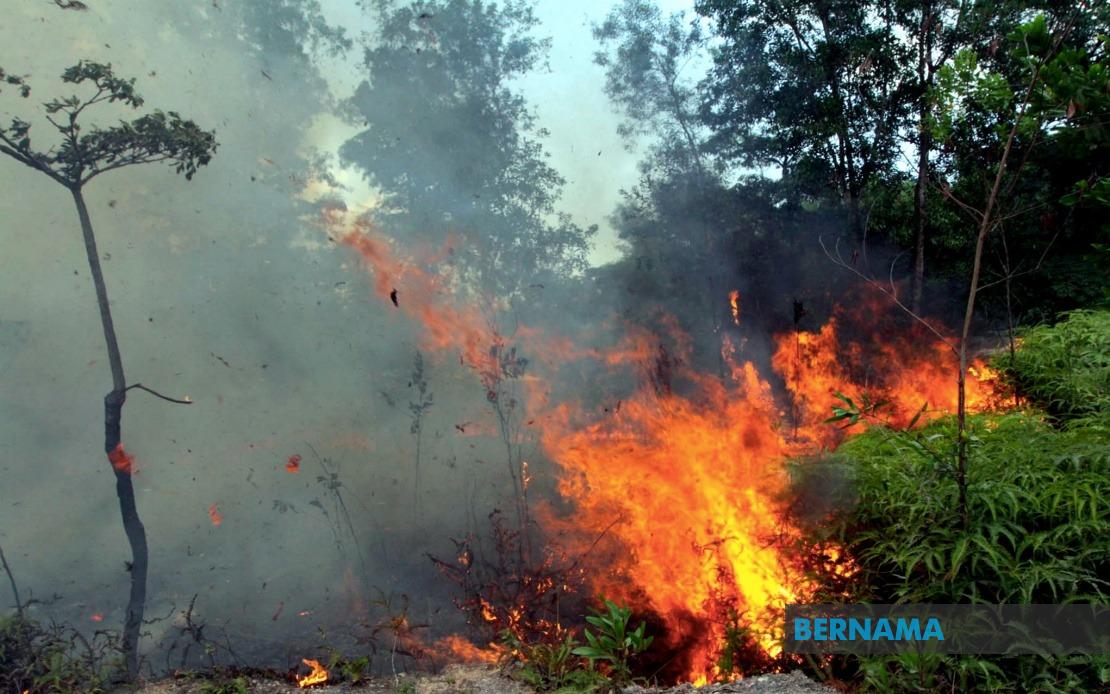
The Sabah Fire and Rescue Department (JBPM) has escalated public warnings against open burning activities as transboundary haze originating from forest fires in Kalimantan, Indonesia, begins to degrade air quality across the northern Sabah region. The warning, issued by department director Mohd Pisar Aziz, comes amid growing atmospheric instability caused by prevailing wind patterns carrying thick smoke from southern and central Borneo towards populated areas including Kota Kinabalu and Kimanis.
According to Mohd Pisar, the combination of advancing haze and locally dry weather conditions has created an elevated fire risk across Sabah. The department views this as a critical moment requiring coordinated public cooperation to prevent secondary fire incidents within the state itself. Officials emphasise that open burning—encompassing the incineration of rubbish, leaf matter, garden refuse, and construction debris—constitutes a legal offence and substantially amplifies existing haze problems. The director framed fire prevention as a shared responsibility affecting the protection of human life, property assets, and environmental integrity.
Real-time air quality data from the Air Pollutant Index Management System (APIMS) indicates that Sabah's atmospheric conditions remain at moderate severity levels, though trends warrant vigilance. Kota Kinabalu registered the highest API reading at 83, followed by Politeknik Kota Kinabalu at 81 and Kimanis at 76 on the day of the warning. While these figures fall within the moderate classification, officials caution that such readings can fluctuate rapidly depending on wind direction, fire activity across the border, and local meteorological shifts. The sustained presence of haze and potential for deterioration over coming weeks mean that current air quality should not breed complacency among either the general population or health authorities.
The department has identified vulnerable population segments requiring enhanced protective measures despite moderate air quality indices. Individuals with asthma, respiratory sensitivities, and chronic conditions should adopt stricter precautionary protocols beyond general public health guidance. Children and elderly residents, whose physiological resilience to air pollutants is typically lower, need particular attention from families and caregivers. The JBPM's emphasis on these high-risk groups reflects international health evidence showing that moderate-level haze exposure can trigger medical complications in susceptible individuals, potentially overwhelming healthcare facilities if exposure becomes widespread or prolonged.
Two districts have already met the technical criteria triggering mandatory open-burning restrictions. Keningau and Pitas each recorded seven consecutive days without rain as of August 10, crossing the threshold that activates the open-burning ban under Sabah's environmental and fire safety regulations. This prohibition encompasses not only residential waste burning but also construction site operations, agricultural clearing, and industrial disposal practices that rely on open incineration. The bans are neither arbitrary nor temporary—they represent evidence-based interventions designed to eliminate one controllable fire source during periods when atmospheric and hydrological conditions make uncontrolled combustion dangerously probable.
Mohd Pisar's departmental guidance provides detailed protective measures for the general public navigating haze conditions. Residents are instructed to restrict outdoor exposure, particularly during the midday to early afternoon window between 11 am and 4 pm when atmospheric conditions typically concentrate pollutants at ground level and UV radiation intensity peaks. Maintaining adequate hydration helps counteract the physiological stress imposed by breathing contaminated air. Wearing appropriate face masks in haze-affected areas creates a basic physical barrier against particulate inhalation, though effectiveness depends on mask type and proper usage. Household electrical systems warrant inspection to eliminate fire ignition hazards, especially given the elevated ambient fire risk during drought conditions.
The JBPM has extended its fire-prevention messaging to address seemingly minor behavioural risks that accumulate into significant danger during vulnerable periods. Careless cigarette disposal represents a chronic ignition source that, while individually small, collectively generates preventable fires across Sabah's territory. Members of the public are encouraged to report suspicious activities or fire incidents immediately via the emergency number 999, enabling rapid response deployment before small incidents escalate into major conflagrations. This approach transforms the general population into force-multipliers for the relatively limited personnel and resources available to the fire service.
The transboundary haze phenomenon reflects the interconnected environmental realities of the Borneo region, where fire management practices in Indonesian Kalimantan directly influence air quality and public health in Malaysian Sabah. Forest fires across the Indonesia-Malaysia border are typically driven by agricultural land clearance, plantation establishment, and deliberate burning practices that become uncontrollable during drought seasons. Climate variability and broader regional drought patterns have intensified the frequency and severity of such cross-border fire episodes over the past two decades. Sabah's vulnerability stems partly from geography—its position at Borneo's northern tip means it receives air masses originating from larger landmass areas to the south, concentrating pollutant loads that cannot easily disperse.
The haze episode raises policy considerations extending beyond immediate emergency response. Sabah and other Malaysian states continue advocating for coordinated regional fire management frameworks that would include stronger enforcement of Indonesian land-clearing regulations and earlier detection of incipient fires before they generate transboundary smoke. Bilateral environmental cooperation mechanisms exist but require sustained political commitment and resource allocation to function effectively. Meanwhile, Sabah's own development pressures—including agricultural expansion and infrastructure projects—mean that the state must simultaneously manage its internal fire risks while addressing external pollution sources beyond its direct control.
Public compliance with open-burning bans and protective health measures depends substantially on community understanding of the rationale behind restrictions. The JBPM's messaging frames these as protective rather than purely punitive, emphasising collective benefit rather than individual inconvenience. Whether residents in affected districts consistently adhere to the bans will significantly influence fire occurrence rates over coming weeks. Similarly, widespread adoption of protective behaviours such as mask wearing and activity limitation depends on accessible information, affordable protective equipment availability, and social normalisation of precautionary practices during haze events. Schools, workplaces, and healthcare facilities may need to adjust operational schedules or protocols if air quality continues deteriorating, creating broader socioeconomic ripple effects beyond immediate health impacts.

