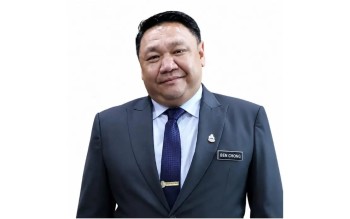
Sabah's state government has collected RM1.38 billion in sales tax from its major revenue-generating sectors during the first half of 2024, providing a significant injection into the state coffers that finance regional development and public services. The revelation came during proceedings in the State Legislative Assembly on July 21, when Datuk Chong Chen Bin @ Ben Chong, the Assistant Finance Minister, outlined the collection figures to lawmakers, underscoring the continued importance of resource-based industries to Sabah's fiscal health during a period of economic uncertainty across Southeast Asia.
The tax breakdown reveals the dominance of two extractive industries in Sabah's economic model. Crude palm oil, including palm biomass, emerged as the single largest contributor, generating RM703.55 million in state sales tax revenue. This underscores the persistent reliance on the palm oil sector, which remains deeply embedded in Sabah's economic structure despite global pressures regarding environmental sustainability and deforestation concerns. The petroleum products sector followed closely with RM679.45 million, representing nearly equal revenue alongside the palm oil industry and demonstrating the critical role that energy resources continue to play in underwriting state revenues.
Fishery commodities, by contrast, delivered comparatively modest returns of RM4.22 million, suggesting that Sabah's marine sector, despite its geographic advantages and potential, remains underdeveloped as a revenue source relative to its land-based counterparts. This disparity raises questions about whether government policy has adequately invested in harnessing the economic potential of Sabah's extensive coastline and fishing grounds. The forestry sector notably generated no state sales tax revenue because it falls outside the tax regime, a structural decision that reflects either exemption policies or the sector's diminished commercial activity in recent years.
Chong indicated that the state government is considering a strategic overhaul of its approach to sectoral taxation. The ministry intends to refine proposals aimed at revising state sales tax rates across particular industries, framing such changes as mechanisms to enhance competitiveness and fortify Sabah's industrial base. This signals recognition that the current tax structure may not optimally position Sabah's sectors to compete regionally and globally, particularly as neighbouring jurisdictions adjust their own fiscal policies. The proposed rate review suggests forward-thinking policy work, though details remain sparse regarding which sectors might benefit from reduced rates or how the revenue implications would be managed.
Finance Minister Datuk Seri Masidi Manjun clarified an important distinction for legislative purposes, explaining that the federal government imposes the sales and service tax, or SST, while state governments impose separate state sales taxes. This dual system can create complexity for businesses operating across Malaysia, and the clarification underscores that Sabah maintains autonomous control over its own tax regime. The state is actively reviewing its rates as part of broader economic strategy, though the timeline and scope of such reviews remain unclear from public statements.
The tax collection figures arrive at a moment when Sabah, like other Malaysian states, confronts questions about economic diversification and sustainability. Heavy reliance on commodity exports—particularly palm oil and petroleum—exposes the state to global price volatility and demand fluctuations beyond its control. The RM1.38 billion collected in the first six months suggests a reasonably healthy revenue stream, yet masks underlying structural challenges that policymakers must address through investment in new sectors and innovation.
In related developments affecting Sabah's future, Education, Science, Technology and Innovation Minister Datuk James Ratib outlined comprehensive preparations for admitting six-year-old students into Year One beginning in the 2027 school session. This policy shift represents a significant change to Malaysia's education system and will require substantial institutional adaptation across Sabah's school network. The state education department has undertaken thorough groundwork to ensure smooth implementation, recognising that such transitions demand careful coordination across multiple administrative layers.
Ratib highlighted the planned deployment of newly trained teachers from both the Bachelor of Teaching Degree Programme and the Postgraduate Diploma in Education Programme to manage increased enrolment. Additionally, the state is recruiting teachers on contracts to supplement permanent staff and meet immediate classroom needs. This phased approach acknowledges the challenge of rapidly expanding the teaching workforce while maintaining quality standards, a concern throughout Southeast Asia as education systems expand.
To ease the transition, the Ministry of Education and Sabah's State Education Department are considering adding student management assistants to school staffing structures. These personnel would handle administrative and non-academic responsibilities, allowing teachers to concentrate on classroom instruction and student learning. Such support roles have proven beneficial in other education systems and could meaningfully improve teaching effectiveness by reducing bureaucratic burdens on educators already facing heavy workloads.
The physical infrastructure dimension of the expansion strategy encompasses construction of additional classrooms, comprehensive renovation and upgrading of existing facilities, and implementation of two-session schooling arrangements in schools facing capacity constraints. These investments signal serious commitment to accommodating increased student populations, though the total budget allocation and timeline for completing such infrastructure work remain unspecified. Two-session schooling, where schools operate morning and afternoon shifts, represents a pragmatic interim solution for congested urban schools while longer-term capacity building proceeds.
These parallel policy developments—taxation adjustments for economic sectors and education system expansion—illustrate the multifaceted challenges confronting Sabah's government. While state finances depend substantially on commodity taxes, the state must simultaneously invest in human capital development to build a more resilient, diversified economy. The educational initiatives suggest recognition that Sabah's future prosperity depends on preparing younger generations with stronger foundational learning, potentially enabling future economic transitions away from exclusive reliance on extractive industries toward knowledge-based sectors.

