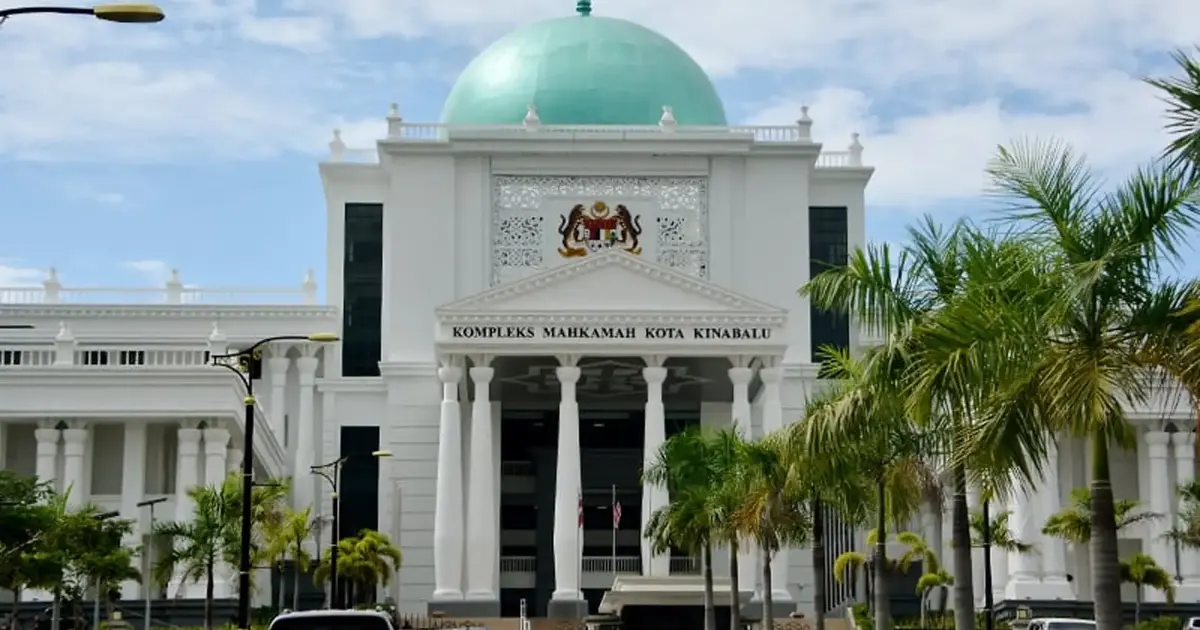
A sessions court in Sabah has ruled against Albert Tei in his defamation case against the state's minerals company, determining that the organisation's public remarks about him did not carry the implication he was involved in a coordinated political effort. Judge Monica Linsua concluded that when examined comprehensively, the company's statement did not reasonably suggest Tei was participating in any organised campaign.
The case represented one of several legal disputes that have unfolded in Sabah's corporate and political landscape in recent months. Such litigation frequently turns on how language in official communications is interpreted by courts, particularly when statements might be construed as damaging to reputation. The dismissal signals judicial reluctance to find defamatory intent in the minerals firm's communications without clearer evidence of malice or explicit allegations of wrongdoing.
Tei's action reflected growing scrutiny of corporate messaging in Sabah, where state-linked enterprises maintain significant public profile and influence. The minerals sector remains strategically important to the state's economy, and disputes involving these firms often attract attention from stakeholders across business, political, and civil society circles. Questions about how such companies communicate publicly, and what legal standards apply to their statements, have become increasingly relevant as transparency concerns mount across the region.
The judge's interpretation hinged on contextual analysis. Linsua's reasoning emphasised that statements must be evaluated holistically rather than on isolated phrases or fragments. This approach aligns with established legal precedent in Malaysian jurisprudence, which generally requires that defamatory meaning be reasonably inferred from the complete text, not cherry-picked portions. The ruling thus reaffirms an important principle: simply appearing in a corporate announcement or official document does not automatically create legal liability for the issuing organisation.
For corporate communicators and state enterprises across Malaysia and Southeast Asia, the judgment offers practical guidance on the boundaries of permissible corporate speech. Companies can describe individuals' actions or positions without legal jeopardy if they avoid explicit false accusations or reasonably interpreted insinuations of criminal conduct or moral turpitude. The distinction between factual assertion, opinion, and implication becomes legally decisive in cases where reputational harm is alleged.
The minerals sector itself remains under considerable scrutiny in Sabah, particularly regarding transparency, environmental impact, and governance standards. State governments across Malaysia have faced recurring criticism from transparency advocates and civil society organisations regarding the management of natural resource contracts and the conduct of state-owned enterprises. This case, though now concluded, reflects underlying tensions between corporate autonomy and individual protection in jurisdictions where state enterprises wield substantial economic power.
Tei's unsuccessful challenge also demonstrates the high legal bar plaintiffs must clear when pursuing defamation claims. Malaysian courts generally require clear proof that published statements are factually false, that they specifically identify the plaintiff, and that they would harm the plaintiff's reputation in the estimation of ordinary, reasonable people. Proving malicious intent or reckless disregard for truth presents additional hurdles. The Sabah court's analysis suggests Tei could not satisfactorily demonstrate these elements.
Beyond the immediate parties involved, the ruling carries implications for political discourse in Sabah, particularly as state elections or political transitions loom. The decision establishes that organisations cannot be held liable simply for mentioning individuals in contexts that might be characterised as political, provided the statements themselves remain factually grounded and avoid explicit false imputation. This may influence how political actors and corporate entities navigate their public communications during sensitive periods.
The judgment also reflects broader trends in Malaysian litigation around defamation and corporate accountability. Courts have increasingly adopted frameworks that balance free expression and business communication interests against reputational protection. The Sabah ruling demonstrates judicial pragmatism: courts recognise that state enterprises and private companies must be able to defend themselves or comment on matters affecting their operations without facing litigation simply for mentioning individuals' names or describing circumstances.
Attention now turns to whether Tei might pursue appeals or seek alternative remedies. Legal experts in Sabah suggest that successful challenges to corporate statements typically require far more substantive evidence of deliberate falsehood or reckless publication. The standards applied by Judge Linsua appear consistent with how superior courts across Malaysia have addressed similar disputes, suggesting appellate prospects would be limited absent significant new evidence or legal arguments.
The minerals firm, meanwhile, emerges from the litigation with validation that its communication approach withstood legal scrutiny. This outcome may embolden other state enterprises in Sabah and beyond to maintain more assertive public positioning when addressing matters of operational or strategic concern. However, the broader question of whether state-linked companies exercise appropriate restraint in their public commentary remains contested among transparency advocates and governance reform advocates throughout the region.

