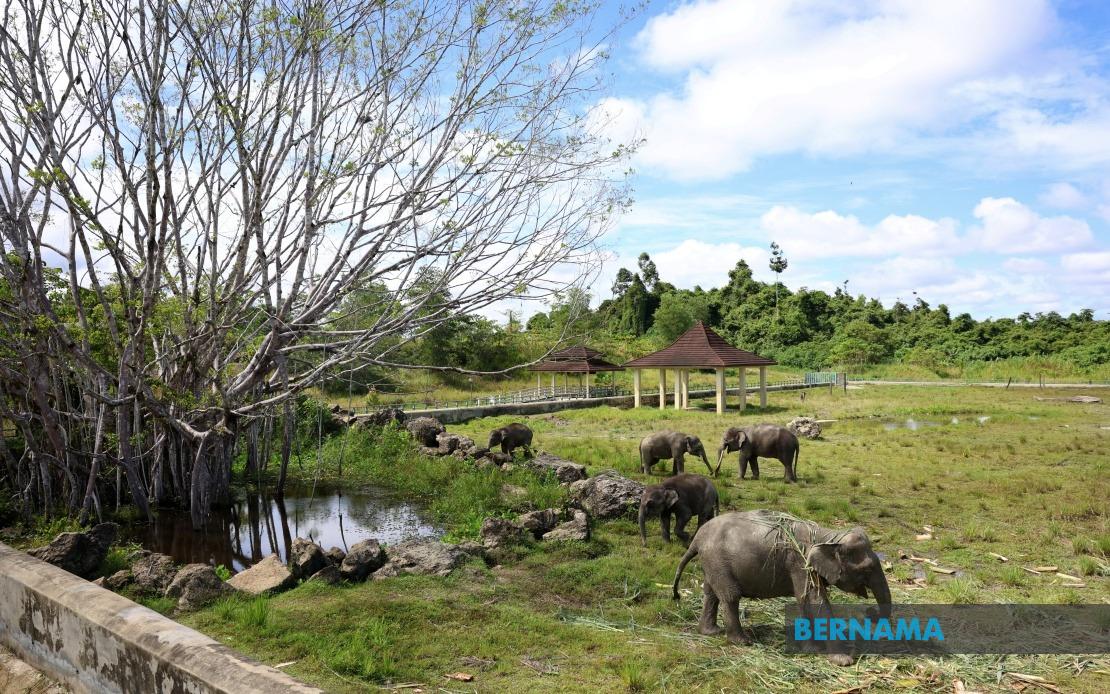
Sabah's government is actively examining a pioneering elephant sanctuary proposal centred on Tawau, with plans to roll out the initiative across other districts should the pilot phase demonstrate measurable success in mitigating human-wildlife confrontations. The disclosure came during parliamentary proceedings in the State Legislative Assembly, where Datuk Dr Andi Md Shamsureezal, serving as Assistant Minister for Tourism, Culture and Environment, outlined the government's carefully calibrated approach to managing escalating tensions between communities and wildlife in the state.
The sanctuary model represents a departure from traditional reactive measures and reflects growing recognition among Sabah's policymakers that isolated interventions fail to address the underlying ecological and socioeconomic drivers of conflict. Rather than treating the Tawau initiative as a standalone venture, state officials are collaborating with the Sabah Wildlife Department and broader stakeholder networks to develop a framework capable of genuine scalability. This methodical evaluation period will establish baseline indicators for measuring effectiveness before any commitment to wider implementation across Sabah's districts.
During the assembly session, Datuk Seri Mohd Shafie Apdal from Warisan representing Senallang had advocated for the government to designate specific zones dedicated to wildlife conservation that could simultaneously function as tourism assets for the region. This dual-purpose vision aligns with contemporary approaches in Southeast Asia, where conservation initiatives increasingly integrate economic benefits for local populations, thereby building grassroots support for wildlife protection efforts. The sanctuary concept thus carries implications beyond environmental management, potentially offering alternative income streams for communities historically burdened by crop losses and livestock predation.
Comprehensive management remains central to the state's strategy, extending far beyond the simplistic removal and relocation of problematic animals. Dr Andi emphasised that merely capturing and translocating wildlife amounts to displacement of the core problem rather than resolution, as relocated animals frequently return to familiar territories or create fresh conflicts in their new locations. This understanding reflects international best practice in wildlife management and acknowledges the biological realities of animal behaviour and territorial attachment that make relocation inherently unsustainable.
The Sabah Wildlife Department has implemented several operational measures designed to create early warning systems and community resilience. Elephant ranger teams comprising local residents from affected areas now operate in key regions, representing an investment in community participation and ground-level intelligence gathering. Additionally, technological interventions such as satellite collars fitted to selected elephants allow officials to track movement patterns in real time, enabling advance notice to vulnerable communities and potentially preventing encounters before they escalate to property damage or loss of life.
Beyond elephants, the state government's wildlife management portfolio encompasses control strategies tailored to each species' biological characteristics and ecological role. Arunarnsin Taib from Warisan-Gum-Gum had raised specific concerns regarding agricultural losses inflicted by wildlife, prompting discussion of immediate tactical responses alongside longer-term strategic interventions. The distinction matters considerably for smallholder farmers whose harvests can be decimated by coordinated wild boar incursions or organised monkey raids on ripening crops.
Monkey population management in designated areas represents another prong of the strategy, with officials citing dual justifications of reducing zoonotic disease transmission risks and enhancing public safety. These initiatives reflect acknowledgment that wildlife management transcends conservation rhetoric to encompass genuine human welfare concerns, particularly in rural communities where disease transmission from wildlife constitutes a tangible health threat alongside agricultural depredation. The controlled approach in selected areas rather than blanket culling suggests a more sophisticated understanding of ecosystem dynamics and the role of primate populations within forest systems.
Wild boar control measures likewise operate within defined legal and assessment parameters, with interventions triggered by risk evaluations and formal complaints from affected farming communities. This evidence-based approach prevents purely opportunistic control that might destabilise local ecological balances while ensuring that government resources address documented problem areas rather than speculative or politically motivated targets. The framework attempts to balance conservation objectives with farmer livelihoods, a tension point that has sparked rural discontent across Southeast Asia.
The sanctuary model's potential expansion carries significant implications for Sabah's broader development trajectory. Tourism diversification remains critical for states seeking to reduce dependence on extractive industries, and wildlife-based tourism offers legitimacy for preservation efforts by demonstrating economic value to policymakers and communities alike. A successful Tawau sanctuary could catalyse similar initiatives statewide, transforming conservation from a cost centre into an asset-generating enterprise while simultaneously reducing human-wildlife friction through deliberate spatial separation and habitat management.
For Malaysian readers and policymakers across the region, Sabah's approach offers instructive lessons about integrating conservation with community welfare and economic development. The preliminary nature of the Tawau evaluation suggests officials understand that premature or poorly designed scaling would risk replicating initial failures across multiple districts. This cautious progression, while potentially frustrating for communities currently experiencing wildlife damage, reflects responsible stewardship of public resources and ecological systems.

