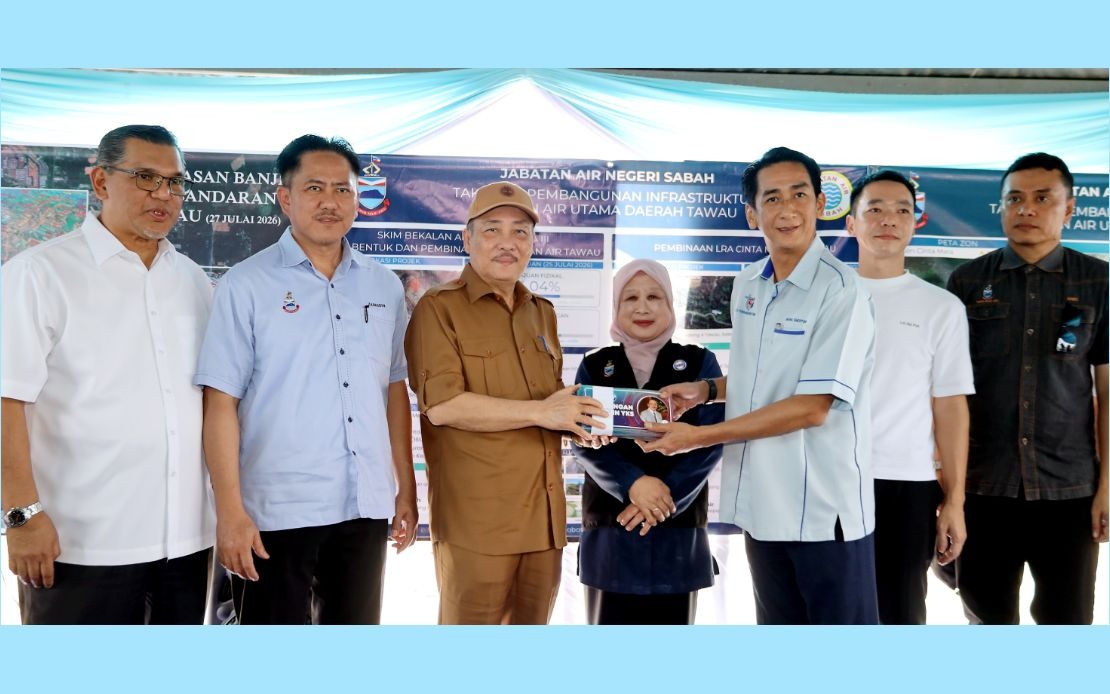
Sabah Chief Minister Datuk Seri Hajiji has announced a relief distribution totalling RM30,600 to households affected by flooding that struck Tawau in late July. The funds, channelled through Yayasan Kebajikan Sabah, were formally handed to Tawau Municipal Council president Mohd Shoffian Mohd Said, representing assistance reaching 102 heads of household in the municipality.
Each affected family has received RM300 from the donation, aimed at easing immediate financial pressures as communities begin recovery efforts. The timing of this assistance reflects the state government's recognition that flood damage typically imposes significant unexpected costs on households, from property repairs to replacement of damaged goods and emergency supplies. The per-capita allocation, while modest, represents a swift response mechanism designed to provide immediate relief during the critical period following a disaster.
The flooding that prompted this assistance occurred on July 25, forcing evacuations of 362 residents to the Dewan Serbaguna Kompleks Sukan Tawau relief centre. This scale of displacement underscores the severity of the weather event and the rapid mobilisation required from authorities to protect lives and establish temporary shelter. The coordinated evacuation demonstrates Sabah's disaster management infrastructure, though it also highlights ongoing vulnerabilities in flood-prone areas of East Malaysia.
In his statement, Hajiji extended formal recognition to the multiple agencies that coordinated response efforts during the emergency period. The acknowledgment encompassed the Civil Defence Force, Royal Malaysia Police, Fire and Rescue Department, Health Ministry, the Tawau disaster management committee, and various supporting organisations. This inclusive recognition reflects the multi-agency nature of modern disaster response, where emergency management depends on seamless coordination across civilian and military structures, health services, and local administrative bodies.
The Chief Minister emphasised that the collective efforts and cooperation of these diverse agencies proved essential to sustaining victim welfare throughout the disaster period. This acknowledgment carries particular significance in the Malaysian context, where coordination challenges between federal and state-level agencies, as well as between civilian and military responders, occasionally surface in post-disaster reviews. The explicit commendation suggests that Sabah's management of this particular emergency achieved the kind of integrated response that authorities aim for in crisis situations.
Tawau's vulnerability to flooding reflects broader geographic and climatic patterns affecting East Malaysia. The municipality's location and topography make it susceptible to intense rainfall events that can overwhelm drainage systems and swell watercourses rapidly. As climate patterns continue shifting and urbanisation increases surface runoff in developed areas, flood risk management has become an ongoing strategic priority for Sabah's state administration. The July 25 event represents one incident in a pattern of recurring seasonal flooding that affects various districts across the state.
The deployment of relief funds through Yayasan Kebajikan Sabah, the state's welfare foundation, indicates the institutional mechanisms available for rapid assistance distribution during emergencies. This channel enables the government to move beyond formal bureaucratic processes and provide direct support to affected populations through a dedicated charitable vehicle. Such foundations serve dual purposes: delivering immediate humanitarian relief and demonstrating government responsiveness to constituents facing hardship.
For Tawau residents, the RM300 allocation provides partial compensation for immediate losses and represents official acknowledgment of their suffering. While insufficient to cover total property damage in most cases, such assistance often proves crucial for purchasing essential supplies, repairing critical infrastructure within homes, or addressing immediate medical or food security needs. Recovery from flooding typically unfolds across extended timeframes, with initial emergency relief giving way to reconstruction phases that may involve insurance claims, government rehabilitation schemes, or community fundraising efforts.
The broader implications of this relief distribution extend beyond Tawau itself. As Southeast Asian nations confront increasing climate volatility and weather unpredictability, the capacity of sub-national governments to mobilise rapid financial response becomes increasingly important. Sabah's demonstration of capability in this instance offers operational insights for other Malaysian states and regional neighbours navigating similar disaster management challenges. The speed of fund distribution and the scale of coordination achieved suggest that Sabah has refined its emergency response protocols through repeated experience with seasonal hazards.
Looking forward, the July 25 flooding will likely inform future disaster preparedness planning in Tawau and surrounding districts. Authorities will analyse rainfall patterns, drainage capacity, evacuation procedures, and relief mechanisms to identify improvements. Climate adaptation at the municipal level increasingly requires investment in infrastructure resilience, early warning systems, community education, and pre-positioned emergency resources. The relatively contained scope of this particular incident—despite requiring mass evacuation—may reflect successful implementation of previous lessons learned from earlier flooding events.

