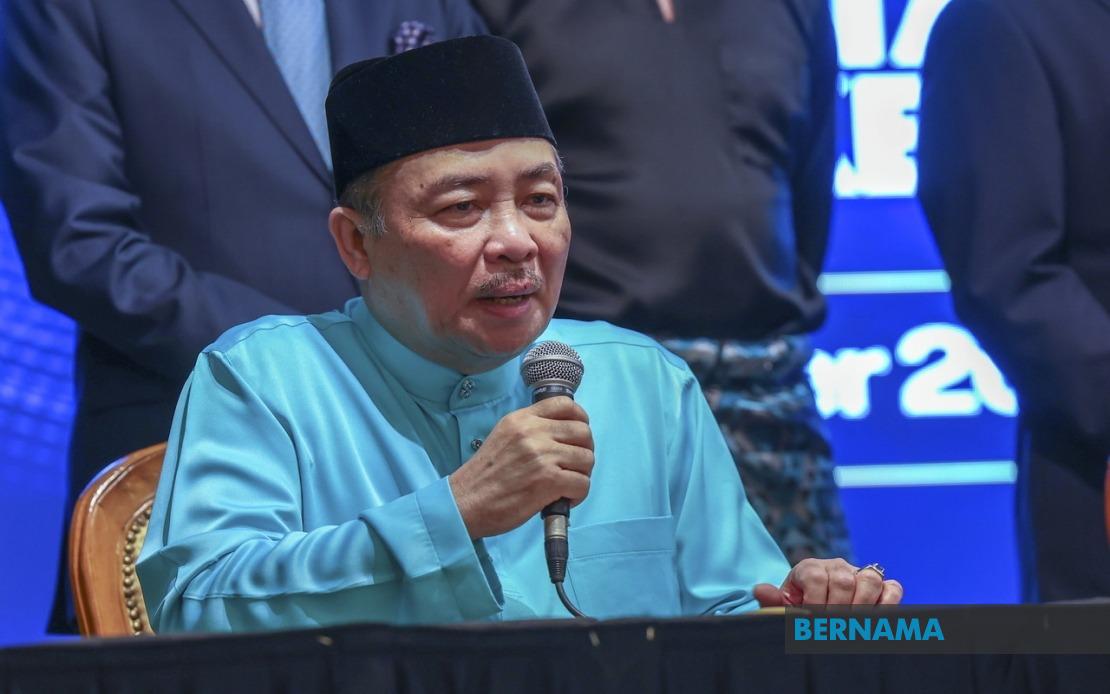
Sabah is channeling more than RM100 million into its scholarship infrastructure this year, a move Chief Minister Datuk Seri Hajiji Noor describes as fundamental to the state's long-term development strategy. The Sabah State Government Scholarship (BKNS) programme will simultaneously support thousands of current beneficiaries while extending financial assistance to nearly 2,200 new students across various educational levels. This investment reflects a deliberate policy choice to prioritize human capital development at a time when regional economies are becoming increasingly knowledge-driven and technology-dependent.
The cumulative impact of this scholarship scheme has grown substantially, with the total student population now receiving BKNS support reaching 13,389 individuals. This figure is significant because it demonstrates the widening reach of the state's education financing apparatus. For a state with Sabah's geographic challenges—including scattered populations across rural and urban areas—maintaining such extensive financial support requires sustained budgetary commitment and administrative coordination. The programme represents one of the most visible ways that state resources are being redistributed to individual households, particularly those with limited means to fund higher education independently.
A distinctive feature of Sabah's approach is its emphasis on Science, Technology, Engineering and Mathematics fields. As Hajiji noted, these disciplines command particular focus within the scholarship allocation strategy. This sectoral emphasis is not incidental; it reflects the state's economic development roadmap. With hydrocarbon reserves, expanding renewable energy sectors, and emerging technology industries, Sabah faces genuine skill shortages in technical fields. By directing scholarship resources toward STEM disciplines, the government is attempting to build a pipeline of qualified workers who can fill positions in these strategically important sectors when they graduate.
Beyond the flagship BKNS programme, the state government has constructed a broader ecosystem of education support mechanisms. Since 2021, Sabah has introduced fourteen distinct assistance initiatives designed to address different barriers to educational access and completion. The one-off Higher Education Institution Registration Cash Assistance (BUDI) helps students manage initial enrollment costs. The Special Examination Cash Assistance (BAKTI) targets examination-related expenses. The Ihsan Computer Assistance (BAIK) programme recognises that technology access has become fundamental to learning, particularly for distance and online education. The Sabah Student Flight Ticket Assistance (GRS-SUBFLY) addresses a unique challenge in the state—the need for students to travel between islands and from rural interior regions to education hubs in urban centres. The State Higher Education Student Contribution (SENTOSA) programme rounds out this portfolio.
This layered approach to education financing reflects sophisticated policy thinking. Rather than assuming a single cash transfer would solve access problems, Sabah's government has identified specific friction points—registration fees, exam costs, technology access, transportation—and created targeted programmes. This granularity matters because it suggests that policymakers have consulted with students and families about their actual needs, not merely imposed a one-size-fits-all solution. For Malaysian policymakers elsewhere, this model offers practical lessons about how to make education assistance genuinely responsive to beneficiaries' circumstances.
The timing of this announcement carries economic context. Hajiji explicitly linked the scholarship expansion to rising living costs and education expenses facing families. Malaysia's inflation rate has affected household budgets across the country, with education costs—tuition, accommodation, materials—among the most visible pressures. By increasing scholarships now, Sabah is directly counteracting these inflationary pressures for scholarship recipients. This is not merely distributional policy; it is cyclical economic management. During periods of rising prices, maintained or expanded education financing helps prevent talented students from dropping out due to financial constraints.
The emphasis on TVET and Artificial Intelligence within Hajiji's remarks about strategic fields is instructive. Technical and Vocational Education represents an alternative pathway to conventional university degrees, one that Southeast Asia has historically underfunded relative to academic tertiary education. By signaling that TVET qualifications are strategic, Sabah is working to elevate the status of vocational training among students and families. Similarly, the mention of Artificial Intelligence signals that Sabah's policymakers recognise the sector's importance to future economic competitiveness, even as AI adoption remains nascent in the region.
Energy sector focus—specifically oil, gas, and renewable energy—dominates Hajiji's articulation of priority fields. This is unsurprising given Sabah's resource endowments and its position as a hydrocarbon-producing state. However, it also raises questions about economic diversification. While scholarship policies can nudge students toward particular sectors, they cannot single-handedly create sufficient job opportunities upon graduation. Sabah's long-term prosperity depends not just on producing skilled energy sector workers, but on developing broader economic opportunities across services, digital industries, and manufacturing. Scholarship policy alone cannot address these structural challenges, though it represents an important first step.
From a comparative Southeast Asian perspective, Sabah's scholarship investment places it among more aggressive education investors in the region. While Singapore and Brunei have long histories of substantial education funding, Malaysian state governments vary considerably in their scholarship commitments. Sabah's RM100 million-plus allocation, when measured against the state's overall budget and population, represents a meaningful prioritization. Other East Malaysian states and peninsular states will be watching whether this commitment translates into measurable improvements in tertiary education attainment rates and graduate employment outcomes.
The broader policy implication concerns whether education financing alone can address skill gaps. Scholarship programmes work most effectively when complemented by quality improvement in schools and universities, career guidance systems, and employer engagement. Students might receive financial support to study engineering, for example, but still graduate with skills mismatched to industry needs if their educational institutions lack adequate facilities or industry-connected faculty. Sabah's next policy challenge will be ensuring that expanded access through scholarships is paired with educational quality improvements.
For Malaysian policymakers nationally, Sabah's approach offers a template for state-level education financing during economically challenging periods. Rather than reducing education support as costs rise, Sabah has expanded it, betting that human capital investment will yield long-term returns sufficient to justify current spending. Whether this bet proves sound will depend partly on factors beyond education policy—macroeconomic conditions, sectoral job creation, graduate retention—but also on the execution of these programmes and the quality of education they support.

