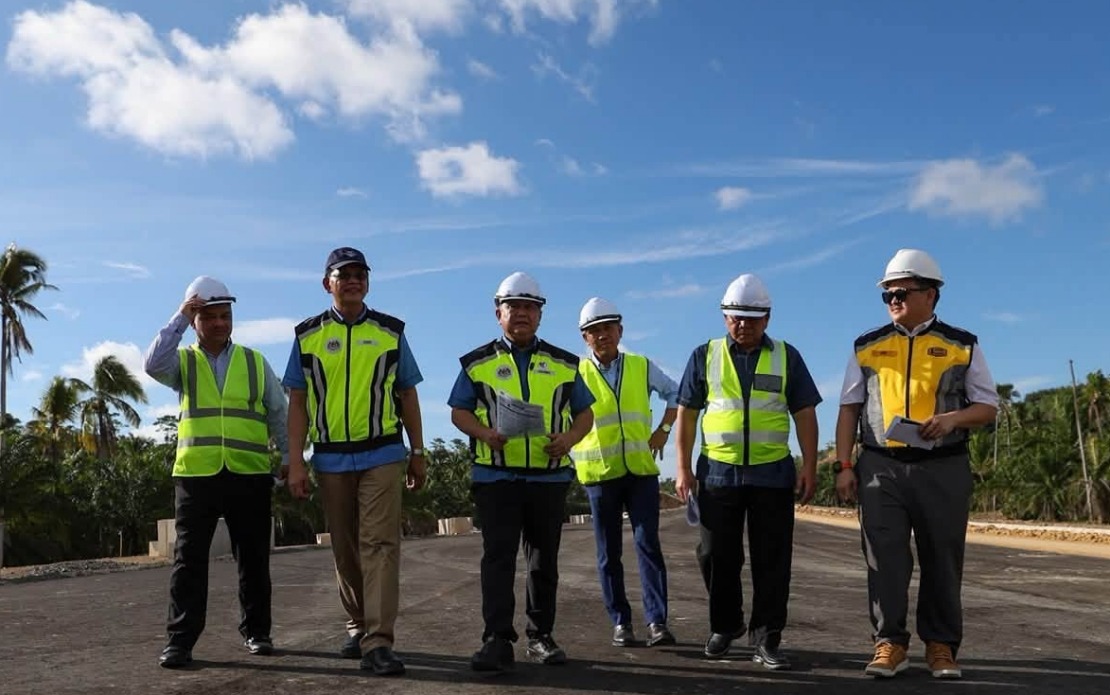
Malaysia's ambitious Pan Borneo Highway project in Sabah faces a critical juncture as the contractor tasked with Work Package 11 submits a comprehensive recovery plan to address scheduling challenges that have accumulated over recent months. The 7.3-kilometre alignment linking Rampayan Laut to Sarang has fallen 32 days behind schedule, prompting intensive coordination efforts among multiple government and private sector stakeholders to salvage the project's timeline and ensure delivery of this crucial infrastructure by its contractual deadline of September 29, 2026.
Works Minister Datuk Seri Alexander Nanta Linggi outlined the recovery strategy, emphasising the commitment of the Works Ministry alongside the Sabah Public Works Department, project consultants, and contractors to intensively supervise implementation efforts. The recovery plan aims to whittle down the accumulated delay to merely 14 days by August 2026, a substantial reduction that would represent significant progress in getting the project closer to its originally scheduled completion. This targeted intermediate milestone suggests confidence among project managers that focused effort can substantially arrest the backward momentum without requiring a formal extension to the overall completion date.
As of late June, the work package had reached 61.76 per cent physical progress, indicating that the majority of construction activities remain ahead, though the rate of advancement trails the original planned schedule by 4.35 percentage points. This gap, while seemingly modest in numerical terms, represents genuine concern for a linear infrastructure project where delays often compound as subsequent phases depend on completion of predecessor work. The ministry's willingness to publicly acknowledge both the delay and the recovery mechanism demonstrates a shift towards transparency in major project reporting, a practice increasingly expected by Malaysian taxpayers funding these substantial investments.
The underlying causes of delay reveal the complex coordination challenges inherent in modern highway construction across diverse terrain and multiple jurisdictions. Utility relocation has emerged as a primary bottleneck, requiring seamless collaboration between Sabah Electricity Sdn Bhd for power infrastructure, the Sabah State Water Department for water systems, and Celcom Timur Sabah Sdn Bhd for telecommunications networks. These organisations operate under different regulatory frameworks and commercial imperatives, creating natural friction points where project momentum can stall. Land acquisition complications compound these difficulties, as securing all necessary property rights along a 7.3-kilometre corridor involves negotiations with numerous private landholders and government entities, each with distinct interests and timelines.
Minister Nanta stressed that resolving these interconnected challenges demands genuine integration of effort rather than sequential problem-solving. The emphasis on proactive coordination suggests previous instances where stakeholders addressed issues in isolation, creating ripple effects that delayed subsequent work. This represents a critical lesson for future major infrastructure projects in Malaysia, where the multiplication of delays through poor coordination can rapidly transform manageable setbacks into project-threatening crises. The recovery plan's success will largely depend on whether the coordinating framework can translate stated commitment into daily operational reality across multiple organisations.
The strategic importance of this particular work package extends considerably beyond its physical dimensions or financial allocation. The Rampayan Laut-Sarang alignment fundamentally restructures connectivity in northern Sabah by introducing a direct route that eliminates up to 30 kilometres of travel distance to key destinations including Simpang Mengayau and Kudat. This geographical transformation translates into time savings ranging between 30 and 60 minutes for travellers, a reduction that meaningfully improves accessibility to remote areas and enhances the economic viability of commercial activities spanning the region. For a state with significant geographic challenges and dispersed population centres, such improvements represent disproportionately valuable infrastructure investments.
The broader development context reveals why this highway project attracts high-level ministerial attention. Northern Sabah contains substantial untapped tourism potential, as evidenced by the Northern Sabah Coastal Tourism Master Plan which depends partially on improved accessibility to justify private sector investment. The Pan Borneo project catalyses this development by effectively bringing previously peripheral locations within practical reach of major population concentrations and tourist markets. This infrastructure-first approach recognises that remote tourism destinations require baseline transportation networks before commercial ventures become viable, establishing a rational sequencing of public and private investment.
Beyond tourism considerations, improved connectivity generates broader economic multiplier effects throughout the region. Better highway access reduces logistics costs for agricultural and resource extraction activities, enhances labour market integration by making commuting practical over wider areas, and attracts manufacturing investment seeking locations with both lower operational costs and dependable transport connections to markets. For communities in Work Package 11's corridor, the completed highway represents potential access to employment opportunities concentrated in urban centres, while simultaneously allowing those centres to source agricultural products and services from more distant suppliers at reduced cost.
The minister's framing of the project as contributing to community wellbeing through quality, safety, and integrity standards reflects evolving expectations surrounding public infrastructure delivery in Malaysia. Beyond technical completion, Malaysian taxpayers increasingly demand that major projects meet contemporary safety standards, incorporate environmental protections, and demonstrate value-for-money expenditure of public funds. The RM167.48 million allocated to Work Package 11 represents a substantial investment requiring transparent demonstration that funds generate proportional public benefit, a standard that justifies the elaborate coordination and monitoring mechanisms now surrounding implementation.
The recovery plan submission marks a transition from problem acknowledgement to active remediation, though success remains contingent on sustained execution discipline across multiple organisations. The August 2026 intermediate milestone provides a concrete checkpoint for evaluating whether coordination improvements have genuinely addressed underlying bottlenecks or whether delays persist despite recovery efforts. Failure to achieve this intermediate target would signal fundamental coordination failures requiring more aggressive intervention, potentially including contract restructuring or escalated senior management involvement. Conversely, successful delay reduction would validate the recovery methodology and provide a replicable framework for other Pan Borneo work packages experiencing similar challenges.
For Malaysian readers and Southeast Asian observers, the Work Package 11 experience encapsulates broader patterns in regional infrastructure development. Large-scale connectivity projects remain essential for economic development across Southeast Asia, yet coordination challenges spanning multiple government agencies, private utilities, and contractors routinely generate delays and cost overruns. The Sabah experience demonstrates both the capacity of project managers to develop recovery strategies and the underlying systemic challenges that make such recoveries necessary. As Malaysia pursues ambitious infrastructure programmes including the Sabah-Sarawak Link Road and expanded Pan Borneo completions, the lessons from Work Package 11 delays will likely influence how future projects structure stakeholder coordination and accountability mechanisms to prevent similar scheduling difficulties.

