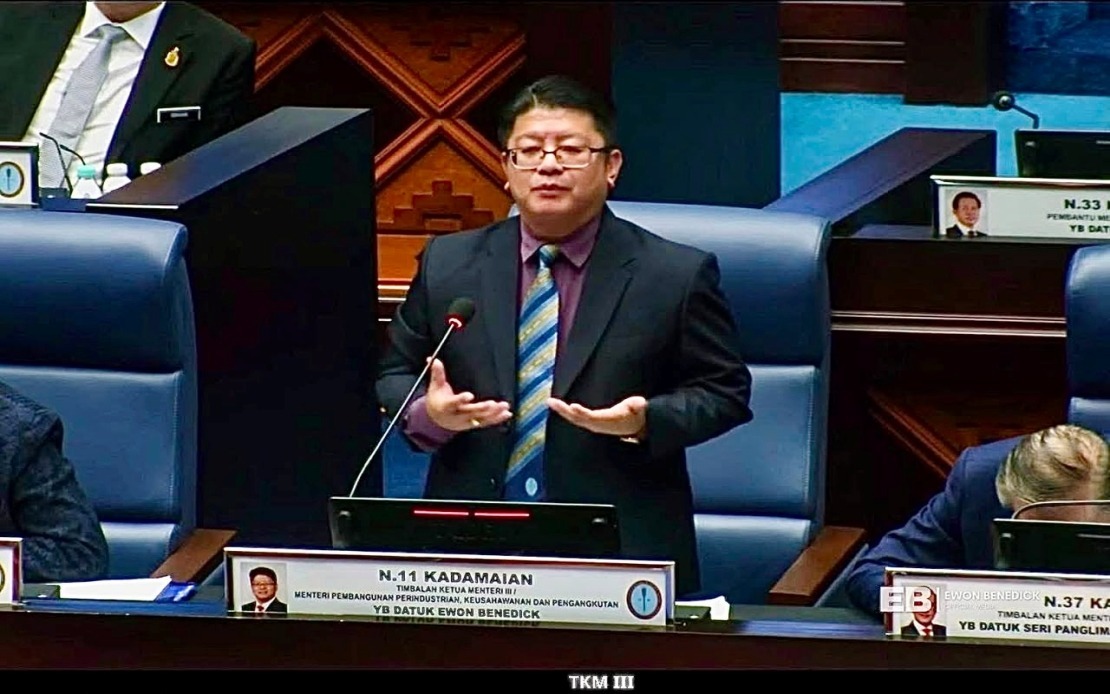
The Sabah state government has moved decisively to resolve a longstanding logistical problem at Sepanggar Port by introducing revised pricing mechanisms that have prompted owners to retrieve 103 previously abandoned containers. Deputy Chief Minister III Datuk Ewon Benedick outlined the intervention to the Sabah State Legislative Assembly on July 23, noting that some containers had accumulated at the facility for periods extending beyond 400 days, severely constraining operational capacity.
The core issue stemmed from a structural pricing imbalance that inadvertently encouraged containerowners to use the port as an economical storage facility rather than retrieving their units promptly. Under the former tariff structure, the cost of leaving containers idle at Sepanggar proved substantially cheaper than renting dedicated warehouse or depot space elsewhere, creating perverse incentives that gradually clogged the port with dormant cargo. This accumulation of idle containers consumed valuable berth space and equipment resources that could otherwise service active cargo operations, reducing the port's throughput and efficiency.
The new charging regime functions as a market-based deterrent by making prolonged storage economically unviable. By establishing a threshold of 21 days beyond which containers incur escalating fees, and coupling this with explicit notification that containers exceeding retention limits face regulatory disposal, the government created immediate pressure for owners to reclaim their property. When port authorities began enforcing these provisions, the response was swift; owners promptly retrieved their containers once faced with actual financial consequences and the prospect of loss.
Ewon, who holds the portfolio of Sabah Minister of Industrial Development, Entrepreneurship and Transport, characterised the clearance as vindication of the new approach. The removal of 103 containers liberated crucial port infrastructure and restored operational efficiency, particularly significant given Sepanggar's role as a key regional maritime gateway. The success demonstrates how properly calibrated pricing signals can resolve infrastructure congestion without requiring prohibitive enforcement actions or capital expenditure.
Recognising that port user communities had raised concerns about the tariff adjustments, Ewon signalled openness to ongoing consultation with industry stakeholders. The Ministry has established a structured dialogue mechanism incorporating representatives from port user associations, shipowners' organisations, and shipping industry bodies into a government task force. These monthly engagement sessions provide a venue for airing grievances, negotiating refinements, and developing solutions that balance the government's operational requirements against commercial operators' cost considerations. This consultative approach reflects recognition that sustainable port governance requires buy-in from the maritime community.
The legislative framework underpinning these operational changes received formal endorsement when the Sabah State Legislative Assembly passed the Sabah Ports (Privatisation) (Amendment) Bill 2026. The amendment addressed administrative machinery issues arising from portfolio restructuring within state government, transferring port affairs responsibility from the Sabah Ministry of Works and Utilities to the Ministry of Industrial Development, Entrepreneurship and Transport. Beyond this organisational realignment, the Bill harmonised definitional language across related statutes to ensure the Sabah Ports (Privatisation) Enactment 1998 and the Sabah Ports Authority Enactment 1981 operated on consistent terminological foundations.
The legislative sitting also processed two companion measures addressing indigenous governance structures. The Sabah Native Affairs Council (Amendment) Bill 2026 expanded the council's advisory mandate to encompass customary education and indigenous legal frameworks, supporting heritage preservation efforts. Significantly, the amendment created a dedicated position for Native Affairs Officers drawn from qualified state civil servants, tasked with receiving complaints, investigating allegations, and conducting proceedings related to customary law violations within the Native Courts system. This institutional innovation strengthens the apparatus for managing indigenous community affairs and ensuring equitable application of customary justice.
The District Chief, Native Chief and Headman Bill 2026 established comprehensive legal scaffolding governing the status, appointment procedures, responsibilities, financial entitlements, and oversight mechanisms applicable to these traditional leadership positions. The legislation stipulates that appointments flow through the District Officer's recommendation to the responsible minister, ensuring administrative continuity and accountability. Revocation provisions address incapacity, financial insolvency, criminal or customary law convictions, misconduct, and circumstances where officeholders cease residing within their designated jurisdictions, thereby maintaining the integrity of traditional governance structures.
For Malaysian and Southeast Asian shipping interests, the Sabah initiative carries broader implications regarding port efficiency and administrative responsiveness. Sepanggar Port serves regional maritime networks extending throughout Sabah, Brunei, and connecting routes to wider Southeast Asian trading corridors. Container congestion at such facilities cascades through supply chains, raising logistics costs and delays for exporters and importers across multiple economies. The demonstration that targeted pricing interventions can rapidly restore port functionality without massive capital investment offers a replicable model for other regional facilities grappling with similar challenges.
The resolution also reflects evolving governance approaches in Malaysian ports, where administrative bodies increasingly employ market-based mechanisms rather than pure command-and-control regulation. By creating financial disincentives for storage abuse while simultaneously establishing clear regulatory thresholds and enforcement procedures, Sabah's port authority aligned commercial logic with public interest in infrastructure utilisation. This hybrid approach—combining pricing signals, regulatory clarity, and stakeholder engagement—represents pragmatic management suited to the complexities of operating shared maritime infrastructure serving diverse commercial constituencies.
The consultation framework that Ewon emphasised underscores recognition that port policy implementation succeeds when industry participants understand underlying rationales and retain meaningful voice in refinement processes. As Malaysia positions itself for expanded regional trade and aims to enhance the competitiveness of its port infrastructure, the Sabah experience suggests that transparent communication, structured dialogue, and responsiveness to legitimate concerns strengthen both operational outcomes and stakeholder relationships essential for sustained maritime development.

