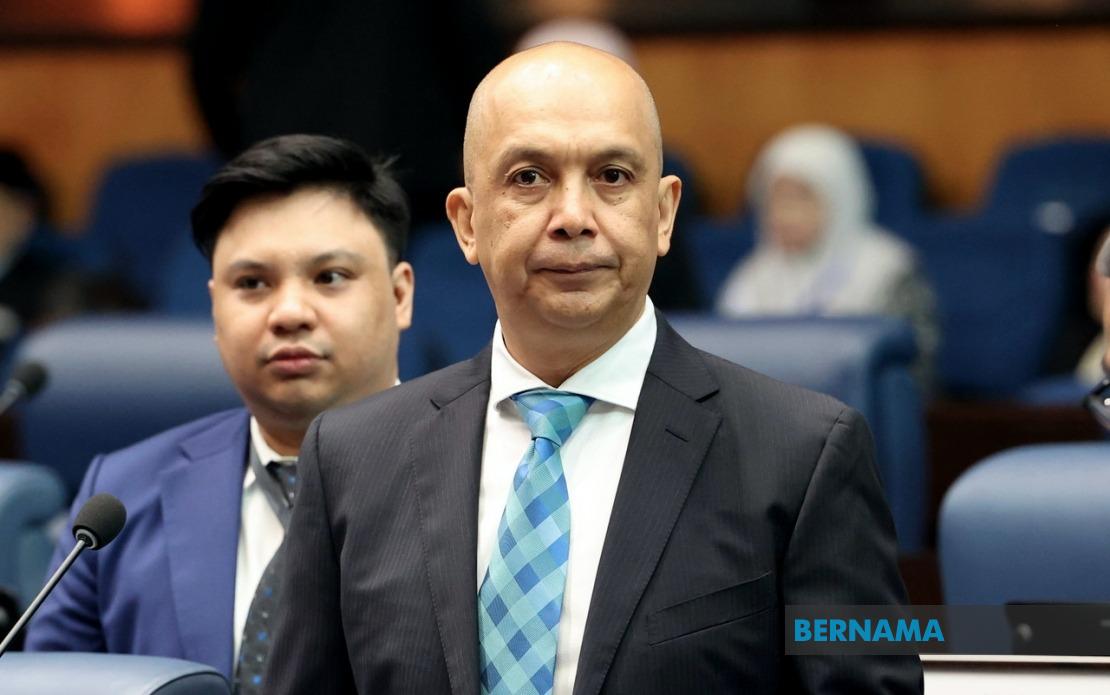
The Sabah government has secured RM600 million from the Federal Government's RM1.5 billion interim Special Grant, which was transferred on June 12, and is now urging Putrajaya to release the outstanding RM900 million within the remainder of 2024. According to Sabah Assistant Finance Minister II Datuk Mohd Ishak Ayub, the state is treating the current payment as a partial settlement only, explicitly rejecting any interpretation that this sum represents the final amount to which Sabah is entitled under the nation's constitutional framework.
The timing of this announcement reflects an ongoing negotiation between Sabah and the Federal Government over the state's rightful share of federal revenues. Prime Minister Datuk Seri Anwar Ibrahim had first announced the expanded interim payment during the Kaamatan Festival celebration on May 30, signalling a willingness to address long-standing grievances. The subsequent exchanges between both governments—recorded in correspondence dated June 9, 19, and 26—indicate continued dialogue aimed at finalising the arrangements. For Sabah, securing the full RM1.5 billion before the year concludes would provide immediate budgetary relief, though the state leadership remains fixated on the broader constitutional principle underlying its claims.
At the heart of this dispute lies Articles 112C and 112D of the Federal Constitution, which prescribe Sabah's entitlement to a fixed percentage of federal tax revenue. The state government has consistently stressed that the 40 per cent formula embedded in these articles must be honoured in full. By accepting the interim grant explicitly without prejudice to its constitutional rights, Sabah has adopted a carefully calibrated negotiating stance—accepting immediate funds while preserving its legal position for future claims. This distinction matters enormously, as it prevents acceptance of the interim payment from being construed as Sabah waiving or compromising its deeper demands.
For Malaysian observers, this dispute underscores the complex fiscal arrangements that underpin federalism in Southeast Asia's oldest constitutional monarchy. Sabah and Sarawak occupy a special constitutional position as former British colonies that joined Malaysia on specific terms; their revenue-sharing arrangements differ materially from those of peninsular states. The tension between interim pragmatism and constitutional principle reflects the genuine complexity of honouring historical agreements whilst managing contemporary fiscal pressures facing the federal government. When Putrajaya announced the increased interim payment, it acknowledged Sabah's legitimate grievances even while declining—for now—to implement the full 40 per cent formula.
The state's insistence on receiving the remaining RM900 million before December reflects both fiscal urgency and political calculation. Sabah faces substantial development needs and infrastructure commitments; the additional funds would enable the state to accelerate projects and ease cash-flow constraints that have periodically strained state services. Politically, securing the full interim amount within a single calendar year would demonstrate to Sabah voters that the current administration has successfully extracted concessions from Kuala Lumpur. The three-month window remaining in 2024 provides an achievable but not trivial deadline, creating meaningful pressure on federal authorities to act decisively.
Meanwhile, the state government continues to manage social welfare programmes within existing fiscal constraints. Sabah Assistant Minister of Women, Health and People's Wellbeing Datuk Rina Jainal confirmed that the state intends to maintain welfare assistance at between RM200 and RM350 per beneficiary, with any expansion contingent on improved financial circumstances. The eligibility thresholds have been adjusted modestly, with the household income ceiling rising from RM1,198 in 2025 to RM1,236 in the current year—a marginal increase reflecting inflation and cost-of-living pressures. These welfare adjustments, whilst incremental, are emblematic of how state governments must balance competing demands when federal allocations remain disputed.
The welfare framework in Sabah operates on two levels: state-funded assistance and federal programmes. Federal assistance rates are determined through the national budget process and announced by the Prime Minister during parliamentary budget presentations. State-level welfare, by contrast, remains more discretionary and susceptible to variations in state revenue. In Sabah's case, the capacity to expand welfare provisions beyond the current bands hinges substantially on whether—and how quickly—the RM900 million balance is disbursed. This creates a direct linkage between the constitutional revenue dispute and the lived experience of vulnerable households dependent on state assistance.
The broader regional implications deserve attention. Both Sabah and Sarawak have historically occupied pivotal positions in Malaysian politics, with their combined parliamentary seats often decisive in determining federal government stability. Recent years have witnessed growing assertiveness from both states in demanding constitutional entitlements, reflecting strengthened state-level political movements and populations increasingly conscious of their historical claims. If Sabah's revenue demands achieve positive resolution, similar pressure may intensify from Sarawak, whose constitutional position parallels that of Sabah. The federal government's willingness to advance interim payments—whilst simultaneously resisting full implementation of the 40 per cent formula—suggests Putrajaya recognises the political necessity of addressing these grievances whilst retaining flexibility on the ultimate outcome.
From an economic governance perspective, the RM1.5 billion interim grant should be evaluated within Malaysia's broader fiscal architecture. Federal revenues have come under sustained pressure from global economic volatility, declining commodity prices, and shifting tax collection patterns. The decision to offer interim payments acknowledges state grievances whilst allowing the federal government time to model comprehensive fiscal arrangements that balance constitutional obligations against macroeconomic constraints. However, this gradualist approach carries political risks; states may interpret delay as reluctance, potentially triggering escalated demands or confrontational posturing.
Looking ahead, the critical question is whether both parties can reach a sustainable agreement on the 40 per cent formula before the interim arrangement expires. Protracted negotiations may eventually require independent arbitration or binding legal determination, a scenario neither government appears keen to pursue. The pressure on federal authorities to disburse the remaining RM900 million before year-end is therefore substantial, as failure to do so would likely be characterised by Sabah as bad faith negotiation. Successfully completing the interim payment would also create momentum for addressing the underlying constitutional question, potentially through structured negotiations encompassing both Sabah and Sarawak simultaneously, thereby addressing equivalent claims from both east Malaysian states within a single policy framework.

