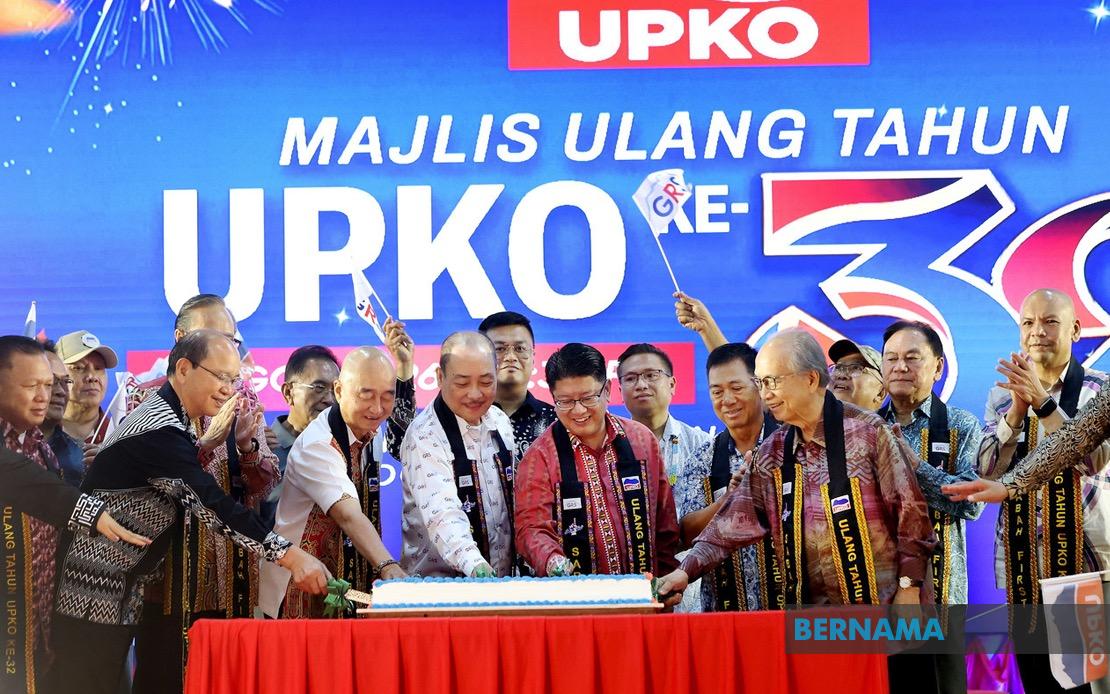
Sabah's Chief Minister Datuk Seri Hajiji Noor has pledged to funnel all revenue received from the Federal Government back into the state through a comprehensive package of public incentives, welfare support, and infrastructure development that directly benefit residents. Speaking at the 32nd anniversary celebration of the United Progressive Kinabalu Organisation (UPKO) and the 17th UPKO Triennial Delegates Conference in Kota Kinabalu, Hajiji outlined an ambitious spending roadmap centred on tangible improvements to daily life across the state.
The commitment comes on the back of a significant financial boost for Sabah, with the Federal Government increasing its interim special grant payment to RM1.5 billion annually. This represents a substantial injection of capital for a state that, while resource-rich, has historically faced infrastructure deficits compared to more developed peninsular regions. Hajiji welcomed Prime Minister Datuk Seri Anwar Ibrahim's decision to expand the interim payment, signalling improved federal-state cooperation in addressing Sabah's developmental needs.
Road and bridge construction emerges as the primary focus of the enhanced funding. Sabah's geography, characterized by vast distances between population centres and challenging terrain, has long necessitated investment in connectivity infrastructure. The commitment to build additional paved roads and concrete bridges addresses a fundamental constraint on economic activity and quality of life, particularly in rural areas where transport accessibility directly impacts access to education, healthcare, and markets. This infrastructure thrust represents the most visible and economically transformative use of the federal allocation.
Beyond roads, the state government intends to deploy funds toward essential utilities that remain unevenly distributed across Sabah. Improvements to water and electricity supply across the state address critical service gaps that have persisted despite years of gradual development. Water security remains a pressing concern in many districts, where dry seasons create shortages affecting households and businesses alike. Similarly, reliable electricity remains inconsistently available in peripheral communities, constraining economic opportunities and residential comfort.
The Rumah Mesra Sabah Maju Jaya (SMJ) housing initiative represents the welfare-focused dimension of the spending programme. This construction project aims to provide additional affordable housing units for lower-income households, addressing the acute shortage of adequate housing that remains endemic in many Malaysian states, including Sabah. The expansion of SMJ units signals recognition that infrastructure extends beyond transportation and utilities to encompass dignified shelter.
Complementing the housing initiative is the Sentuhan Kasih Rakyat (SYUKUR) programme, which focuses on direct assistance to vulnerable populations. Though specific details remain limited, such programmes typically target elderly residents, people with disabilities, and families below the poverty line through cash transfers, healthcare subsidies, or essential supplies. The dual emphasis on SMJ housing and SYUKUR assistance reflects a holistic approach to poverty reduction that combines structural interventions with immediate relief.
Hajiji's assurance that "whatever we receive from the Federal Government will be returned to the people" marks a departure from historical tensions between Sabah and Putrajaya over resource distribution and federal funding allocation. This rhetoric emphasizes transparency and accountability, addressing longstanding complaints from Sabahans that revenue generated within the state has not proportionately benefited local communities. By explicitly committing to reinvestment, Hajiji attempts to rebuild public confidence in state government stewardship of federal resources.
The state's own financial performance underpins this expanded spending capacity. Sabah has maintained annual revenue collection at approximately RM7 billion since 2022, with projections suggesting growth to RM8 billion in the current year. This consistent internal revenue generation demonstrates fiscal discipline and provides the state with autonomous financing capacity beyond federal allocations. The combination of stable state revenue and increased federal transfers creates a favourable fiscal environment for sustained development spending.
Sabah's positioning as a strategic investment destination hinges on infrastructure quality and economic resilience. Hajiji's emphasis on strengthening economic resilience despite "various domestic and global challenges" acknowledges headwinds facing the state economy, from commodity price volatility affecting palm oil and cocoa exports to global supply chain disruptions. Investment in roads, utilities, and housing creates the foundational environment necessary to attract both domestic and foreign investment. Potential investors assess regions not only on resource endowments but on the quality of infrastructure, stability of governance, and reliability of essential services.
The timing of this announcement carries political significance within Sabah's factional landscape. Hajiji's address to the UPKO delegates conference demonstrates his continued importance within the Sabah political establishment, particularly among Kadazandusun constituencies that form UPKO's historical base. By emphasizing federal financial cooperation and concrete developmental commitments, he reinforces his value as an interlocutor capable of securing central government support for state interests.
For Malaysian federalism more broadly, Sabah's enhanced interim special grant reflects evolving dynamics in centre-state fiscal relations. The increase suggests greater recognition of Sabah's claims for developmental equity, though whether this represents a permanent structural shift or cyclical adjustment remains unclear. Other states, particularly Peninsular constituencies facing their own infrastructure deficits, will monitor whether Sabah's improved allocation reflects changing federal priorities or reflects singular circumstances unique to Sabah's political positioning.
The effectiveness of these spending commitments ultimately depends on implementation capacity and project execution. Malaysian development projects, despite good intentions, frequently encounter delays, cost overruns, and quality issues. Monitoring how successfully Sabah transforms RM1.5 billion annually into completed roads, functioning water systems, and occupied housing units will determine whether Hajiji's pledge materializes into tangible improvement in residents' lived experience or remains aspirational rhetoric.

