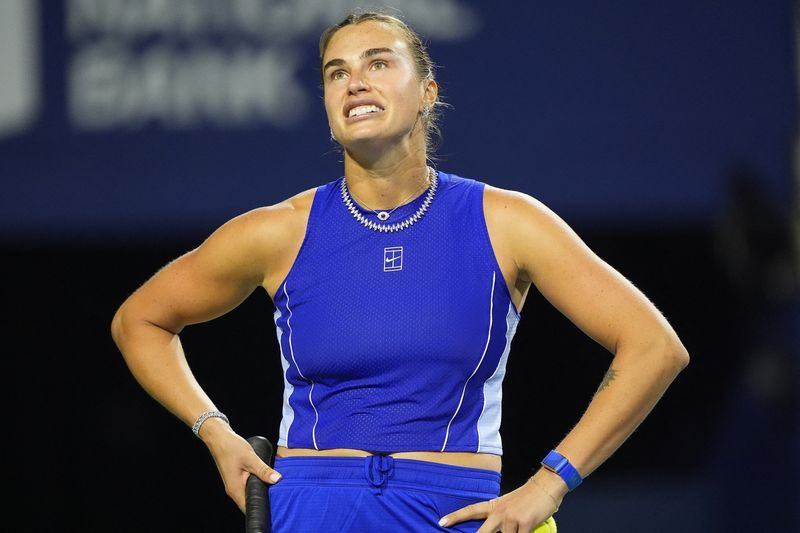
Aryna Sabalenka's bid to maintain momentum heading into the US Open has suffered a notable setback after the world number one was toppled by Russia's Ekaterina Alexandrova in the fourth round of the Canadian Open in Toronto. The 16th-seeded Alexandrova secured a hard-fought victory with a 7-6(3) 4-6 6-4 scoreline in a match that stretched just under two and a half hours, advancing to the quarter-finals of the hardcourt tournament. The result presents a cautionary moment for the Belarusian champion, who heads into the US Open later this month as the defending champion and a four-time Grand Slam winner seeking to build winning form before the year's final major championship.
The opening set proved fiercely competitive, with neither player able to establish decisive control. Sabalenka initially broke serve to forge ahead, but Alexandrova demonstrated remarkable resilience by clawing her way back into the set. Unable to consolidate her early advantage, Sabalenka was forced into a tiebreak where the Russian proved steadier under pressure, capturing the breaker 7-3 to claim the opening set. The loss of that first set would prove consequential, placing additional pressure on the top seed to recover and impose her rhythm on the match.
Sabalenka responded decisively in the second set, reasserting her authority with precise serving and aggressive groundstroke play. The world number one broke service at the 3-2 mark and consolidated that advantage to level the match at one set apiece. This recovery demonstrated the kind of mental fortitude expected of a top-ranked player, yet it would ultimately prove insufficient against an opponent playing with exceptional confidence and tactical discipline. Alexandrova had clearly identified opportunities within Sabalenka's game and was prepared to exploit them in the crucial moments.
The deciding third set became a battle of nerves and execution, with Alexandrova maintaining her composure even as the pressure mounted. As Sabalenka's unforced error count climbed, the Russian seized control of the set with early momentum. When Sabalenka served at 5-4, facing match point, she managed to save two opportunities through determined play. However, a double fault on the third match point proved fatal to her championship hopes, handing victory to Alexandrova and sending her through to the quarter-finals.
Alexandrova's post-match comments revealed a player acutely aware of the magnitude of her achievement. Speaking in her courtside interview, the Russian emphasized her point-by-point mentality, acknowledging that against an opponent of Sabalenka's calibre, opportunities are scarce and must be seized when they appear. She spoke candidly about her internal struggle after losing the second set, admitting she had momentarily doubted her chances before regrouping to claim the decisive third set. Her candid reflection on the psychological dimensions of the match highlighted the mental resilience required to topple one of the sport's most dominant players.
The upset carries particular significance given the timing within the tennis calendar. The Canadian Open represents one of the final major tuning opportunities before the US Open, and unexpected defeats at this stage can disrupt the carefully calibrated preparation schedules that top players construct. For Sabalenka, this loss means reassessing her approach before heading into Flushing Meadows, where she won last year and will be expected to mount another serious title challenge. The defeat also demonstrates that even elite players cannot afford complacency against determined mid-ranked opponents who execute their game plans with precision.
Alexandrova will advance to the quarter-finals to face Ukraine's Elina Svitolina, who produced a commanding performance to dispatch American eighth seed Amanda Anisimova 6-2 6-4. Svitolina's straightforward victory over a fellow seeded player contrasts sharply with Alexandrova's epic struggle, yet both represent the kind of disruption increasingly common in modern tennis where depth of talent throughout the rankings has improved substantially. The Svitolina-Alexandrova quarter-final will determine who reaches the semi-finals and potentially claims a spot in Toronto's championship match.
For Southeast Asian tennis enthusiasts and regional observers, Sabalenka's unexpected loss underscores the unpredictability of professional tennis at the highest levels. While Sabalenka remains the clear favourite for the US Open and remains the ranking's dominant force, this result serves as a reminder that tournaments are fluid, form is variable, and no player is immune from upset. The loss may ultimately prove beneficial if it forces Sabalenka to identify and rectify technical or tactical weaknesses before the US Open begins, or it could signal a momentary loss of rhythm that compounds into larger struggles. The coming weeks will clarify which narrative applies as the tennis calendar moves toward its climactic final major.
Sabalenka's withdrawal or reduced preparation at subsequent tournaments leading into the US Open will warrant close monitoring, as will her first-round opponent and early-round draw. The defending champion still possesses every resource necessary to claim a second consecutive US Open title, but psychological momentum and winning streaks matter in professional tennis. Alexandrova's upset victory has reminded the sport's elite that complacency and off-peak performances against determined opponents can derail even the most accomplished players' plans. How Sabalenka responds to this setback over the coming fortnight will significantly influence her trajectory heading into the year's final championship.

