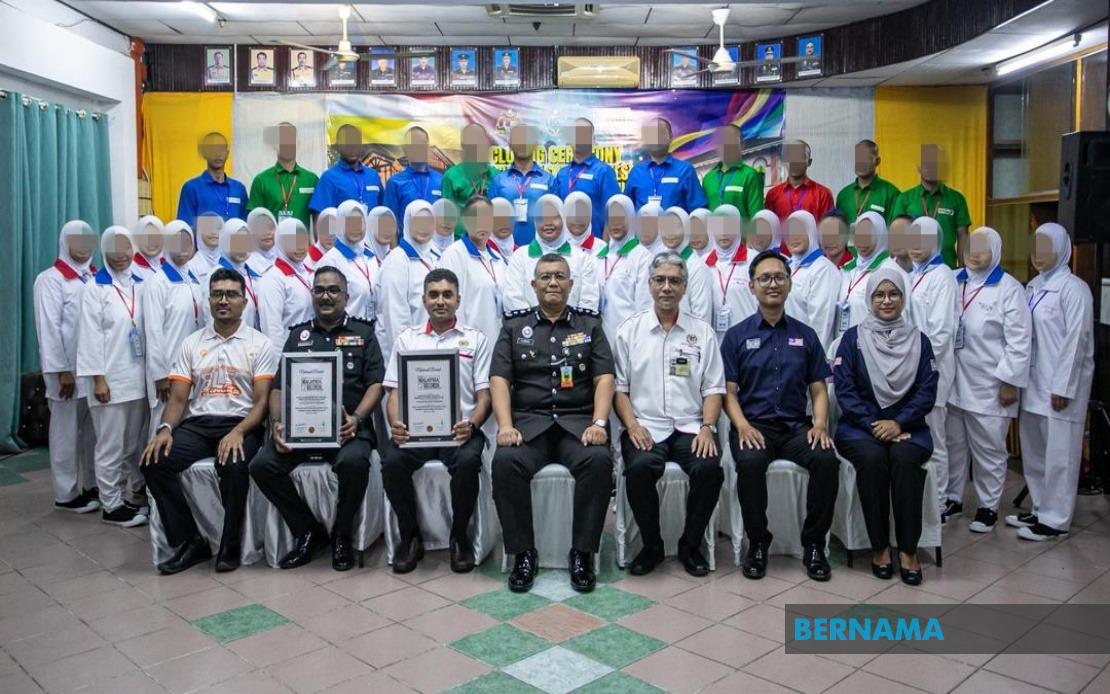
Home Minister Datuk Seri Saifuddin Nasution Ismail has praised the Malaysian Prisons Department for achieving a Malaysia Book of Records recognition following its pioneering Basic Life Support and Automated External Defibrillator training initiative at the Batu Gajah Correctional Centre. The achievement marks a significant milestone in the department's approach to inmate rehabilitation, with 42 detainees successfully completing the certified life-saving course.
The minister's commendation underscores a broader philosophical shift within Malaysia's correctional system, moving beyond the traditional framework of punishment-focused incarceration toward a comprehensive rehabilitation model. By recognising the achievement publicly through his Facebook statement on June 25, Saifuddin sent a powerful message about the government's commitment to transforming how the nation's prisons function within the justice system.
According to the Home Minister, the significance of this programme extends far beyond the technical skills acquired. The training serves as a vehicle for instilling humanitarian values, personal discipline, accountability, and self-assurance among incarcerated individuals preparing for their eventual return to society. These intangible outcomes represent a deliberate strategy to reshape prisoners' identities and perspectives during their tenure in correctional facilities.
The philosophy underpinning this initiative reflects a sophisticated understanding of criminology and rehabilitative justice. Rather than viewing prisons exclusively as custodial institutions designed to incapacitate and deter, the Malaysian Prisons Department increasingly positions itself as an educational and transformational entity. By enabling inmates to acquire recognised qualifications in emergency medical response, the system provides tangible evidence of personal development and creates opportunities for gainful employment post-release.
The selection of life-saving skills training represents a particularly strategic choice. These competencies carry inherent social value, placing graduates in the position of potential contributors to public safety and community welfare. An inmate who completes BLS certification emerges not merely as someone who has served their sentence, but as an individual equipped with recognised expertise that society desperately needs. This psychological reframing can prove instrumental in reintegration.
Saifuddin's emphasis on preparing detainees to become productive members of society reflects the Malaysian government's recognition that successful rehabilitation directly impacts public safety, social cohesion, and economic productivity. Prisoners who leave the system with marketable skills, self-confidence, and pro-social values are significantly less likely to reoffend. By extension, lower recidivism rates reduce the burden on the correctional system and law enforcement resources while strengthening communities nationwide.
The Malaysia Book of Records recognition itself serves an important symbolic function. Official acknowledgement of this achievement elevates the programme's profile, potentially encouraging replication across other correctional facilities. It also provides positive publicity for prison staff, countering negative perceptions that often accompany the correctional sector. Such recognition can boost morale among prison administrators and frontline officers who dedicate their careers to rehabilitation work.
For Malaysian policymakers and regional observers, this initiative demonstrates how creative programming can transform the prison environment into a space of positive development. The approach aligns with contemporary international best practices in correctional science, where emphasis on education, skills training, and psychological rehabilitation has proven more effective than purely punitive approaches in reducing reoffending rates.
The minister's statement indicates that the Prisons Department plans to expand similar high-impact programmes across its facilities. This expansion would require sustained investment in training infrastructure, qualified instructors, and programme coordination. It also necessitates close cooperation with external organisations that can certify training and provide curriculum support, creating potential partnerships between the public sector and civil society.
From a Southeast Asian perspective, Malaysia's focus on rehabilitative corrections offers a model worth examining. As the region grapples with overcrowded prisons and rising crime rates, alternatives to purely custodial approaches may prove increasingly valuable. The Batu Gajah initiative suggests that even within existing institutional frameworks, meaningful transformation is achievable through focused intervention and philosophical reorientation.
The implications for families and communities with incarcerated members are also significant. When correctional systems actively prepare individuals for successful reintegration, the entire ecosystem surrounding that person benefits. Reduced recidivism lessens the likelihood of family separation and intergenerational transmission of criminal behaviour, while improving employment prospects enhances family economic stability.
Looking forward, the challenge lies in scaling this model sustainably. The success at Batu Gajah must translate into system-wide change, requiring consistent funding, training capacity, and organisational commitment across Malaysia's correctional facilities. The Home Minister's public endorsement suggests political will exists, but implementation will depend on dedicated resource allocation and institutional adaptation.

