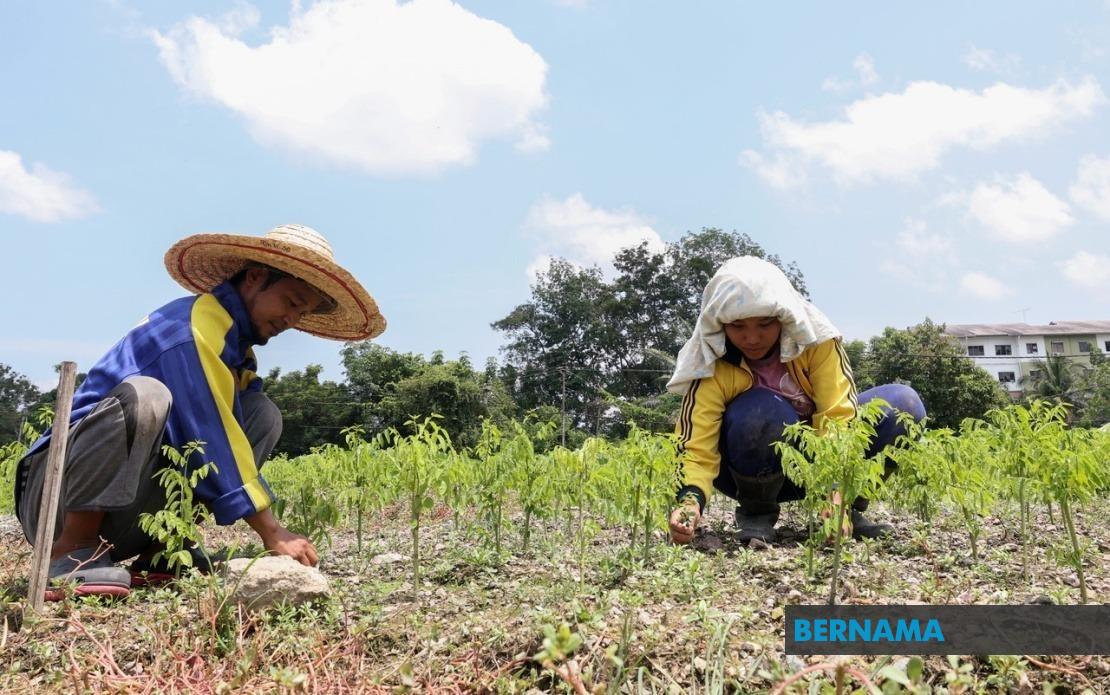
Agricultural communities across Malaysia are confronting significant production challenges as a prolonged heat wave sweeps through 17 regions nationwide, with Sabah's Sandakan district among the hardest-hit areas. The phenomenon has disrupted not merely the rhythms of daily life but inflicted measurable damage to farming operations, forcing growers to fundamentally restructure their cultivation practices in response to dangerously elevated temperatures.
Vegetable cultivator Firyanus Salamba, operating a farm in Batu 7 on the outskirts of Sandakan, has emerged as a stark example of the crisis confronting producers. The 33-year-old farmer explains that maintaining viable moisture retention in soil and plants has become dramatically more difficult, necessitating a threefold increase in irrigation frequency. What previously required a single daily watering cycle—adequate during normal seasonal conditions—now demands morning, midday, and evening applications to prevent crop desiccation. Despite this intensive labour-intensive regimen, his yields have contracted noticeably, undermining both productivity and economic viability.
Chilli production has proven particularly vulnerable to the extreme conditions. These thermally sensitive plants, already prone to stress in elevated temperatures, are succumbing at accelerating rates across affected farms. The combination of intense solar radiation and soil moisture depletion creates hostile growing environments that standard irrigation protocols cannot adequately compensate for, leaving cultivators facing potential substantial losses. Similar vulnerability affects other heat-sensitive crops including okra, sweet shoots, and mustard greens, though these demonstrate marginally greater resilience than capsicum varieties.
The metropolitan Meteorological Department's decision to invoke Level 1 hot weather alert status reflects the severity of current atmospheric conditions. This cautionary classification triggers when daily maximum temperatures consistently exceed 35 degrees Celsius for a minimum of three consecutive days. The breadth of the alert—encompassing five Sabah districts, eleven Peninsular Malaysian zones, and one Sarawak location—underscores how widespread and acute the phenomenon has become. Such coordination across multiple states indicates systemic atmospheric disruption rather than isolated regional weather variation.
Peninsula Malaysia's affected zones concentrate particularly in the east coast and central interior regions. Perak bears the heaviest burden with four designated areas: Larut and Matang, Kuala Kangsar, Kampar, and Batang Padang. Pahang hosts four additional locations: Kuantan, Raub, Temerloh, and Pekan. Kelantan records Kuala Krai, whilst Selangor includes Hulu Selangor and Gombak. These districts typically experience moderate temperatures year-round; the current extremes represent significant departures from established climatic norms.
Sabah's vulnerability extends across five separate administrative areas. Alongside Sandakan, the alert encompasses Telupid, Tenom, Pitas, and Beluran. Sarawak's Marudi represents the lone affected location in Malaysian Borneo. The geographical distribution suggests the heat phenomenon operates as a coordinated atmospheric system rather than discrete localised pockets, likely driven by high-pressure air mass positioning or reduced rainfall patterns that eliminate the mitigating influence of atmospheric moisture.
Flower nursery operators face equally daunting circumstances, though their challenges manifest through different mechanisms than field vegetable cultivation. Ornamental plant producers report mandatory doubling of irrigation schedules, with twice-daily watering now representing minimum maintenance requirements. Without such intensive attention, flowering specimens rapidly wilt and perish, rendering entire production cycles economically worthless. The nursery sector, already operating on tighter profit margins than staple food crop production, confronts potential revenue collapse if current conditions persist.
The cascading economic implications extend beyond immediate harvest losses. Farmers incur substantially elevated operational costs through elevated water consumption, diesel fuel expenditure for pump operations, and intensive labour allocation. Simultaneously, reduced yields and compromised crop quality diminish marketable output and realised prices. This dual pressure—rising costs coupled with declining revenues—threatens farm viability, particularly for smaller independent operators lacking financial reserves to absorb temporary setbacks.
Water availability itself emerges as a secondary crisis dimension. Agricultural demand already stresses water infrastructure systems across Malaysia during normal conditions. The extraordinary irrigation requirements now imposed by extreme heat may trigger competition with urban domestic water supplies and industrial consumers, potentially necessitating water rationing that would further compress agricultural productivity. Rural communities frequently occupy lower positions in water allocation hierarchies, making them vulnerable to prioritisation toward urban centres during shortage scenarios.
The timing of this heat episode raises concerns regarding broader climate pattern implications. While Malaysia traditionally experiences distinct dry seasons, the intensity and geographical scope of current temperatures suggest possible shifts in precipitation patterns or monsoon predictability. Agricultural planning cycles operate on historical climate assumptions; if these norms become unreliable, farmers face fundamental uncertainty in crop selection, planting schedules, and irrigation infrastructure dimensioning. Medium-term adaptation would require substantial capital investment in drought-resistant crop varieties, enhanced water storage capacity, and modified cultivation techniques.
The Malaysian Meteorological Department's alert system, whilst valuable for hazard awareness, addresses symptoms rather than underlying causes. Understanding the atmospheric mechanisms driving this heat episode—whether influenced by climate change trajectories, natural oceanic circulation patterns, or transient weather system positioning—becomes essential for developing genuine mitigation strategies. Current alert classifications facilitate public awareness but offer limited guidance for agricultural adaptation beyond basic heat-avoidance recommendations.
Farmers and policymakers face urgent coordination requirements. Agricultural extension services must rapidly disseminate proven drought-management techniques and heat-tolerant crop varieties to affected regions. Government intervention might include emergency water supply allocation to agricultural areas, temporary irrigation subsidies, or crop insurance mechanisms to cushion financial impacts. Without coordinated support, this weather crisis threatens not merely individual farm profitability but regional food security and rural community stability across multiple Malaysian states.

