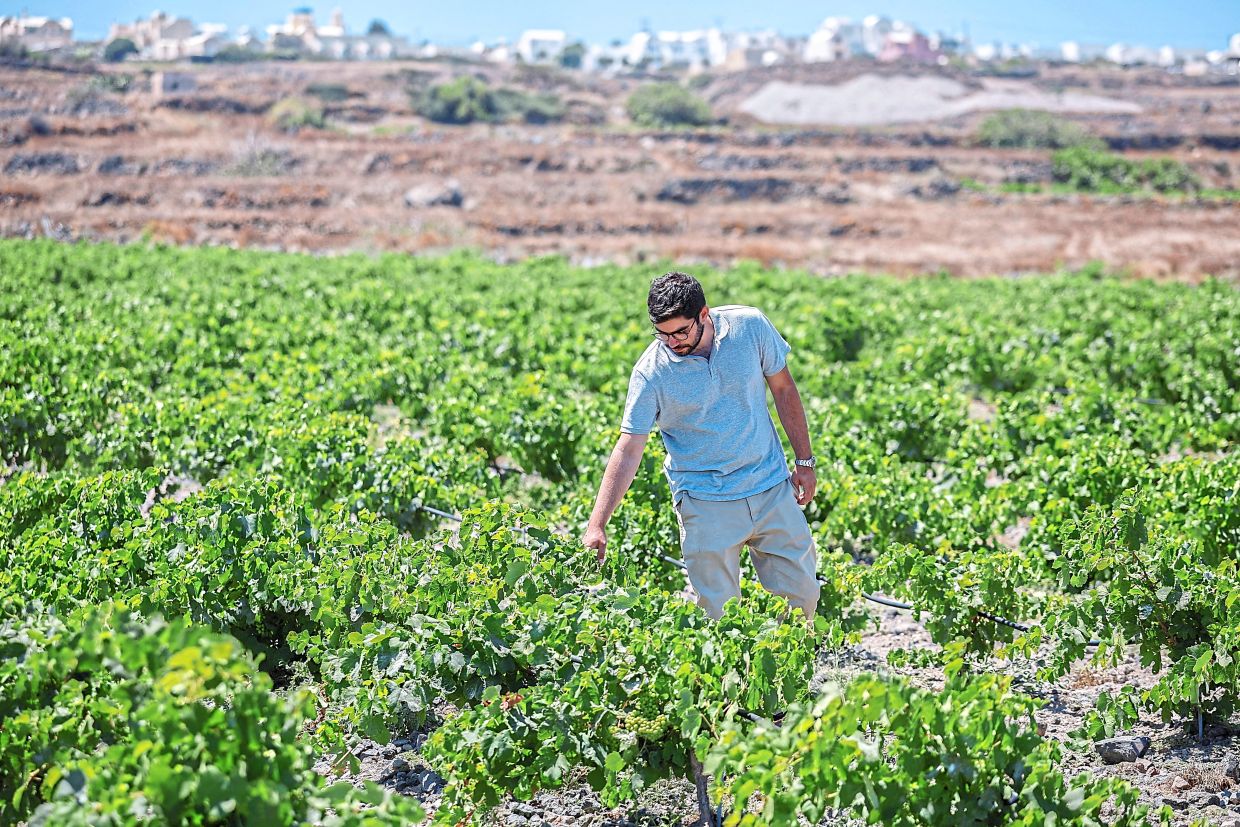
The iconic vineyards of Santorini are facing an existential challenge as climate change transforms the Greek island into an increasingly inhospitable environment for the ancient vines that have defined its agricultural identity for generations. A 90-year-old grapevine that winemaker Yiannis Boutaris once tended, trained into the traditional basket shape called a "kouloura" to shield its fruit from the merciless summer heat, has finally succumbed to the relentless combination of scorching temperatures and vanishing rainfall. The death of this single vine represents a broader crisis unfolding across Santorini's vineyards, where consecutive years of severe drought from 2023 through 2025 have decimated harvests, sent grape prices soaring, and precipitated an acute water shortage that now pits farmers against tourism operators competing for the island's depleted aquifers.
The economic and environmental pressures facing Santorini's wine sector illustrate a microcosm of Mediterranean agriculture's vulnerability to accelerating climate disruption. Rainfall has become unpredictable and sparse, while temperatures have reached their highest levels in six decades, according to Stefanos Koundouras, a viticulture professor at Aristotle University in Thessaloniki. These conditions have fundamentally altered the economics of grape production—prices have escalated sharply on Santorini, with buyers paying premium rates compared to the €0.80 per kilogram fetched for grapes in the cooler northern regions of Greece. For an island where wine production has been central to local culture and export revenue, the implications extend beyond individual harvests to questions about the long-term viability of viticulture itself in this corner of the Mediterranean.
Yiannis Boutaris, a sixth-generation winemaker who helms Domaine Sigalas, now part of the Kir-Yianni family of wineries, represents a new breed of Santorini producers unwilling to accept historical decline. Rather than abandoning the vineyard traditions his family has maintained for generations, Boutaris has pivoted toward adaptation, launching a pilot initiative with local authorities and scientific researchers that would recycle treated wastewater from residential buildings and hotels to irrigate grapevines. This approach, already in use among California's wine regions, offers potential advantages over the prohibitively expensive alternative of relying on desalination plants to generate fresh water for agriculture. The scheme addresses a critical tension: sustainability demands that Santorini's wine industry maintain its heritage while simultaneously acknowledging that 20th-century methods are incompatible with 21st-century climate realities.
Beyond wastewater recycling, Boutaris is experimenting with multiple cultivation techniques designed to optimize water efficiency and reduce vulnerability to heat stress. One initiative involves replanting vines in organized rows rather than following the traditional scattered layout, a restructuring that facilitates more controlled and efficient irrigation distribution. Additionally, Boutaris is testing atmospheric water harvesting technology—a process that captures ambient moisture using hydrogels and then releases that water when solar panels generate heat—representing a creative fusion of ancient agricultural principles with contemporary renewable energy infrastructure. These pilot projects, though modest in scale, signal recognition that Santorini's wine future depends on technological innovation and willingness to modify centuries-old practices.
The water scarcity affecting Santorini exemplifies a broader competition for finite resources across Mediterranean islands during peak summer seasons. When tourism reaches its annual crescendo, Santorini experiences acute strain as millions of visitors arrive to experience the island's famous sunsets and archaeological treasures, simultaneously driving demand for water to fill swimming pools, service hotels, and maintain restaurants. Farmers find themselves in a precarious position, negotiating with hospitality operators and municipal authorities for adequate water allocations while simultaneously trying to salvage their harvests. This seasonal competition underscores how climate change intersects with tourism development, creating complex resource allocation challenges that transcend agricultural policy and implicate island governance more broadly.
Another winemaker, Yiannis Papaeconomou, has adopted complementary strategies that focus on reducing water loss through evaporation and improving irrigation efficiency. His subsurface irrigation system delivers water directly to vine roots rather than spraying from above, minimizing wasteful evaporation that occurs in the intense summer heat. Concurrent with this investment, Papaeconomou has modified his trellising—the framework supporting grapevine growth—to enhance access for targeted watering. For a producer with relatively young vines only six years old, these decisions have been integrated into vineyard planning from inception rather than retrofit onto existing infrastructure, potentially offering a template for other Santorini producers contemplating major restructuring of aging vineyards.
The viticulture crisis on Santorini gains additional significance when contextualized within broader European wine production trends. Stefanos Koundouras emphasizes that Mediterranean wine regions face systematic threats from climatic change, warning that the sector could experience widespread sustainability problems if current warming and drying trends persist. Quality metrics are already deteriorating, with Koundouras noting visible declines in both the organoleptic characteristics and distinctive regional identity that consumers associate with Mediterranean wines. For regions like Santorini, where appellation status and terroir-driven marketing form the foundation of brand value and premium pricing, any erosion of wine quality represents not merely an agricultural setback but a commercial and cultural threat.
The wastewater recycling project and associated technological innovations emerging from Santorini merit attention from policymakers and agricultural economists across Southeast Asia, where climate variability and water stress increasingly challenge farming communities. Malaysia and neighboring countries face parallel pressures from intensifying heat, shifting rainfall patterns, and competing demands for water from agricultural, industrial, and residential sectors. While Santorini's solutions—wastewater treatment, atmospheric water harvesting, and strategic restructuring of crop patterns—may require modification for tropical contexts, the underlying principle of innovation-driven adaptation rather than resigned abandonment offers a valuable conceptual framework. The political will demonstrated by Boutaris and Papaeconomou to collaborate with scientists and authorities on experimental approaches suggests that sectoral resilience requires leadership engagement at producer level, not merely top-down policy mandates.
The future of Santorini's wine industry hinges on whether these pilot initiatives can be scaled, refined, and replicated across the island's broader vineyard landscape. Success would require not only continued investment in new infrastructure and research but also cultural and commercial adjustments among producers accustomed to established methods. The challenge extends to regulatory frameworks that may need modification to permit widespread wastewater irrigation while maintaining public health standards, and to economic structures that currently price water in ways that may discourage agricultural usage relative to tourism. Boutaris's conviction that adaptation need not entail abandonment of tradition carries both practical and symbolic weight—the viability of Santorini's wine sector may ultimately depend on cultivating this philosophical balance between heritage preservation and innovative transformation, a lesson with resonance far beyond this Greek island's sun-scorched vineyards.

