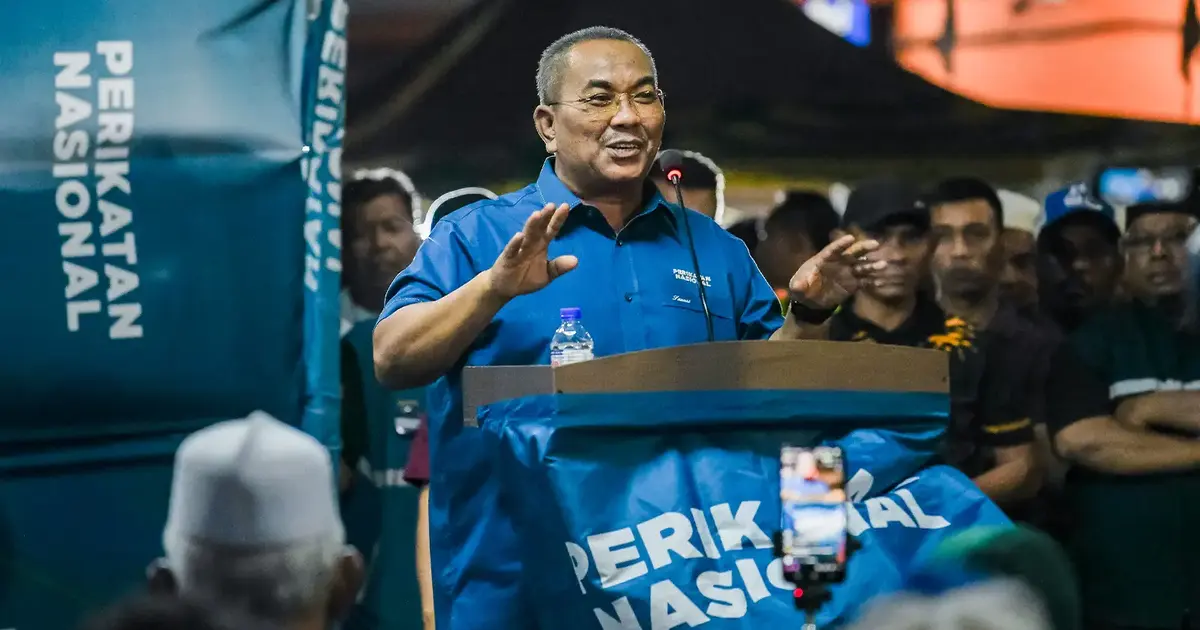
The Kedah menteri besar Sanusi Md Nor's latest pronouncements have ignited fresh scrutiny of the Barisan Nasional-Perikatan Nasional political alliance, raising questions about the durability of a partnership that has reshaped Malaysia's political landscape in recent years. Yet beneath the headline-grabbing controversy, a more nuanced picture emerges: political observers are sharply divided on whether the remarks will translate into measurable shifts in voter behaviour or fundamentally destabilise the coalition architecture that currently governs much of the country.
The timing of Sanusi's statement carries particular significance given the fragile nature of BN-PN cooperation. Since their effective alliance solidified following the 2022 general election, the two blocs have maintained a workable but often uneasy relationship, marked by competition for influence within federal structures and periodic tensions over resource allocation and cabinet positions. The Kedah leader's intervention appears to have reopened fault lines that coalition managers have been carefully managing, suggesting that underlying grievances within the partnership remain volatile and capable of surfacing at unexpected moments.
Sanusi, who leads PKR-affiliated Amanah's political rival Bersatu in Kedah and commands significant influence within PN circles, occupies a peculiar position within Malaysia's current political architecture. His statements carry weight disproportionate to his formal position because they often reflect broader sentiment within Perikatan's leadership regarding the terms of engagement with Barisan Nasional. When the Kedah menteri besar speaks on coalition matters, observers typically interpret his words as testing ground for positions that PN leadership may be considering more broadly, making his recent remarks potentially consequential for alliance negotiations.
Analysts emphasizing the controversy's significance point to the immediate friction visible between BN and PN figures responding to Sanusi's comments. Coalition members have issued sharply worded rebuttals, with some interpreting the remarks as an attempt to reassert PN's leverage in ongoing negotiations over government restructuring and resource distribution. From this perspective, Sanusi's statement represents not an isolated incident but rather escalation in a longer pattern of coalition strain that risks undermining the partnership's cohesion heading into future political contests.
However, a contrasting school of thought among Malaysian political analysts counsels against reading too much significance into what they characterize as routine political theatre. According to this interpretation, both BN and PN leadership have developed sufficient mechanisms to contain such flare-ups before they metastasize into genuine crisis. The fact that the controversy has remained largely confined to elite-level discourse, without spiralling into coordinated grassroots mobilization or defections, suggests that the alliance possesses adequate shock absorbers to weather periodic friction without structural damage.
The impact on voter sentiment represents perhaps the most contested terrain in assessing Sanusi's remarks. Some analysts argue that Malaysian voters have become increasingly sophisticated in distinguishing between coalition management disputes and substantive policy disagreements. Urban and younger voters especially appear capable of compartmentalizing intra-alliance squabbles from their electoral calculations, focusing instead on government performance and service delivery. From this angle, Sanusi's statement may generate media coverage and parliamentary theatre without penetrating the consciousness of swing voters whose choices will ultimately determine electoral outcomes.
Other observers, however, contend that persistent coalition friction risks cumulative damage to voter confidence in Barisan Nasional and Perikatan Nasional governance. They suggest that although any single controversy may not dramatically shift voting patterns, the accumulation of perceived instability and leadership disagreements gradually erodes the bedrock of competence and reliability that these coalitions have attempted to project since 2022. In this interpretation, the real danger lies not in immediate electoral consequences but in creating an environment where opposition narratives about governmental dysfunction gain traction through repeated demonstration.
Geographically, Sanusi's position as Kedah menteri besar adds a regional dimension to the analytical complexity. Kedah represents a crucial battleground state where BN and PN compete intensely for influence. The menteri besar's prominence in state-level politics means his statements carry implications extending beyond federal coalition management into the competitive dynamics of Northern Region politics, where PN has increasingly challenged BN's traditional dominance. Any visible cracks in the BN-PN partnership inevitably reverberate through these regional power structures, where local politicians constantly calibrate their own positioning based on perceptions of coalition stability.
The coalition's broader context further illuminates why analysts struggle to reach consensus on Sanusi's remarks. Malaysia's transition to coalition-based governance following the erosion of BN's supermajority has created an environment where managing internal party and bloc tensions has become central to governing. The current arrangement, while providing governmental stability, inherently generates friction as coalition partners negotiate competing priorities and compete for credit for popular policies. Sanusi's comments emerge within this structural reality rather than as an aberration, making their significance largely dependent on whether they signal genuine breakdown or represent normal coalition friction.
Moving forward, the trajectory of this controversy will likely depend on whether BN and PN leadership actively move to defuse tensions or allow them to simmer. Coalition stability ultimately rests not merely on structural incentives but on leadership decisions to prioritize partnership maintenance over short-term factional advantage. Whether Sanusi's remarks catalyse meaningful re-negotiation of coalition terms or fade into the background of Malaysian politics will hinge on actions taken in coming weeks by senior figures within both blocs. For Malaysian voters and investors assessing political stability, this period of elevated coalition scrutiny demands close attention to signals of either reconciliation or accelerating fragmentation.

