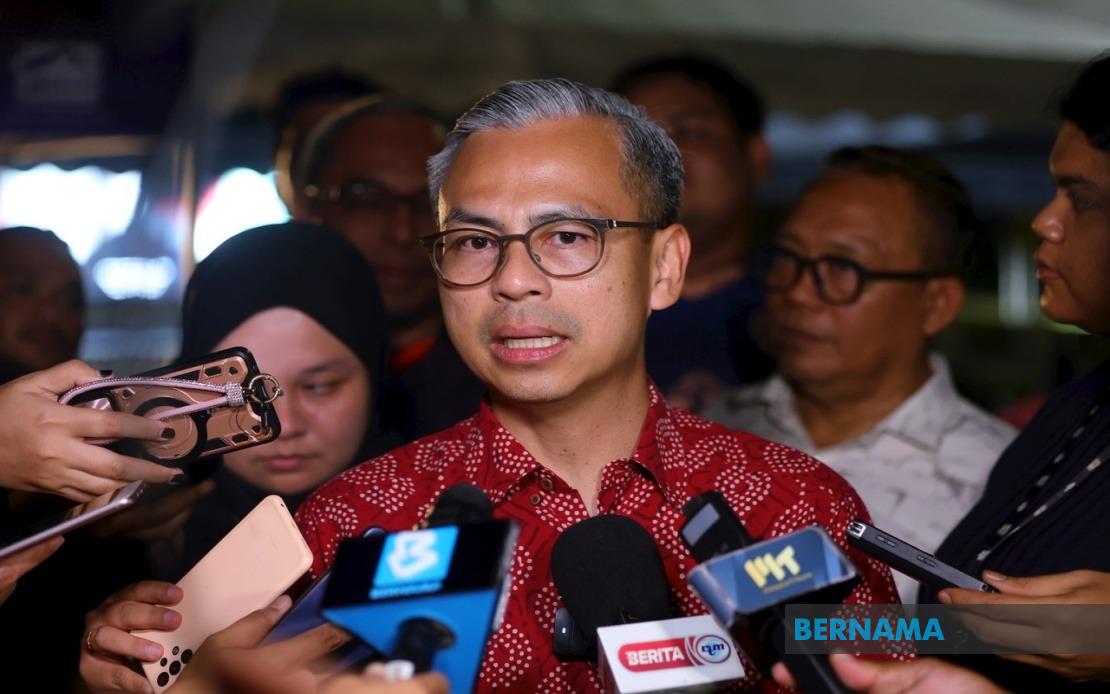
Pakatan Harapan communications director Datuk Seri Fahmi Fadzil has condemned remarks made by Kedah Menteri Besar Datuk Seri Muhammad Sanusi Md Nor regarding Malaysia's racial composition, asserting that such statements exemplify a wider pattern within the PAS leadership of weaponizing communal sensitivities to deepen societal divisions. Speaking to reporters in Jempol on July 25 during the Wayang Pacak community programme, Fahmi emphasized that responsible governance demands a commitment to building bridges across ethnic and religious lines, not constructing barriers that fragment the nation's diverse population.
Fahmi pointed to a troubling consistency in PAS messaging on identity issues, noting that previous statements from the party president himself have similarly touched on immigration controversies in ways calculated to stoke anxiety and resentment. He underscored that Malaysia's democratic maturity and decades of independence should have moved the political discourse beyond such divisive rhetoric. The Communications Minister argued that leaders must demonstrate genuine commitment to acknowledging the country's multicultural fabric rather than advancing narratives that emphasize differences and historical grievances. This approach, he suggested, ultimately weakens rather than strengthens the nation's social cohesion and institutional stability.
The controversy centered on Sanusi's assertion that Malaysia, as Tanah Melayu, belongs exclusively to the Malays, and that other ethnic groups possess ancestral homelands in India and China. Sanusi, who also serves as the central PAS election director, articulated these views during a joint Barisan Nasional and Perikatan Nasional Premier Talk held in Jempol on July 24 coinciding with the Negeri Sembilan state election campaign. The comment immediately drew criticism for its essentialist framing of national belonging and its implicit suggestion that non-Malay citizens occupy a subordinate status within Malaysia's constitutional and moral framework.
Fahmi's rebuke reflects a fundamental disagreement between Pakatan Harapan and PAS regarding the proper role of ethnicity and religion in political discourse. Where PAS appears to view identity-based appeals as legitimate electoral strategy, the government coalition contends that political leaders bear a special responsibility to transcend parochial appeals in favor of messages emphasizing shared citizenship and collective prosperity. For Malaysian observers watching the Negeri Sembilan state election unfold, this clash reveals deep philosophical differences about how the country should resolve the tension between respecting group identities and maintaining an overarching sense of national purpose that encompasses all communities.
Fahmi also addressed separate comments from MARA chairman Datuk Dr Asyraf Wajdi Dusuki, who had speculated that DAP secretary-general Anthony Loke might be positioned as a Menteri Besar candidate should the incumbent, Datuk Seri Aminuddin Harun, lose the state polls. Fahmi demanded an apology, noting that the Negeri Sembilan state constitution has long reserved the Menteri Besar position for Malays since its original enactment. The demand underscores a critical distinction: while Fahmi himself invoked constitutional provisions to rebut what he characterized as an inflammatory suggestion, he simultaneously lambasted Sanusi for making inflammatory statements about constitutionally enshrined Malay-Muslim prerogatives. This apparent tension reveals the delicate balance political leaders must navigate when discussing communal rights and national identity in a pluralistic democracy.
When asked about former Rembau MP Khairy Jamaluddin's assertion that Pakatan Harapan commands only approximately ten percent support among Malay voters in Johor, Fahmi dismissed the prediction as inapplicable to Negeri Sembilan's distinct political and demographic terrain. He expressed confidence in Aminuddin's administration, citing its demonstrated commitment to advancing the welfare of all citizens irrespective of ethnic background. This response highlights how state-level elections have become crucial proving grounds for testing competing narratives about which political coalitions can effectively govern multiethnic societies. The Negeri Sembilan contest thus carries implications extending well beyond the state itself, potentially influencing how voters throughout the peninsula assess the competing visions represented by Pakatan Harapan and the opposition blocs.
Separately, Fahmi characterized recent speculation from UMNO deputy president Datuk Seri Mohamad Hasan about the possible timing of Malaysia's sixteenth general election as merely personal opinion rather than government policy. He clarified that the Cabinet has not discussed calling elections before the scheduled timeframe, and he emphasized that Prime Minister Datuk Seri Anwar Ibrahim and his administration remain focused on stabilizing the economy and managing the consequences of geopolitical turbulence in West Asia. This statement appears designed to temper expectations among those hoping for an early dissolution, while simultaneously positioning the government as statesmanlike and concerned with substantive governance rather than political maneuvering.
The broader significance of Fahmi's comments extends beyond immediate party politics to encompass fundamental questions about how Malaysia's plural society will be governed in coming years. The contrast between Fahmi's appeals for unity and Sanusi's assertions about Malay exclusivity encapsulates a deeper debate about whether Malaysian politics can transcend identity-based mobilization in favor of issue-based competition focused on delivery and competence. As the Negeri Sembilan state election proceeds and as Malaysians contemplate the approaching general election, the resonance of these competing narratives with voters will substantially determine the trajectory of governance and national development for the coming parliamentary term.

