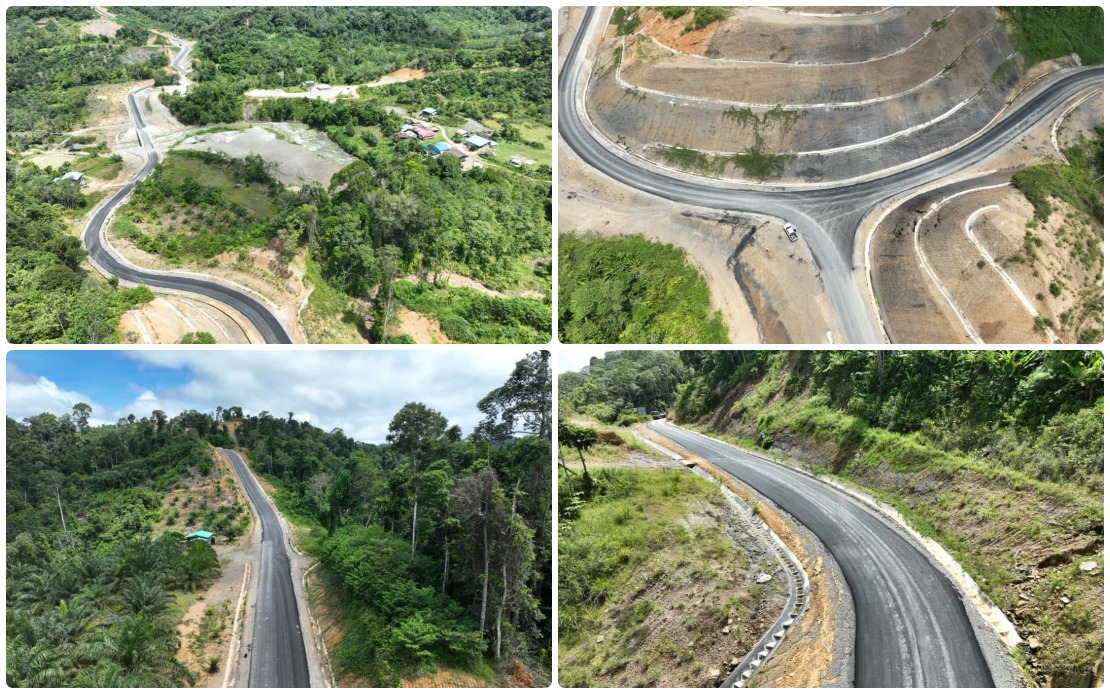
The completion of the Sapulut-Salong-Pagalungan-Pensiangan road corridor marks a significant milestone for Sabah's interior development, with the highway now extending fully to Pensiangan town. The accomplishment, confirmed during a recent inspection by Natural Resources and Environmental Sustainability Minister Datuk Seri Arthur Joseph Kurup, represents the fulfilment of an electoral pledge he made while campaigning as Member of Parliament for the Pensiangan constituency.
The transformation this road has brought to the region is immediately visible. Where previously the waterways dominated local transport, with boats being the primary mode of travel, the improved road surface has encouraged vehicle ownership and mobility. Kurup noted the striking difference between his earlier parliamentary visits and the current landscape, observing that vehicles now line the streets and car parks of Pensiangan town rather than the boats that once characterised the settlement's transport ecosystem.
The time savings delivered by this infrastructure are substantial and carry practical implications for service delivery across the region. The journey from Keningau, the nearest major town, has been compressed from over six hours to a mere three hours. This reduction eliminates the hazards that characterised previous travel—including the risk of being stranded on roadside during inclement weather—and creates more reliable conditions for professionals working in remote areas. Teachers, medical practitioners, and nursing staff can now reach Pensiangan more predictably, addressing a chronic challenge in rural service delivery across Southeast Asia's less developed regions.
The economic implications extend beyond mere convenience. According to Kurup, the improved road access is already encouraging demographic reversal in the constituency. Younger residents who had previously migrated to urban centres in search of opportunity are returning to their home villages, intent on developing agricultural land and participating in local economic activities. This pattern, while modest in scale, suggests that infrastructure investment can help retain population in vulnerable rural areas rather than accelerating the urban drift that has characterised development across the region.
The completion to Pensiangan town represents Phase Three of a more ambitious long-term development vision for the interior. Kurup has positioned the road project within a broader master plan for transforming the Pensiangan parliamentary constituency over the coming years. The subsequent Phase Four will extend the highway network to the border with Indonesian Kalimantan, a development with potentially significant cross-border trade implications and tourism potential that could reshape the economic positioning of this historically isolated area.
The broader development framework encompasses numerous complementary projects designed to create an integrated infrastructure ecosystem in the region. The government has already completed the Sinaron-Linayukan road in Tongod and an agricultural collection centre serving the Pagalungan area, while the Salong Agrobazaar provides a marketing platform for local produce. Currently under construction are the Rancangan Belia Tiulon-Simbuan road project and the Sapulut coffee processing facility, reflecting efforts to develop value-added agricultural production rather than relying solely on raw commodity exports.
Connectivity improvements extend beyond physical infrastructure. Telephone and internet service enhancements across the district are being implemented to reduce the digital divide that typically widens the gap between urban and rural regions. These improvements hold particular significance for agricultural communities, enabling better market access, improved business communication, and enhanced access to government services and educational resources that increasingly depend on digital connectivity.
Boundary infrastructure development is also advancing, with a jetty and boat facility upgrade at Pangkalan Salong nearing completion. More substantially, government authorities are currently processing approvals for an immigration and customs complex at the Kalimantan border crossing, infrastructure that would formalise and expand cross-border economic activity. Such facilities typically serve as catalysts for increased trade, though they also require careful management regarding environmental protection and cultural preservation in border communities.
Educational infrastructure has also been prioritised in the development plan. The Sabahan government recently completed construction of the first Sixth Form Centre for Nabawan district at Sekolah Menengah Kebangsaan Nabawan, allowing local students to pursue upper secondary education without relocating to distant urban centres. This facility reduces educational barriers that often force families to separate or relocate entirely to access quality schooling.
The strategic logic underlying these interconnected projects reflects a deliberate attempt to create self-sustaining economic activity in Sabah's interior rather than merely improving transportation links. By combining road access, agricultural processing capacity, market facilities, and improved telecommunications, planners hope to establish conditions where local communities can generate income and retain population without permanent out-migration. The model resembles approaches attempted elsewhere across Southeast Asia, where infrastructure alone has proven insufficient without complementary economic opportunities.
The Pensiangan development initiative also carries implications for Malaysia's broader regional positioning. By investing in remote border areas and improving cross-border connectivity, the federal government signals commitment to developing all Malaysian territories, not merely concentrating resources in highly populated zones. For a nation seeking to maintain cohesion across geographically dispersed states, such visible investment in peripheral constituencies carries political significance beyond immediate economic returns.
For Malaysian readers, the project illustrates how infrastructure development in one region can serve as a model or template for other remote areas facing similar challenges of isolation and limited economic opportunity. The apparent success of the Sapulut-Pensiangan corridor in attracting return migration and stimulating local economic activity may inform policy discussions regarding rural development across Peninsular Malaysia and other parts of Borneo facing comparable circumstances.

