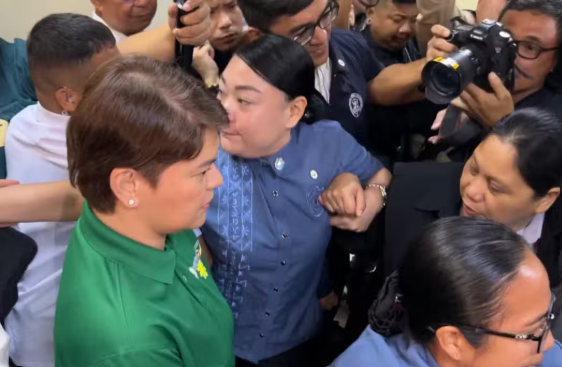
Philippine Vice President Sara Duterte appeared before the Senate on Tuesday to meet with her legal team, using the occasion to reaffirm her posture of steadfast resistance against what she characterizes as a deliberate campaign to remove her from office. Drawing from William Ernest Henley's celebrated poem "Invictus," she declared that while she would emerge "bloodied" from the ordeal, she would remain "unbowed"—a rhetorical choice that underscores her determination to weather the constitutional process arrayed against her despite the serious nature of the charges.
The Vice President first introduced the metaphor of "bloodbath" in May 2025, when she stated publicly that she welcomed the impeachment trial and wanted it to proceed to full proceedings. At that time, the characterization appeared designed to convey both her acceptance of the challenge and perhaps a warning signal to her political opponents. However, her subsequent absence from most House impeachment hearings in both 2025 and 2026 has invited substantial criticism from both political opponents and commentators who saw the pronouncements as theatrical rather than reflective of genuine engagement with the accusations.
The four Articles of Impeachment lodged against Duterte represent serious constitutional charges that could result in her permanent removal from the presidency of the country, coupled with a perpetual bar from holding any elected office. The first article alleges the misappropriation of P612.5 million in public funds—P500 million drawn from confidential accounts maintained by the Office of the Vice President and an additional P112.5 million originating from the Department of Education. Such financial irregularities, if proven, would constitute a fundamental breach of public trust and fiduciary responsibility.
The second article concerns unexplained wealth accumulation and alleged failures in financial disclosure obligations. Duterte stands accused of failing to accurately report assets across her Statements of Assets, Liabilities and Net Worth during the 2022 to 2024 period, and of maintaining undisclosed business interests despite legal requirements to divest. These allegations suggest a pattern of concealment rather than isolated administrative oversights, touching on questions of personal integrity and compliance with constitutional standards governing public officials.
A third charge implicates the Vice President in procurement irregularities and alleged bribery involving Department of Education officials, raising concerns about possible corruption within the education sector and the systemic integrity of government procurement processes. The specificity of these allegations indicates a detailed investigative foundation that proponents of impeachment have documented through documentary and testimonial evidence.
The fourth and most explosive article concerns alleged threats of assassination directed toward President Ferdinand Marcos Jr., first lady Liza Araneta-Marcos, and former House Speaker Martin Romualdez. Such threats, should they be substantiated, would constitute offences of extraordinary gravity that transcend ordinary political disputes and venture into matters of national security and personal safety of state officials. Public utterances threatening the life of the sitting president represent perhaps the most constitutionally serious accusation.
The constitutional mechanics governing Duterte's trial establish formidable barriers to conviction that reflect the Philippine system's protection of executive independence. Under the 1987 Constitution, conviction requires the affirmative vote of at least two-thirds of all senator-judges, a supermajority threshold that historically has been difficult to achieve in impeachment proceedings across comparable presidential systems. This high bar means that even if the Senate believes some allegations partially proven, conviction depends upon commanding overwhelming consensus among legislative judges.
The trial itself is projected to consume 92 days of proceedings, positioning completion for early 2027 at the earliest. This extended timeline means the constitutional question of Duterte's tenure will hang unresolved for many months, creating institutional uncertainty and potentially constraining the effectiveness of the Vice Presidential office during this period. The extended duration also reflects the complexity of evidence that must be presented and tested across multiple substantive allegations.
For Malaysian observers, the Philippine impeachment represents a significant test of that nation's constitutional safeguards and the functioning of its oversight mechanisms. The proceedings demonstrate how presidential systems attempt to address serious allegations of executive misconduct through judicial rather than electoral processes. The resilience Duterte emphasises rhetorically will ultimately be tested against the documentary evidence and testimony presented by the House impeachment managers and the judgment of senators balancing their constitutional duties against political considerations.
The Vice President's invocation of "Invictus"—a poem about unconquerable spirit in the face of overwhelming circumstances—carries layered meaning in this context. Whether her words reflect genuine confidence in ultimate vindication or represent a rhetorical position designed for her political base remains subject to interpretation. What seems evident is that the coming months will determine whether her defiance proves justified or whether the Senate judges conclude that the weight of evidence supports the serious accusations leveled against her.
The case also raises questions about the broader health of Philippine democratic institutions and whether impeachment functions as a legitimate constitutional remedy or increasingly as a weapon of political contest. That distinction will matter not merely for Duterte's personal fate, but for the precedent her trial establishes regarding the treatment of incumbent vice presidents and the standards applied to allegations of executive misconduct.

