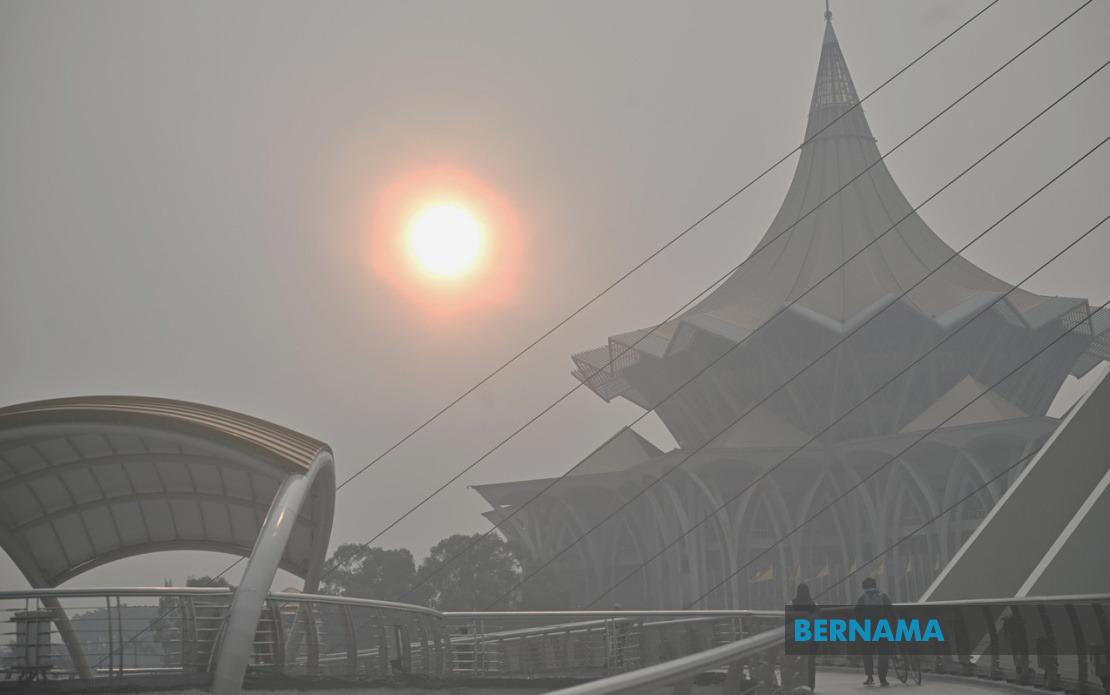
The Sarawak Education Department has ordered the temporary closure of 591 educational institutions across the state, affecting nearly 200,000 students as prolonged heat and arid conditions continue to grip multiple districts. The shutdown, which commenced on 20 August and extends through the following day, represents a significant disruption to learning schedules and underscores the severity of environmental pressures confronting the state's education system and broader population.
The closures encompass 509 primary schools serving 107,590 pupils alongside 82 secondary institutions with 89,733 enrolled students. These institutions operate under the jurisdiction of ten District Education Offices distributed across Kuching, Padawan, Bau, Lundu, Samarahan, Simunjan, Serian, Sri Aman, Lubok Antu and Betong. The geographic spread of affected districts illustrates how pervasively the weather event has impacted Sarawak, spanning both urban centres and rural communities dependent on stable environmental conditions.
Beyond the immediate educational implications, the Sarawak State Disaster Management Committee has escalated its monitoring protocols to address interconnected environmental hazards emerging from the prolonged drought. The extended period of high temperatures and minimal precipitation creates compounding risks across multiple domains including forest degradation, peatland fire susceptibility, and strain on freshwater resources that communities depend upon for daily consumption and economic activities.
Forest and peatland fires represent a particularly acute concern in Sarawak's context, given the state's extensive rainforest coverage and carbon-rich peatlands that, once ignited, burn with tremendous intensity and generate substantial smoke pollution. The committee's statement emphasises that sustained heat combined with low humidity dramatically amplifies ignition probabilities and fire spread potential, threatening not only environmental integrity but also human health through air quality deterioration and smoke-related respiratory complications.
Water supply constraints constitute an equally pressing dimension of the crisis. Sarawak's water infrastructure, while generally adequate during normal rainfall patterns, faces potential strain when prolonged dry spells reduce river flows and reservoir levels. For rural populations relying on gravity-fed systems or community water sources, such shortfalls can precipitate acute supply disruptions, whilst agricultural and industrial users face operational constraints that ripple through regional economies.
Air quality monitoring data released as of 2 pm on the closure day reveals the acute nature of atmospheric degradation across multiple population centres. Nine locations recorded unhealthy Air Pollutant Index readings, with Serian registering the highest measurement at 195, followed closely by Kuching at 191 and Lubok Antu at 191. Samarahan, Sri Aman, Lundu, and Tebedu recorded readings between 169 and 180, whilst Sarikei and Sibu registered 154 and 108 respectively. These measurements, which typically indicate elevated concentrations of particulate matter and other pollutants, pose direct health risks particularly for vulnerable populations including children, elderly residents, and those with pre-existing respiratory conditions.
The school closure decision reflects Malaysian authorities' established protocols for managing environmental emergencies that directly compromise student safety and outdoor activity viability. By temporarily halting in-person learning, officials aim to minimise children's exposure to hazardous air whilst signalling to the broader community the seriousness of prevailing conditions. Such measures, whilst disruptive to educational continuity, prioritise immediate health protection over scheduling consistency.
The Sarawak State Disaster Management Committee's commitment to intensifying surveillance and preventive measures indicates institutional recognition that the crisis demands proactive rather than reactive responses. Enhanced monitoring of high-risk zones, particularly forested areas and peatland territories where fire initiation carries greatest consequences, forms the foundation of mitigation strategy. Coordination with relevant agencies—including forestry departments, water authorities, and emergency services—becomes essential for executing comprehensive responses that address interconnected environmental and social dimensions simultaneously.
For Southeast Asian observers, Sarawak's experience reflects climatic patterns increasingly evident across the broader region, where climate variability manifests through episodic extreme weather events that strain infrastructure and public services. The state's response demonstrates how educational systems must integrate environmental considerations into operational planning, recognising that institutions serve as critical touchpoints for disseminating information and coordinating community-level resilience during crises.
The immediate economic implications extend beyond educational disruption. Families managing childcare during unexpected closures face workplace productivity losses, whilst commercial sectors dependent on reliable electricity generation or water supply confront potential operational challenges. Such cascading effects underscore how environmental crises, seemingly localised to weather phenomena, possess broad socioeconomic consequences affecting employment, income stability, and household budgeting across affected regions.
Looking forward, the situation in Sarawak may presage similar challenges across other Malaysian states and Southeast Asian jurisdictions as climate patterns shift. The demonstrated capacity of public institutions to mobilise rapid responses—evident in JPNS's decisive closure order and JPBNS's escalated monitoring—provides a model for institutional flexibility, though long-term resilience requires investments in climate adaptation infrastructure, water management systems, and forest conservation strategies that transcend individual crisis response episodes and address underlying vulnerabilities in regional environmental management systems.

