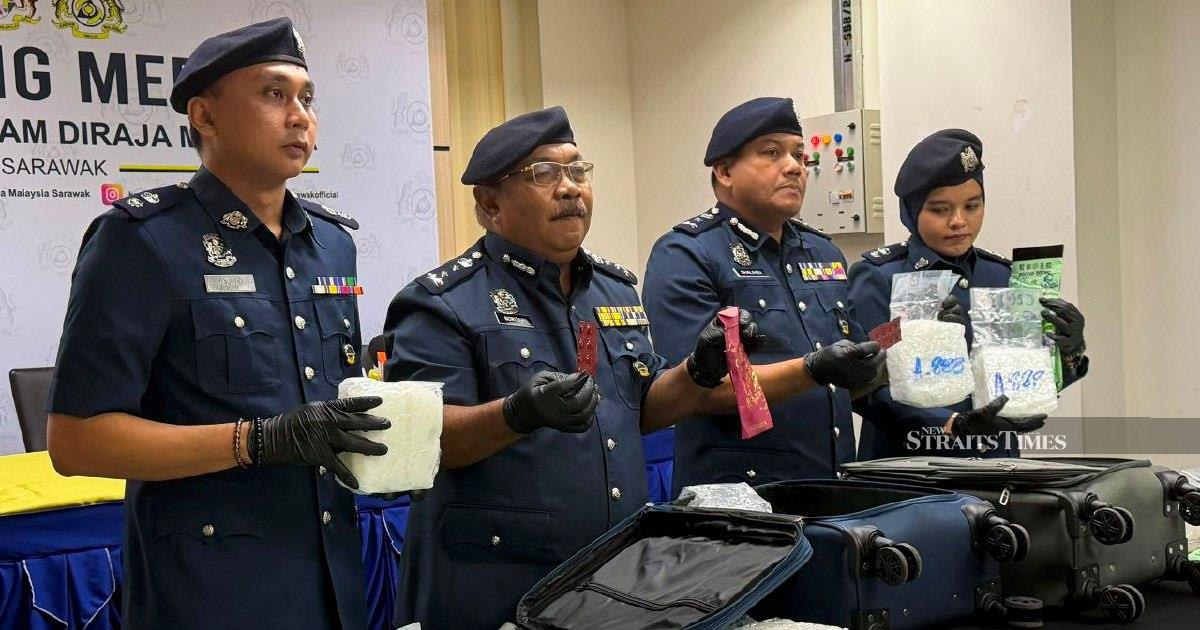
Border enforcement authorities in Sarawak successfully intercepted a significant drug trafficking operation at Kuching International Airport on July 9, resulting in the seizure of narcotics estimated at RM1.32 million and the arrest of two individuals suspected of orchestrating the smuggling attempt. The interception underscores the ongoing challenges facing Malaysia's airports as transit points for regional drug networks seeking to exploit security vulnerabilities and shift illicit cargo across borders.
The Sarawak Customs Department's operational success reflects intensified scrutiny at the state's primary international gateway, where officials have implemented enhanced screening protocols and intelligence-sharing mechanisms with partner agencies. This particular bust demonstrates the effectiveness of coordinated vigilance at departure and arrival terminals, where hidden compartments and concealment methods continue to evolve in sophistication. The confiscated quantity and street value represent a substantial dent in trafficking operations that typically route contraband from Southeast Asian manufacturing hubs toward Australian and New Zealand markets.
The two arrested individuals face charges under Malaysia's Dangerous Drugs Act, which carries mandatory minimum sentences and potential capital punishment depending on the quantity and classification of controlled substances involved. Investigations will likely focus on identifying the broader supply chain, including upstream manufacturers, downstream distribution networks, and the financial mechanisms enabling transnational operations. The timing of this seizure coincides with increased enforcement activity across Malaysia's maritime and air borders, reflecting federal directives prioritizing drug interdiction.
Kuching International Airport, serving as Sarawak's primary commercial hub with connections to regional and international destinations, remains an attractive target for smuggling organisations due to passenger volumes and cargo handling operations. The airport's strategic location within Borneo and proximity to waters used by trafficking vessels create layered vulnerabilities that authorities must continuously address through technology upgrades and personnel training. Previous seizures at the facility have involved synthetic drugs, heroin, and methamphetamine, indicating diverse smuggling attempts.
The RM1.32 million valuation underscores the commercial scale of operations being attempted through the airport, with individual shipments representing substantial profit margins for criminal networks operating across Malaysia, Thailand, Indonesia, and Philippines territories. The economics of drug trafficking ensure that interdiction at any single point—regardless of success rate—represents merely one barrier among many employed by organised syndicates. Nevertheless, each successful seizure degrades operational capacity and increases costs for smugglers, incentivising route changes and methodological innovation.
Sarawak Customs' capacity to execute this interception reflects ongoing investment in training, intelligence analysis, and equipment modernisation supported by federal enforcement agencies and international partners including the United Nations Office on Drugs and Crime. Cooperation frameworks established through ASEAN regional mechanisms have facilitated information exchange that enables authorities to anticipate emerging trafficking patterns. The agency's success rate, while commendable, remains constrained by resource limitations that affect coverage at smaller airfields and land borders throughout the state.
The incident occurs within a broader context of escalating drug seizures across Malaysia in 2024, with federal authorities reporting record quantities of methamphetamine and fentanyl intercepts at borders. Transnational criminal organisations have increasingly fragmented operations into smaller shipments dispersed across multiple routes and conveyances, complicating detection efforts and distributing risk across smuggling attempts. This tactical adaptation forces enforcement agencies to maintain vigilance across diverse vectors rather than concentrating resources at perceived high-threat locations.
For Malaysian travellers and the aviation industry, the seizure demonstrates ongoing screening effectiveness and commitment to passenger safety at commercial facilities. However, it also reflects persistent operational vulnerabilities that criminal networks continue exploiting, requiring sustained investment in infrastructure, personnel, and intelligence capabilities. Airport operators, while supportive of enforcement activities, must balance security imperatives with operational efficiency and passenger facilitation objectives that define competitive positioning among regional aviation hubs.
The arrested individuals will be processed through court systems in Kuching, where sentencing guidelines reflect Malaysia's zero-tolerance approach toward trafficking offences. Successful prosecution requires comprehensive evidence compilation, forensic analysis of seized materials, and witness testimony—processes that typically extend investigations over months. Beyond individual accountability, authorities will pursue asset seizures targeting proceeds and identifying financial networks funding trafficking organisations, disrupting revenue streams essential for organisational sustainability.
Looking forward, the seizure reinforces need for continuous enhancement of border security architectures across Malaysian territory, particularly at airports where passenger processing timelines create operational pressures potentially exploitable by smugglers. Enhanced cooperation between Sarawak Customs and federal agencies including the Malaysian Anti-Corruption Commission and police narcotics units strengthens investigative capacity and intelligence integration. Regional cooperation through ASEAN mechanisms and bilateral partnerships with Singapore, Brunei, and Indonesia remains foundational for addressing trafficking networks spanning multiple jurisdictions and requiring coordinated response capabilities that transcend individual nation-state enforcement capacity.
The broader significance extends beyond Kuching, illustrating Borneo's continued vulnerability within regional drug trafficking architectures. Both Malaysian and Indonesian authorities recognize that addressing supply-side pressures requires addressing cultivation and manufacturing operations in source regions, chemical precursor controls, and financial investigation targeting money laundering networks that enable trafficking profitability. The RM1.32 million seizure represents one tactical success within strategic context demanding comprehensive, multi-agency responses operating across enforcement, prevention, and treatment domains.

