The Sarawak Disaster Management Committee has issued fresh guidance for event organisers grappling with deteriorating air conditions across the state, recommending they carefully weigh pollution data before committing to outdoor activities. Speaking in Kuching on August 30, SDMC chairman Datuk Amar Douglas Uggah Embas acknowledged that responsibility for such decisions ultimately rests with individual organisers, yet stressed the importance of prioritising public welfare in their deliberations. The advisory reflects growing concern over air quality degradation in Sarawak, a phenomenon that has become increasingly disruptive to normal economic and social activity during certain seasons.
The committee's guidance establishes clear thresholds for decision-making tied to the Air Pollutant Index, a standardised measurement that quantifies airborne pollutants and their health impact. When API readings exceed 200, Uggah advised that organisers should fundamentally reconsider whether outdoor events, sports competitions and physically demanding activities should continue, particularly when vulnerable populations such as children, elderly persons or those with pre-existing health conditions would be exposed. This guidance recognises that haze-related pollution poses measurable risks to respiratory function and cardiovascular health, making risk assessment a moral as well as practical responsibility.
Beyond simply postponing or cancelling events, the SDMC encouraged creative alternatives that would allow public engagement while mitigating health hazards. Organisers were invited to consider relocating activities indoors, redesigning programmes to minimise physical exertion or shifting event dates to periods when air quality improves. Such flexibility represents a pragmatic middle ground that acknowledges both the economic and social value of community activities and the genuine risks posed by poor air quality. The advisory implicitly recognises that blanket cancellations impose costs on communities and businesses, making targeted adaptation preferable where feasible.
The regulatory framework underlying these recommendations extends beyond simple advisory thresholds. Should API readings climb to 500 or higher—a hazardous level indicating severe pollution—established disaster management protocols mandate closure of government and private sector offices except those providing essential services. However, such sweeping restrictions require formal declaration by the National Disaster Management Committee, establishing a hierarchy of response that balances flexibility with decisive action when conditions become genuinely critical. This two-tiered approach allows regional authorities in Sarawak to maintain proportionate responses while reserving more draconian measures for truly emergency situations.
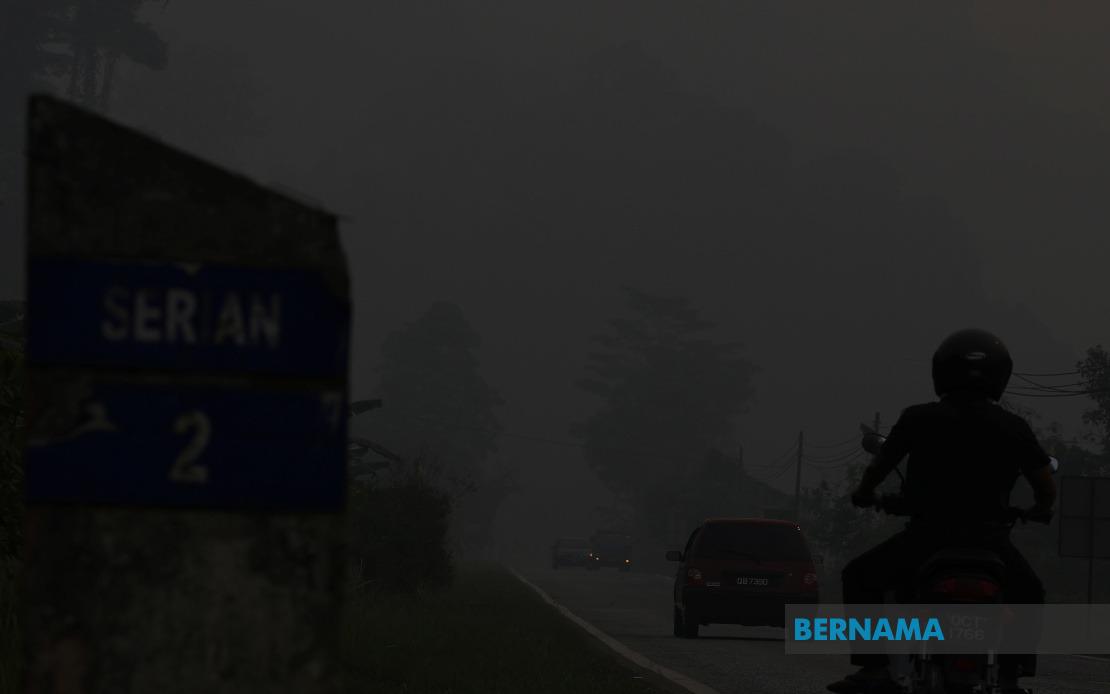
Conditions on the day the guidance was issued illustrated why such precautions matter. Air quality monitoring stations across Sarawak recorded alarming readings by midday on August 30, with several locations breaching hazardous thresholds. The Serian District Police Headquarters monitoring station registered an API of 412—well into the hazardous range that triggers health warnings and activity restrictions. Samarahan recorded 332, while Kuching, the state capital, posted 304, both well above the 200 threshold that Uggah identified as triggering serious concerns about outdoor activities. These readings revealed significant geographical variation in pollution intensity, with western Sarawak experiencing the worst conditions.
Beyond the most severely affected areas, numerous other locations recorded unhealthy air quality readings that, while below hazardous levels, still pose meaningful health risks to exposed populations. Sarikei registered 197, Sibu 190, and Bintulu 183, all approaching or exceeding the threshold at which air quality begins affecting individuals with respiratory vulnerabilities. Industrial areas such as Samalaju (175) and Miri (159) also showed concerning readings, suggesting transboundary pollution patterns typical of regional haze events that often originate from agricultural burning in Indonesia and affect multiple Southeast Asian nations. Even areas recording lower measurements like Kapit and Mukah experienced unhealthy conditions by international standards.
The SDMC's monitoring regime relies on the Department of Environment's Air Pollutant Index Management System portal, which provides real-time data from multiple stations across Sarawak's geography. This systematic data collection enables evidence-based decision-making rather than reliance on subjective assessments or informal reports. The breadth of monitoring coverage—spanning from urban centres like Kuching and Sibu to remote areas like Kapit and Mukah, and including industrial facilities—reflects sophisticated infrastructure for environmental tracking. Access to such data allows organisers to make informed choices rather than guessing about conditions, though it simultaneously places responsibility on event planners to actually consult available information.
Sarawak's recurrent experience with haze episodes reflects its geographical proximity to Indonesia and participation in regional atmospheric systems that transport transboundary pollution. The state's forest-rich landscape and proximity to regions where agricultural land is cleared through burning create vulnerability to episodic but severe air quality degradation. Unlike some environmental challenges that develop gradually, haze events can emerge rapidly and intensify within hours, necessitating flexible response mechanisms that allow real-time adjustment of plans. The SDMC's approach reflects this reality by encouraging ongoing monitoring rather than static decisions made days in advance.
For Malaysian policymakers and regional observers, Sarawak's experience underscores the interconnection between environmental management, disaster preparedness and public health. While individual organisers bear responsibility for local decision-making, addressing transboundary haze ultimately requires coordinated approaches across Southeast Asia involving agricultural practices, land-use policies and enforcement mechanisms. The SDMC's focus on providing information and guidance to event organisers rather than imposing blanket prohibitions reflects confidence in decentralised decision-making, yet such systems only function effectively when organisers actively engage with available information and prioritise public health considerations.
The timing of the SDMC's guidance—issued as dangerous conditions were already manifesting—illustrates both the utility and limitations of advisory frameworks. While clear guidance helps organisers respond appropriately when conditions deteriorate, the advisory's effectiveness depends on widespread awareness and genuine commitment to public health priorities. Event organisers facing significant economic losses from cancellations might be tempted to minimise health risks or ignore guidance, making clear communication about both thresholds and underlying health rationale essential. The committee's decision to emphasise that responsibility remains with individual organisers, while strongly recommending specific actions above defined API thresholds, represents an attempt to balance autonomy with accountability.
Looking forward, Sarawak's experience with current haze conditions will likely inform refinements to disaster management protocols and event planning guidelines. As climate change potentially alters fire patterns and transboundary pollution dynamics across Southeast Asia, states like Sarawak may need to develop even more sophisticated response mechanisms. The balance between maintaining normal economic and social activity and protecting public health remains challenging, particularly for communities where seasonal haze has become almost routine. The SDMC's current approach—emphasising informed decision-making guided by clear thresholds—represents a reasonable framework, though whether it adequately protects vulnerable populations during severe episodes remains open to ongoing evaluation and debate within Sarawak's governance structures.

