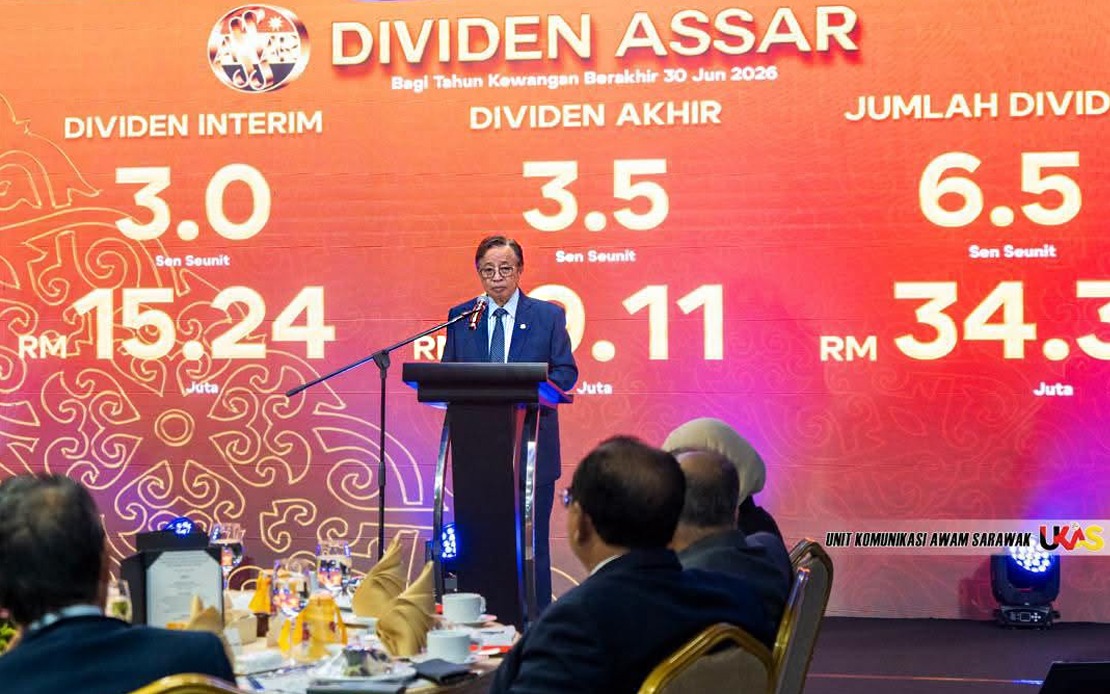
Sarawak's state government is actively exploring ways to democratise investment opportunities across its population by potentially extending the Amanah Saham Sarawak (ASSAR) scheme to non-Bumiputera citizens through a complementary fund structure. Tan Sri Abang Johari Tun Openg, the Sarawak Premier, disclosed this strategic consideration following the announcement of ASSAR dividend distributions for the financial year ending June 30, 2026, signalling the state's commitment to broader-based economic participation.
The proposal centres on creating ASSAR 2 as a parallel investment vehicle that would mirror the mechanics of the existing ASSAR programme but serve the non-Bumiputera demographic. Currently, ASSAR operates exclusively for Bumiputera investors, reflecting Malaysia's constitutional protections for indigenous communities. The introduction of a separate fund for non-Bumiputera participants would circumvent existing legal frameworks while maintaining the foundational structure of preferential investment schemes that have proven successful in Sarawak.
Abang Johari indicated that the ASSAR board of directors and management will undertake a thorough feasibility assessment of this expansion proposal. The evaluation process will draw comparative insights from Permodalan Nasional Berhad (PNB), the national fund manager that operates multiple investment vehicles serving different demographic segments within Malaysia's investment ecosystem. PNB's multi-tiered approach to fund management, which accommodates various investor categories whilst maintaining distinct investment platforms, provides a proven template for Sarawak's consideration.
The underlying rationale for this expansion reflects a deliberate pivot towards inclusivity within Sarawak's economic development strategy. By creating dual investment channels, the state government aims to attract broader domestic capital participation and deepen capital pooling mechanisms that can fund state economic initiatives. This approach acknowledges that non-Bumiputera populations, whilst excluded from constitutional provisions affecting Bumiputera rights, represent a significant portion of Sarawak's consumer base and productive workforce whose economic engagement benefits overall state competitiveness.
Abang Johari emphasised that this initiative aligns with the Sarawak government's stated commitment to inclusive policymaking, wherein economic benefits are distributed across diverse community segments rather than concentrated within historically privileged groups. In pragmatic terms, expanding investment access to non-Bumiputera residents accelerates capital accumulation for state development projects, infrastructure enhancement, and economic diversification efforts that benefit the entire population regardless of ethnic background.
The financial landscape in Sarawak has demonstrated robust growth trajectories in recent years, creating compelling rationales for widening participation in state investment vehicles. By extending ASSAR mechanisms to non-Bumiputera investors through ASSAR 2, the government could capitalise on this economic momentum whilst simultaneously addressing calls for greater equity in wealth-building opportunities. The existing ASSAR programme has established itself as a trusted investment platform with demonstrated returns, making an expansion programme potentially attractive to non-Bumiputera savers seeking exposure to state economic growth.
From a Malaysian perspective, Sarawak's consideration of this measure reflects broader regional trends toward recalibrating affirmative action programmes to accommodate contemporary demographic and economic realities. Whilst constitutional provisions protecting Bumiputera rights remain sacrosanct, finding complementary mechanisms that extend economic participation to other communities represents pragmatic governance. This approach mirrors global best practices in development finance, where inclusive growth models have consistently outperformed exclusionary frameworks in generating sustainable prosperity.
The implementation of ASSAR 2 would likely position Sarawak as a regional pioneer in harmonising constitutionally mandated protections with contemporary inclusive development principles. Such positioning carries reputational benefits for the state as an economically progressive jurisdiction and may attract domestic and regional investors seeking exposure to markets with balanced social policies. The dual-fund structure signals that Sarawak is responsive to demographic transformation and increasingly sophisticated investor expectations.
Practically speaking, the administrative architecture required for ASSAR 2 already exists within Sarawak's institutional framework. The state's financial management infrastructure, regulatory experience with ASSAR operations, and existing relationships with investment management entities position it favourably to execute this expansion with minimal institutional friction. Board-level approval and management sign-off represent the primary procedural hurdles, both of which Abang Johari's announcement suggests are actively progressing.
The timing of this proposal merits attention within Sarawak's broader political economy. The state government's confidence in announcing this initiative publicly reflects legislative backing and political consensus among decision-makers regarding the appropriateness and necessity of such expansion. Given the centrality of economic development to Sarawak's governance narrative, framing investment opportunity expansion as inclusive rather than separatist positions the government favourably for forthcoming electoral considerations.
Regional implications of Sarawak's ASSAR expansion extend beyond state boundaries. If successfully implemented, ASSAR 2 may establish precedent for other Malaysian states considering similar inclusive investment mechanisms. The scheme's structure and outcomes will likely attract scrutiny from federal-level policymakers, development economists, and comparative governance analysts monitoring how Malaysia's constituent states navigate the tension between constitutional provisions and inclusive development imperatives. Success would demonstrate that these objectives are not inherently contradictory but rather complementary when managed with institutional sophistication.
Investor response to ASSAR 2 remains speculative pending formal board approval and regulatory finalisation. However, preliminary indications suggest substantial pent-up demand among non-Bumiputera Sarawakians for locally-focused investment vehicles offering transparent returns and developmental alignment. The existing ASSAR track record of dividend distributions and portfolio management excellence would likely translate into considerable interest once ASSAR 2 launches.
Looking forward, successful implementation of ASSAR 2 would represent a meaningful evolution in Sarawak's approach to economic governance, balancing historical constitutional commitments with contemporary imperatives for broader-based participation. The initiative encapsulates recognition that sustainable prosperity requires maximising the productive engagement of all community segments, a principle increasingly recognised across Malaysia's development landscape.

