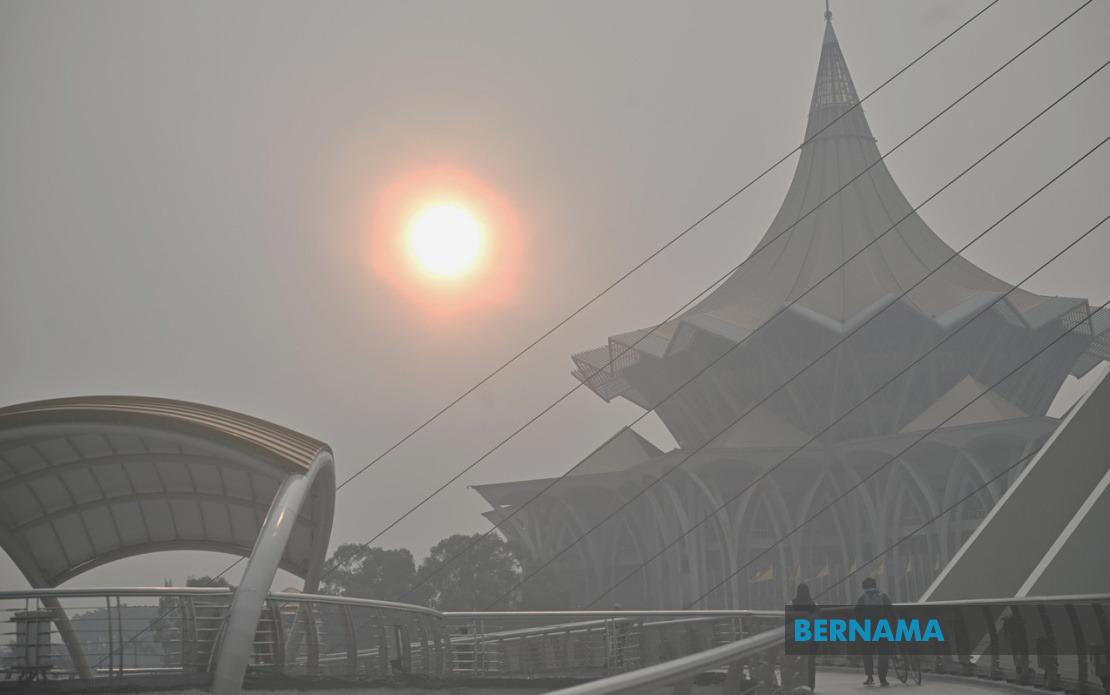
Childcare facilities across Sarawak will shut their doors immediately whenever the Air Pollutant Index climbs to 200, a threshold classified as very unhealthy under national air quality standards. Women, Family and Community Development Minister Datuk Seri Nancy Shukri confirmed the policy aligns with earlier directives issued by the Sarawak Disaster Management Committee, creating a clear protocol for protecting vulnerable populations during periods of poor air quality.
The decision reflects growing concerns about the health impacts of transboundary haze on young children, whose developing lungs are particularly susceptible to damage from air pollutants. Nancy explained that exposure to such atmospheric conditions can trigger respiratory complications and other health difficulties that ripple beyond the child to affect entire family structures. By establishing an automatic closure trigger at API 200, authorities aim to remove children from contaminated environments before serious health consequences materialise.
On August 12, the Sarawak Disaster Management Committee formally announced that schools, kindergartens, and childcare centres would face immediate closure once the API breached the 200 mark. This directive operates under the National Haze Action Plan framework and falls within the operational authority of the Sarawak Education Department director. The API scale, which measures concentrations of five major air pollutants, provides a standardised mechanism for triggering public health interventions across different regions and during varying atmospheric conditions.
Currently, the closure protocol applies specifically within Sarawak's jurisdiction. However, Nancy indicated that the framework could potentially extend to other Malaysian states should haze conditions deteriorate and spread beyond Borneo. She emphasised that any expansion would be implemented through formal directives from respective state governments and relevant authorities, thereby ensuring consistency and preventing public confusion during air quality emergencies.
The measure underscores a coordinated approach to haze management across state lines, recognising that air pollution recognises no administrative boundaries. When transboundary haze events occur—often originating from forest fires in Indonesia—multiple states may simultaneously experience unhealthy air quality. Having harmonised closure procedures prevents the chaotic patchwork of responses that otherwise creates logistical headaches for families straddling state boundaries for work and childcare arrangements.
For Malaysian parents, particularly those in dual-income households, the prospect of sudden childcare centre closures raises immediate practical concerns. Nancy acknowledged these worries but stated that managing the resulting family disruption falls primarily under state government responsibility, since the directive operates within state-level jurisdiction. This positioning reflects Malaysia's federal structure, where education and childcare oversight typically reside with state authorities rather than federal ministries, though coordination mechanisms exist for national emergencies.
The closure policy represents a preventive health intervention rather than a reactive one, establishing a clear threshold rather than leaving decisions to discretionary judgment. This approach reduces administrative ambiguity and allows parents, employers, and facility operators to prepare contingency arrangements in advance. When an official announcement confirms that API has reached 200, all stakeholders immediately understand their obligations without requiring further clarification or interpretation.
Sarawak's vulnerability to haze events stems from its geographical proximity to major agricultural and industrial regions in Kalimantan, where seasonal burning practices generate massive smoke plumes. The state has experienced several severe air quality episodes over recent decades, with the 2015 haze crisis particularly memorable for disrupting schools and businesses across Borneo. These historical precedents informed the decision to establish predetermined closure thresholds rather than relying on ad-hoc emergency responses.
For childcare operators, the policy creates administrative clarity but also operational challenges. Centres must establish protocols for notifying parents, securing facilities, and managing staffing during closures. However, the advance notice provided by API monitoring systems gives operators several hours' warning before closures become mandatory, allowing them to communicate with families and arrange alternative arrangements where possible.
Beyond immediate childcare disruptions, the policy highlights Malaysia's broader vulnerability to regional environmental challenges. Transboundary haze remains an annual concern during dry seasons, affecting millions across Southeast Asia. The closure mechanism represents one response layer within a larger strategy encompassing diplomatic pressure on neighbouring countries, domestic fire prevention efforts, and air quality monitoring infrastructure.
The health rationale underlying the API 200 threshold reflects medical consensus about air quality impacts on children. Young children inhale more air per kilogram of body weight than adults, while their respiratory defence mechanisms remain underdeveloped. At very unhealthy API levels, even short exposure can trigger asthma attacks, bronchitis, and other acute respiratory conditions. For children with pre-existing respiratory conditions, the risks escalate significantly.
Implementing the closure policy consistently requires coordination between the Education Department, health authorities, and individual childcare operators. Training programmes and clear communication channels ensure facility managers understand the API monitoring process and closure procedures. Regular drills and updated guidelines help maintain operational readiness without creating excessive alarm among staff and parents.
As Malaysia experiences increasing environmental volatility, such protective policies for vulnerable populations will likely expand. The Sarawak childcare closure framework may serve as a template for other sectors and states grappling with seasonal air quality crises. By prioritising children's health through predetermined, transparent protocols, authorities demonstrate commitment to balancing economic activity with public wellbeing during environmental emergencies.

