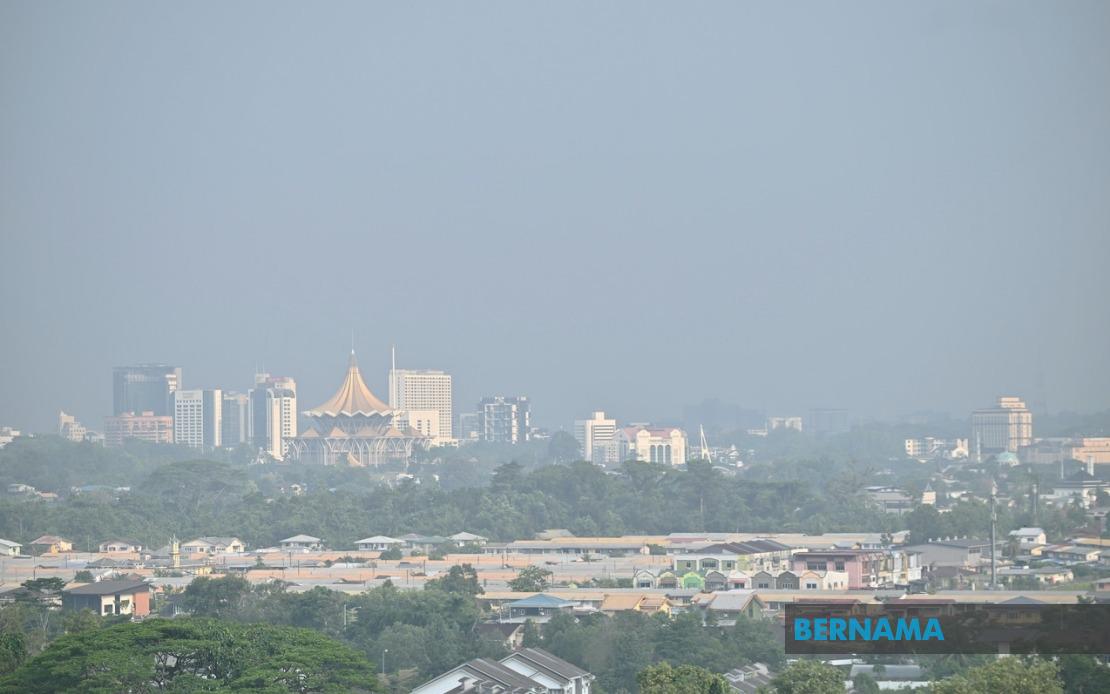
Sarawak's Disaster Management Committee has issued a public advisory recommending the postponement of outdoor activities and mass gatherings as the state grapples with deteriorating air quality stemming from haze that has settled across the region. The precautionary measure, announced by committee chairman Datuk Amar Douglas Uggah Embas, aims to minimise residents' exposure to unhealthy air while conditions remain problematic. Officials stress that rescheduling events to a later date represents a prudent safeguard for public health and safety, particularly as the situation continues to develop.
According to data compiled from the Hot Weather Update Report released on the morning of August 22, the air quality situation presents a mixed picture across Sarawak's districts. Eleven locations have registered unhealthy air quality readings ranging between 101 and 200 on the air quality index, while six additional areas sit at the moderate level with readings between 51 and 100. Only one monitored location has achieved a good rating with an index below 50. This distribution indicates that unhealthy conditions are widespread, particularly in populated and economically significant zones where outdoor activities and public events typically draw large crowds.
The highest concentration of pollutants was measured in Serian, which recorded an index reading of 190—approaching the threshold of hazardous conditions. Kuching, the state capital and commercial hub, and Lubok Antu both registered readings of 181, placing them among the most severely affected areas. Other significantly impacted districts include Lundu at 179, Samarahan at 177, Sri Aman at 174, and Sarikei at 172. This pattern reveals that haze pollution is not confined to remote areas but has penetrated major urban centres where daily activities and planned events typically concentrate.
The advisory has already prompted concrete cancellations of prominent scheduled events. The Sarawak Ku Sayang festival, initially planned for August 28 to 30 in Mukah, has been postponed to allow for improved atmospheric conditions. Similarly, Sarawak's state-level celebrations for the 2026 National Day, which were slated for August 30 to 31 in Kapit, have also been rescheduled. These high-profile postponements underscore official recognition that current conditions pose genuine risks to public welfare during large-scale indoor and outdoor gatherings.
The Sarawak Disaster Management Committee, working in coordination with relevant state agencies, has established ongoing monitoring systems to track air quality developments across different regions. Officials have indicated that decisions regarding further event cancellations or revised activity guidelines will be informed by real-time data and weather pattern analysis. This approach allows flexibility for adjusting public advisories should conditions either deteriorate further or show signs of improvement.
Haze events in Sarawak typically arise from transboundary sources, particularly burning activities in neighbouring regions during dry seasons. While immediate causation is often external, the state has developed institutional frameworks to respond rapidly to air quality degradation. The current advisory represents implementation of established public health protocols designed to protect vulnerable populations, including children, elderly residents, and those with pre-existing respiratory conditions.
For Malaysian readers across the peninsula and other East Malaysian states, the Sarawak situation serves as a reminder of recurring seasonal challenges that affect multiple regions. The haze phenomenon has emerged as a persistent environmental and public health issue throughout Southeast Asia, requiring coordinated responses that balance economic considerations with citizen wellbeing. Sarawak's approach of proactively rescheduling rather than proceeding with events reflects lessons learned from previous episodes when authorities prioritised events over air quality warnings, resulting in public health consequences.
The postponement strategy carries economic implications for event organisers, vendors, and local tourism sectors reliant on scheduled gatherings. However, authorities evidently judged that proceeding with large outdoor assemblies during unhealthy air conditions would expose government and sponsors to significant liability and reputational damage. This calculation reflects broader shifts toward prioritising environmental and occupational health standards in government decision-making.
Residents and event planners in Sarawak should anticipate that further adjustments to the current advisory may occur as weather patterns evolve. The committee's ongoing coordination with environmental monitoring agencies means that air quality data will be continuously assessed to determine when conditions have sufficiently improved to permit previously scheduled activities. Officials encourage the public to remain alert to updated advisories and to plan alternative arrangements for time-sensitive outdoor commitments during this period of air quality uncertainty.

