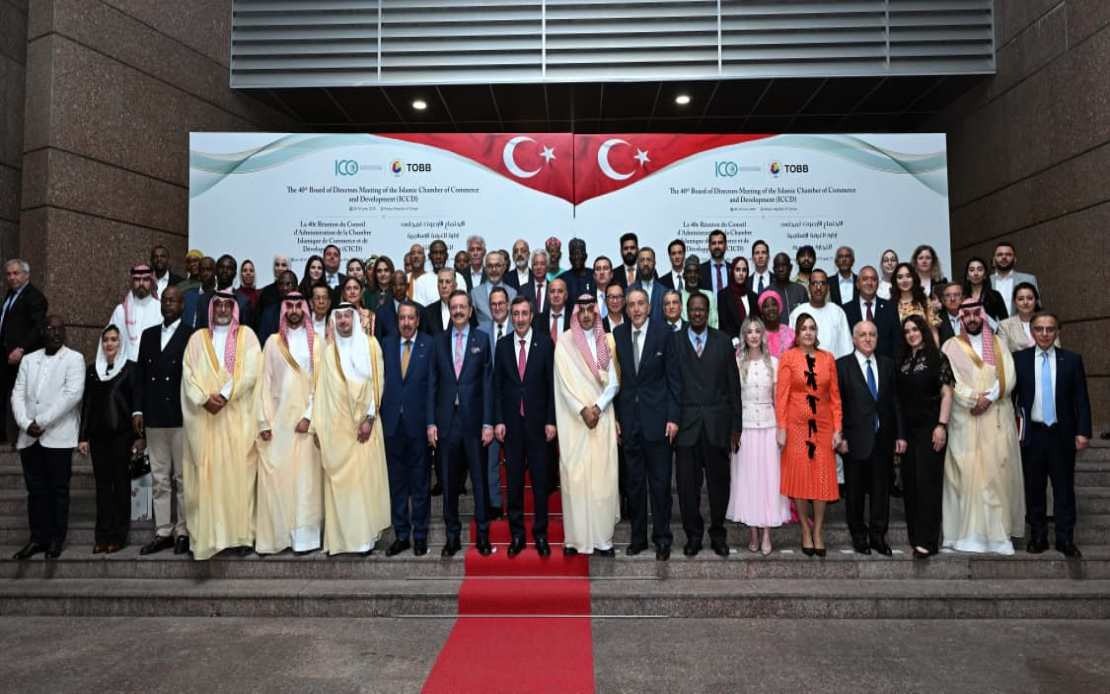
Saudi Arabia has renewed its push for closer economic partnership with Muslim-majority nations, with particular emphasis on major regional players like Malaysia and Indonesia. The appeal came from Abdullah Saleh Kamel, chairman of the Federation of Saudi Chambers and president of the Islamic Chamber of Commerce and Development, during high-level meetings held in Ankara, Turkiye. The timing reflects a broader strategic shift in how the Kingdom is approaching economic cooperation across the Islamic world, positioning itself not merely as a financial powerhouse but as an active facilitator of South-South economic integration.
Kamel's intervention at the 40th ICCD Board of Directors Meeting and the 72nd Finance Committee Meeting signalled that Riyadh views the ICCD as a vital platform for advancing shared economic interests across Muslim-majority jurisdictions. The Kingdom's participation, channelled through its Federation of Saudi Chambers, underscores its commitment to leveraging this multilateral framework for tangible outcomes. By positioning the FSC as the representative voice of Saudi's private sector within the ICCD structure, Riyadh is essentially signalling that economic cooperation among Islamic nations is no longer the preserve of government-to-government diplomacy but increasingly a matter of business-to-business engagement.
The Saudi leader's specific mention of Malaysia and Indonesia as anchor economies reflects a sophisticated understanding of regional dynamics. Both nations represent substantial Muslim-majority markets with diverse economic structures, growing consumer bases, and increasing technological capabilities. Malaysia, in particular, possesses well-developed financial services infrastructure, Islamic banking expertise, and established supply chains that could benefit from deeper integration with Gulf capital and markets. Indonesia's sheer demographic weight and manufacturing capacity make it equally strategically important for any vision of expanded intra-Islamic trade that aims for meaningful scale and sustainability.
The statement emphasised several priority areas that resonate strongly with Southeast Asian development agendas: youth entrepreneurship, food security, sustainable agriculture, and regional trade connectivity. These concerns are not abstract—they reflect genuine policy challenges facing governments across the region. Food security in particular has become increasingly critical as global supply chains face disruption and climate impacts intensify agricultural production challenges. A coordinated approach involving Saudi capital, Southeast Asian production capacity, and Islamic financial instruments could theoretically address these gaps more effectively than bilateral arrangements alone.
According to the official messaging from the ICCD platform, the organisation is actively pursuing the expansion of trade and investment flows between member nations in ways designed to foster genuine economic integration rather than merely transactional exchange. This distinction matters considerably for Malaysian policymakers. True integration requires complementary regulatory frameworks, recognised standards, and mechanisms for dispute resolution—areas where Malaysia's experience as an ASEAN leader and Islamic finance pioneer could prove invaluable in shaping ICCD initiatives going forward.
The ICCD Board's concurrent discussions on organisational development and future strategic initiatives suggest this is not merely rhetorical positioning. The chamber is apparently undertaking substantive work to strengthen cooperative mechanisms among Islamic economies. The fact that multiple standing committees are actively reviewing implementation of existing programmes indicates that the organisation is attempting to move beyond aspirational declarations toward practical outcomes. For Malaysian companies and entrepreneurs, this could eventually translate into new pathways for market access, investment partnerships, and knowledge exchange within the Islamic world.
Particularly noteworthy is the ICCD's emphasis on creating quality employment opportunities for young people and entrepreneurs across member nations. Southeast Asia's youth demographic offers both opportunity and urgency—a large cohort of working-age citizens seeking meaningful economic participation. If Saudi Arabia and other Gulf states are genuinely committed to channelling capital toward youth-oriented entrepreneurship programmes across the Islamic world, Malaysia and Indonesia would be logical initial focal points given their established startup ecosystems and technological infrastructure.
The Kingdom's longstanding support for the ICCD since its establishment underscores that this current push represents continuity with existing commitments rather than an abrupt policy reorientation. Saudi Arabia has positioned itself as one of the ICCD's largest institutional supporters, which grants it considerable influence over the chamber's strategic direction and priority-setting. This leverage is now being exercised to elevate Malaysia and Indonesia within the organisation's strategic calculus, potentially opening doors for Malaysian businesses seeking to access broader Islamic markets or attract Gulf investment.
The ICCD's golden jubilee celebration scheduled for 2027 provides a concrete timeline for the deepening of partnerships being discussed in Ankara. Typically, such milestone commemorations become opportunities for member nations to announce major new initiatives or funding commitments. Malaysia should monitor this process carefully, as it may signal an appropriate moment for bilateral or multilateral negotiations focused on specific sectoral cooperation—whether in Islamic finance, halal food trade, renewable energy, or digital commerce infrastructure.
For Malaysian policymakers and the private sector, the Saudi initiative merits close attention as a potential avenue for economically beneficial cooperation. The emphasis on youth, entrepreneurship, food security and regional connectivity directly aligns with Malaysia's own development priorities under various five-year plans. Rather than viewing Saudi Arabia's outreach as originating externally, Malaysian stakeholders might productively engage with these overtures as opportunities to shape intra-Islamic economic architecture in ways that reflect Southeast Asian interests and capabilities. The challenge will be ensuring that such cooperation genuinely benefits Malaysian firms and workers rather than simply creating new export markets for Saudi goods or investment channels for Gulf capital.

