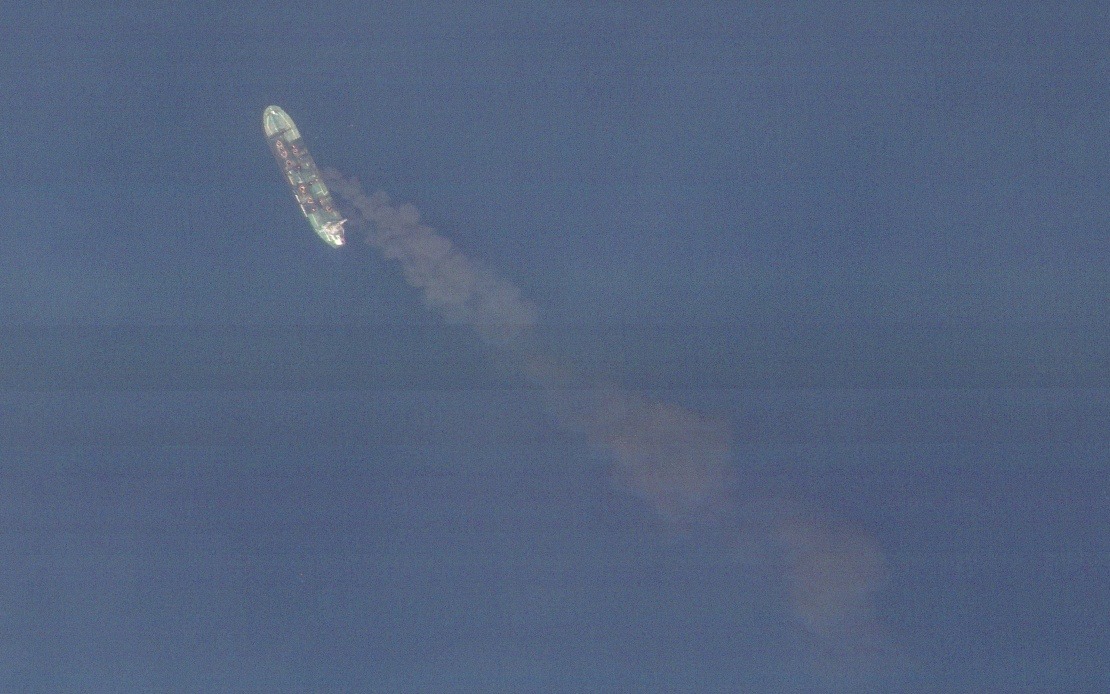
The Saudi-led military coalition operating in Yemen has declared its intention to enforce protective measures for commercial shipping traversing the Bab al-Mandab Strait, signalling a hardened stance following the Houthi group's declaration of a maritime ban targeting Saudi vessels. Coalition spokesperson Turki Al-Malki issued the statement via social media, reaffirming that the Joint Forces Command would deploy all requisite and decisive operational capabilities within the bounds of international law to shield coalition shipping passing through the critical waterway.
The escalating rhetoric underscores the fragile state of maritime security in one of the world's most economically vital shipping lanes. The Bab al-Mandab Strait, separating Yemen from the Horn of Africa, serves as a crucial gateway connecting the Red Sea to the Gulf of Aden and beyond to global trading networks. Disruptions to shipping in this corridor reverberate across international commerce, affecting supply chains and energy flows to markets worldwide, including Southeast Asia. For Malaysian traders and shipping companies with interests in Indian Ocean commerce, such tensions introduce fresh uncertainties and potential cost escalations.
Al-Malki characterised the Houthi maritime ban as baseless posturing and further escalation, pointing to operational data that demonstrates relative commercial normalcy in the contested region. According to the coalition's accounting, more than 300 commercial vessels have utilised ports under Houthi control during the first half of 2024, transporting essential commodities including foodstuffs and petroleum products. This figure suggests that despite political antagonism, the practical mechanics of regional trade have continued functioning, albeit under considerable tension and with elevated insurance and security premiums for participating shipping firms.
The Saudi Foreign Ministry weighed in through a separate statement, directly refuting Houthi claims of an economic blockade. Riyadh's position emphasises that the kingdom has actively pursued initiatives to mitigate suffering among Yemen's civilian population through development programming and budgetary transfers to support governance structures. This counter-narrative reflects competing interpretations of responsibility for Yemen's humanitarian crisis, a debate that has persisted throughout the conflict and influences how regional powers justify their military postures to domestic and international audiences.
The Houthis' announcement of the maritime ban rested on what their leadership termed a "blockade for blockade" rationale, framing it as proportional retaliation against what they characterise as a nearly twelve-year Saudi-imposed siege of Yemen. This rhetorical construction attempts to establish moral equivalence between their actions and coalition policies, appealing to narratives of resistance against foreign intervention that resonate within certain constituencies in the region and among sympathetic observers globally.
The immediate trigger for this latest deterioration traces to a specific incident involving Sanaa International Airport, where the Saudi-backed Yemeni government conducted military strikes designed to prevent an Iranian aircraft carrying a senior Houthi delegation from landing. The Houthis responded to this interdiction through their established asymmetric tactics, launching missiles and armed drones toward Saudi Arabian territory. This tit-for-tat dynamic reflects the persistence of covert and overt hostilities that continue despite the nominal ceasefire framework established in 2022.
Yemen's conflict trajectory spans a decade, originating in late 2014 when Houthi forces captured the capital city Sanaa and consolidated control over densely populated northern territories. The Saudi-led coalition's military intervention beginning in 2015 aimed to reverse these gains and restore the internationally recognised government, yet the conflict has instead settled into a grinding, multi-faceted struggle involving regional proxies, international interests, and complicated internal Yemeni factionalism. The humanitarian toll has been severe, with millions displaced and dependent on external assistance for survival.
The 2022 United Nations-brokered truce represented a significant achievement in de-escalation efforts, temporarily reducing active military operations and creating space for dialogue. However, this arrangement has proven brittle, subject to recurring violations and incidents that threaten its continued viability. Security analysts and policymakers have cautioned that the current trajectory, marked by fresh provocations and counter-escalations, risks unravelling the fragile ceasefire entirely and returning the region to widespread active conflict.
For Southeast Asian stakeholders, the implications merit serious consideration. Malaysia and the region depend substantially on Red Sea and Indian Ocean shipping corridors for energy imports and manufactured goods exports. Escalating instability in Yemen threatens to impose significant costs through heightened maritime insurance premiums, extended transit times, and potential supply chain disruptions. Shipping companies and traders must factor in additional security expenses and route modifications, ultimately raising costs for consumers throughout Southeast Asia and beyond.
The coalition's explicit commitment to defend shipping using military means, combined with Houthi counter-threats, creates a volatile environment where miscalculation could precipitate broader conflict. The presence of international commercial interests and military assets from multiple nations in the region compounds the risks of unintended escalation. Regional powers, including Iran, maintain stakes in Yemen's outcome and maritime security arrangements, ensuring that local disputes retain international dimensions and significance.
The ideological and geopolitical dimensions of the Yemen conflict intersect with maritime security concerns, making simple technical solutions untenable. The Houthis' anti-Saudi positioning reflects broader regional competition between Saudi Arabia and Iran for influence, a rivalry that permeates Middle Eastern politics and affects states far beyond the immediate theatre. Understanding these deeper currents proves essential for Malaysian policymakers monitoring regional developments and their potential repercussions on shipping, energy security, and broader Indo-Pacific stability.
Moving forward, de-escalation appears increasingly difficult absent meaningful diplomatic breakthroughs addressing the underlying sources of Houthi grievance and Saudi security concerns. International mediation efforts, including potential United Nations engagement, may provide avenues for stabilising the situation, though the track record of such initiatives in Yemen remains mixed. The continued deterioration of the ceasefire arrangement signals that the window for diplomatic solutions may be narrowing, with consequent risks for maritime commerce and regional peace.

