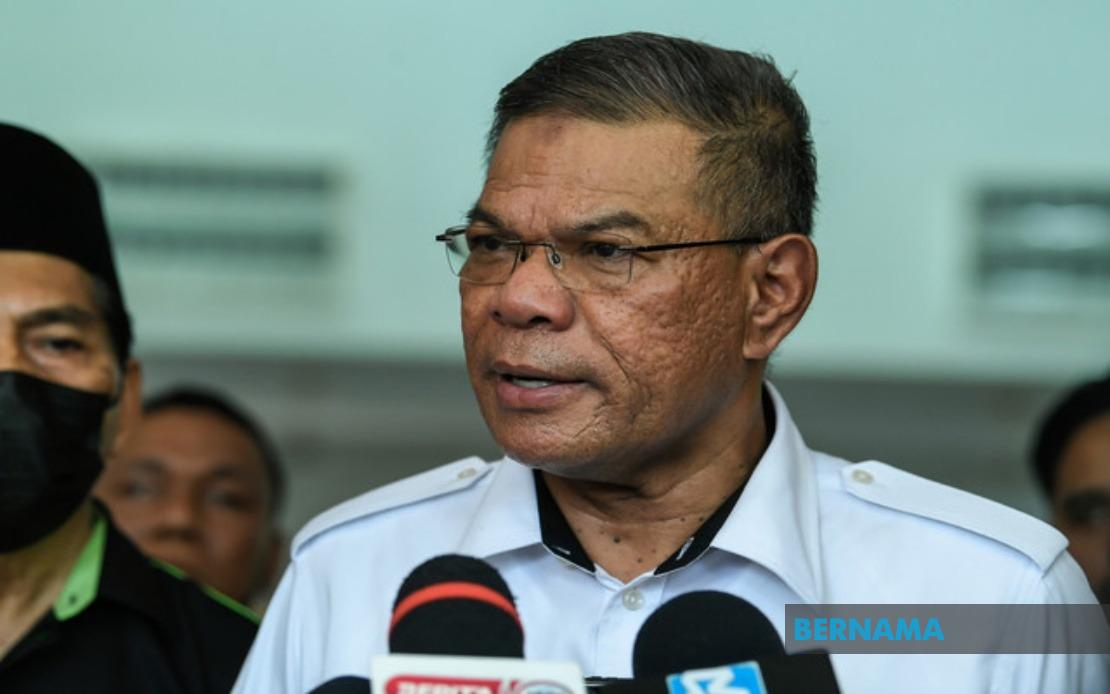
Home Minister Datuk Seri Saifuddin Nasution Ismail has clarified that School Liaison Officers operating within Malaysia's education system shoulder considerably broader responsibilities than simply addressing bullying among students. Speaking in Kulim on July 22, the minister outlined how the Royal Malaysia Police (PDRM) continues to expand and strengthen its monitoring infrastructure through strategically deployed officers in schools nationwide, working as part of a larger government framework designed to safeguard student welfare across multiple dimensions.
The minister's comments came as he inspected the damaged hostel facilities at Sekolah Menengah Agama Tarbiah Diniah following a fire that swept through the building early in the morning, destroying the structure and displacing 116 students from their temporary residences. During a media briefing, Saifuddin Nasution sought to reframe the public conversation around school safety officers, emphasising that their mandate extends well beyond the high-profile bullying incidents that periodically capture social media attention and concern parents across the country.
According to the Home Minister, School Liaison Officers comprise trained police personnel drawn from district police headquarters or nearby police stations who maintain consistent engagement with educational institutions, parent bodies, and student communities through structured programmes and regular interaction. This integrated approach ensures that officers develop familiarity with individual school environments, student demographics, and potential risk factors unique to each institution. The deployment represents a systemic effort to establish protective infrastructure rather than merely responding reactively to isolated incidents of student misconduct or violence.
Beyond PDRM's involvement, Saifuddin Nasution highlighted the complementary role played by officers from the National Anti-Drugs Agency (AADK), whom the Home Ministry positions within schools to monitor student wellbeing and safety across a spectrum of concerns. These initiatives work in concert, creating overlapping layers of observation and intervention designed to catch emerging problems before they escalate into serious incidents. The minister cited recent cases including a student injury at a Kuala Nerang school to illustrate the diversity of situations requiring police attention and investigation, demonstrating that school safety encompasses everything from accident investigation to incident prevention.
The timing of these remarks proved significant given the national attention surrounding recent bullying incidents, notably a case in Cheras that generated substantial online discussion. By positioning the School Liaison Officer programme within a broader safety framework, the minister sought to reassure the public that government responses to school-related problems operate across multiple channels and preventative mechanisms, rather than depending solely on reactive intervention when individual bullying cases become public knowledge.
On the immediate crisis affecting Sekolah Menengah Agama Tarbiah Diniah, the government moved swiftly to provide material support to displaced students. Each of the 116 affected students received RM500 in emergency cash assistance, representing the government's immediate response to students who lost all personal belongings in the fire. The minister acknowledged the severity of their situation, noting that many students possessed only the clothes on their backs following the blaze that erupted around 2.30 am.
Beyond individual cash payments, Saifuddin Nasution announced that he had secured Prime Minister approval for an additional RM200,000 emergency allocation specifically directed towards constructing temporary accommodation facilities. This funding enables the school to establish interim housing solutions while permanent reconstruction proceeds, minimising disruption to affected students' educational continuity. The decision reflects the MADANI Government's stated commitment to prioritising incidents affecting school infrastructure and student welfare, framing such responses as core governance responsibilities rather than exceptional circumstances.
The government's response extended into administrative support as well, with the National Registration Department (NRD) agreeing to deploy mobile services directly to the school premises. This arrangement enables affected students to obtain replacement identity documents free of charge, addressing a significant bureaucratic burden that typically compounds physical loss and displacement. By removing cost barriers and centralising services at the affected institution, the government sought to streamline recovery processes and reduce friction as students navigate the multiple practical consequences of losing their belongings.
Saifuddin Nasution emphasised the philosophical underpinning of this comprehensive response, characterising government intervention in school emergencies as reflecting broader societal commitments to children's welfare and educational access. His remarks positioned rapid emergency funding allocation and multi-agency coordination as indicators of government seriousness regarding education infrastructure and student protection. The minister indicated that his office would continue leveraging emergency allocations available through State Development Offices to maximise support reaching affected students, particularly for replacing essential school and learning materials.
In an additional gesture, Saifuddin Nasution's office contributed RM10,000 to the school's Parent-Teacher Association (PTA), enabling the community organisation to support affected families through established local networks. This contribution recognises the important role PTAs play in school communities, particularly during crises when parent-level coordination and mutual assistance often provide crucial supplementary support beyond formal government programmes.
The incident and government response together illustrate how Malaysian policymakers increasingly conceptualise school safety as a complex, multi-dimensional responsibility requiring coordinated action across law enforcement, health services, administrative agencies, and community organisations. Rather than restricting school officer roles to confronting individual misconduct, contemporary approaches acknowledge that comprehensive student protection requires systematic monitoring, emergency preparedness, rapid material assistance, and administrative coordination. For Southeast Asian readers and Malaysian families, this suggests an evolving government posture toward education sector challenges, moving beyond traditional policing functions toward integrated welfare frameworks.

