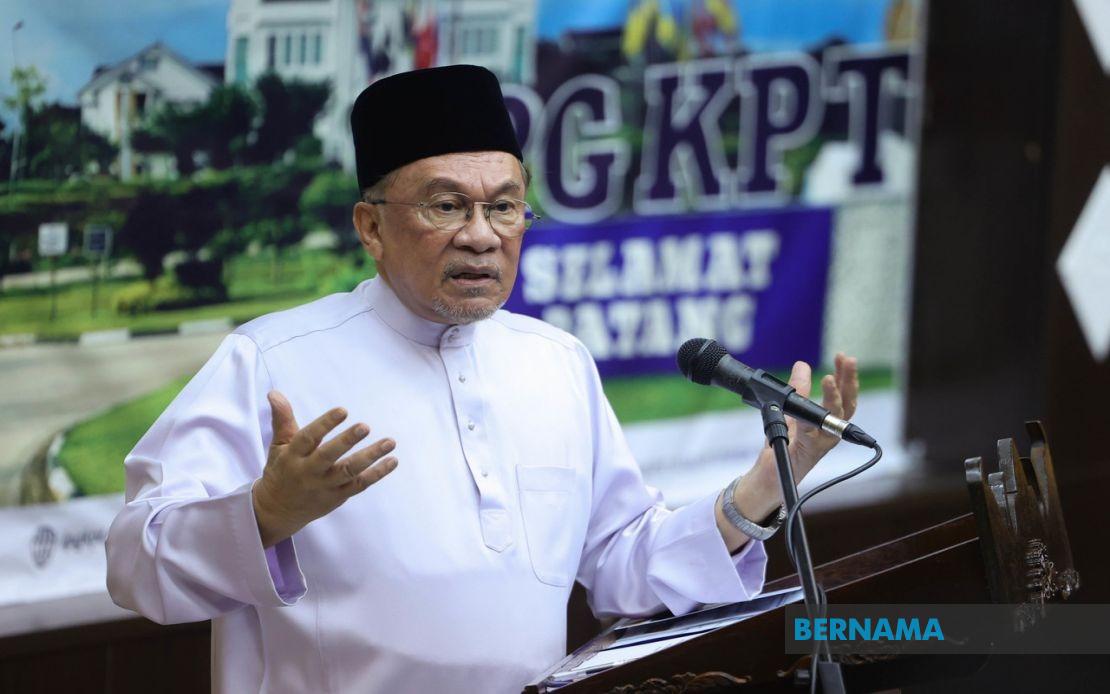
Prime Minister Datuk Seri Anwar Ibrahim has called on Malaysian schools to abandon the practice of suppressing bullying cases in an effort to maintain their public standing, warning that institutional reputation should never take precedence over student welfare. Speaking in Nilai on July 17, the Premier stressed that immediate and transparent responses to bullying are fundamental to protecting affected students and tackling the problem at its roots.
The Prime Minister's remarks underscore a persistent concern within Malaysia's education system: the reluctance of some institutions to publicly acknowledge bullying incidents. While schools may fear that disclosing such cases could tarnish their image or deter prospective students and parents, Anwar made clear that this defensive approach is counterproductive and ethically indefensible. He drew a distinction between schools that handle reported cases properly and those that attempt to silence victims, emphasising that the latter category bears genuine responsibility for institutional failure.
To illustrate his point, Anwar noted that a school educating 1,000 students should not face criticism for reporting two bullying incidents. Rather, the measure of institutional integrity lies in how swiftly and thoroughly school leaders respond once they become aware of misconduct. A headmaster or principal who acknowledges and addresses bullying is exercising proper duty; one who discovers incidents but chooses silence is fundamentally abandoning their pastoral responsibility. This reframing shifts the narrative from viewing reported cases as institutional failings to viewing cover-ups as the true breach of trust.
The Prime Minister's intervention comes at a time when Malaysia faces growing awareness of bullying's psychological and social toll on victims. While bullying has long existed in schools across the country, the emergence of digital platforms and social media has enabled harassment to extend beyond physical spaces into students' homes and personal lives. Anwar's acknowledgment that bullying constitutes far more than a minor disciplinary matter reflects this evolved understanding of the phenomenon's pervasiveness and impact.
Central to Anwar's argument is a diagnosis of systemic weakness in moral and character education. Despite Malaysia's considerable religious education infrastructure—more extensive than in previous generations—incidents of student-on-student cruelty persist. This paradox suggests that institutional access to religious and ethical instruction does not automatically translate into genuine internalization of values such as empathy, kindness, and respect for human dignity. The gap between curriculum and conduct points to deeper challenges in pedagogy and school culture that cannot be remedied through policy documents alone.
Anwar articulated a broader vision of education's purpose that extends beyond academic and technical achievement. The contemporary emphasis on producing high-performing graduates and skilled professionals, while important for economic competitiveness, has sometimes overshadowed education's classical function of forming character and cultivating wisdom. A society may boast numerous IT specialists, engineers, and doctorate holders, yet find itself diminished if those individuals lack compassion, fail to recognise the inherent worth of others, or employ their expertise without ethical restraint. The Prime Minister's critique implicitly challenges Malaysia's education sector to recalibrate its priorities.
The burden of fostering such values rests significantly on teachers themselves. Anwar acknowledged the Malaysian teaching profession's generally high standards and expressed confidence in its capacity to continue improving. Yet he simultaneously placed substantial expectations on educators to serve as guardians not merely of knowledge transmission but of moral formation. Teachers must create classroom environments where bullying becomes socially unacceptable, where victims feel safe reporting harassment, and where perpetrators encounter meaningful consequences alongside opportunities for rehabilitation and reflection.
Education Minister Fadhlina Sidek's presence at Anwar's address signals government-wide commitment to translating these principles into policy and practice. The visibility of the education portfolio holder suggests that addressing bullying is not a peripheral concern but an integrated aspect of the government's education agenda. Implementation will require clear protocols requiring schools to document and report incidents, training for teachers in recognising and responding to bullying, and assurance to school leaders that reporting will not result in unfair institutional penalties.
For Malaysian parents and students, the Prime Minister's statement provides reassurance that transparency around bullying is now a national priority rather than a matter left to individual school discretion. Parents considering whether to report their child's victimisation can take comfort that the highest levels of government have rejected the shame-based culture that once discouraged disclosure. Students who witness bullying may feel emboldened to speak up if they understand that their schools will face accountability for inaction rather than for mere acknowledgment of problems.
The challenge ahead involves converting rhetoric into sustained behavioural change across Malaysia's thousands of schools. Some institutions will readily embrace Anwar's framework, recognising that transparency builds trust with families and communities. Others may resist, fearing reputational damage or unsure how to implement systems for reporting and remediation. The Education Ministry must provide concrete guidance, including templates for incident documentation, training modules for staff, and support mechanisms for bullied students and their families. Without such practical support structures, even well-intentioned schools may struggle to translate the Prime Minister's vision into reality.
Anwar's intervention also raises questions about the sufficiency of Malaysia's existing anti-bullying infrastructure. While schools typically maintain disciplinary codes addressing misconduct, comprehensive antibullying frameworks that address prevention, early intervention, and support for victims remain inconsistently implemented. Moving forward, the government may need to mandate standardised protocols, establish counselling and therapeutic services, and ensure that consequences for bullying behaviour are proportionate and educationally constructive rather than merely punitive.
Ultimately, the Prime Minister's remarks represent an attempt to realign Malaysian education with its stated purpose: developing not merely technically competent workers but morally grounded citizens capable of contributing to a cohesive, compassionate society. Bullying undermines this mission by instilling fear, damaging psychological wellbeing, and teaching victims that vulnerability invites cruelty rather than protection. By insisting on transparency and swift action, Anwar has signalled that creating genuinely safe learning environments is not a luxury but a non-negotiable dimension of educational excellence.

