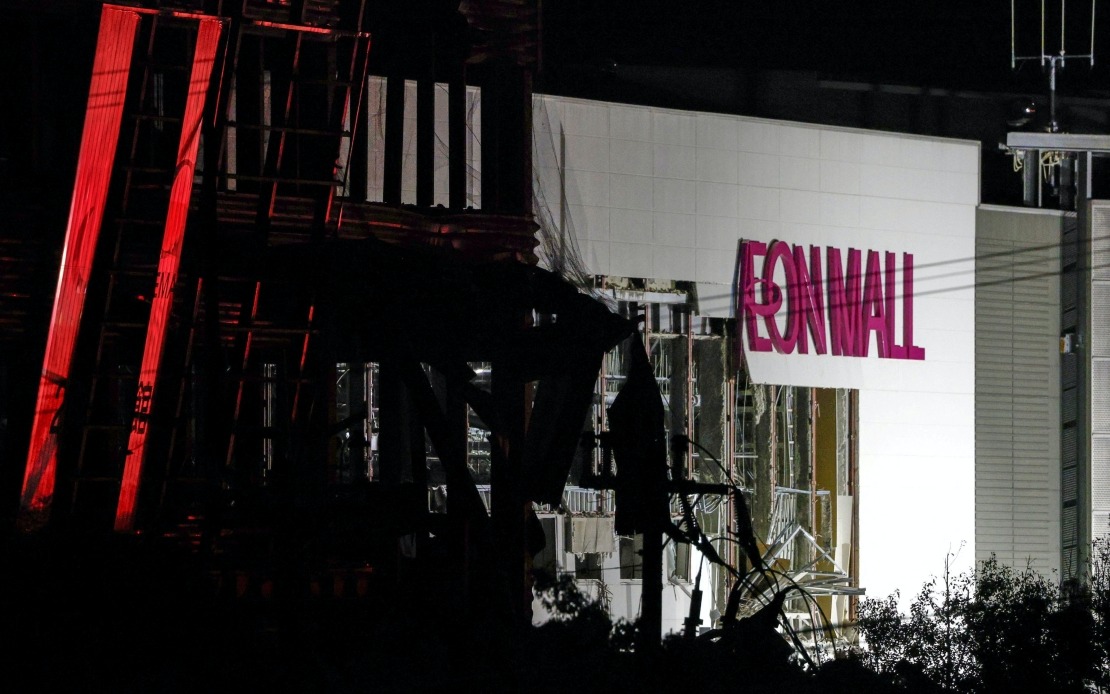
Rescue teams in Japan are racing against time to locate between 20 and 30 employees who have gone missing following a catastrophic explosion that struck Aeon Mall Kumamoto in Kashima Town on Tuesday evening. The incident unfolded in the aftermath of a major seismic event that jolted southwestern Kumamoto Prefecture, creating a dual emergency that has strained local emergency services and captured national attention.
The magnitude-7.1 earthquake that preceded the mall explosion struck at 4:27 pm local time, sending tremors across the region and prompting immediate evacuation procedures. The subsequent blast at the shopping complex occurred around 6 pm, roughly two hours after the initial quake. According to reports from Japan's National Police Agency and public broadcaster NHK, the explosion caused significant structural damage to the major retail hub, though the exact cause remains under investigation. The timing of the incident, occurring during evening hours when the mall would typically still be operational, has raised particular concerns about the potential scale of casualties.
While most customers had already been moved to safer outdoor areas by the time the explosion occurred, authorities are still working to determine whether any shoppers are among those unaccounted for. The focus of initial search efforts has centred on mall employees, many of whom may have been working in back-of-house areas or storage facilities less accessible to customers during the evacuation process. Police officials have expressed concern that some staff members may be trapped within the damaged structure, prompting intensive searches through the building's ruins.
The National Police Agency confirmed that multiple individuals believed to be Aeon Mall employees cannot be reached by telephone or other means of contact. This communication blackout has complicated rescue efforts, as authorities struggle to determine whether the missing persons are injured, trapped, or have simply been displaced and are currently out of contact due to network failures or other factors. The uncertainty has forced emergency services to treat the situation as a potential mass casualty incident and conduct thorough searches of the entire affected area.
Beyond the shopping mall itself, the broader earthquake has created additional challenges for search and rescue operations. Authorities have reported that fewer than ten other people remain unaccounted for across the wider Kumamoto Prefecture region as a direct result of the magnitude-7.1 seismic event. This secondary wave of missing persons, though numerically smaller, indicates that the earthquake's impact extended well beyond the immediate vicinity of the mall and has created cascading emergencies across multiple locations.
Police and fire department personnel have mobilised extensive resources to search the damaged mall building for survivors and trapped workers. The complexity of modern shopping centres, with their multiple levels, interconnected spaces, and basement areas, presents significant challenges for rescue teams attempting to locate missing individuals. The structural damage caused by the explosion compounds these difficulties, as sections of the building may have become unstable or impassable.
Broadcaster TBS reported that multiple fatalities may have resulted from the explosion, though official confirmation of deaths has not yet been released. A Kumamoto Prefectural Police official indicated that authorities are bracing for substantial casualties, cautioning that considerable time will be required to identify all victims and compile an accurate death toll. This measured but grim assessment reflects the severity of the situation and suggests that the final toll could be significant.
For Malaysian readers, this incident underscores the vulnerabilities that modern shopping centres face during natural disasters and the cascading emergencies that can result from seismic events. Southeast Asia's own earthquake-prone regions, particularly areas near major fault lines, should take note of how coordination between emergency services and private facility operators proved critical in evacuating most customers before the explosion occurred. The dependence on swift communication and established evacuation protocols likely saved considerable lives in this instance.
The explosion at Aeon Mall Kumamoto also highlights the importance of infrastructure resilience and workplace safety protocols in high-risk environments. Shopping malls in earthquake-prone zones must maintain rigorous emergency preparedness programs and ensure that all staff members, particularly those in back-of-house areas, receive comprehensive training in evacuation procedures and shelter-in-place protocols.
As rescue operations continue, the focus remains on locating and assisting the missing employees as quickly as possible. The coordination between local police, fire services, and regional authorities will be critical to determining the final outcome of this disaster. Japanese emergency management expertise in handling seismic-related incidents has been tested many times over the decades, but each major incident brings fresh lessons about vulnerability and preparedness.
The incident also raises questions about infrastructure inspection schedules and building code compliance for major commercial centres in seismically active regions. Post-disaster investigations will likely examine whether the mall's construction, utility systems, and safety infrastructure met current standards and whether any structural weaknesses contributed to the explosion's severity.
For the families of missing employees and the broader business community operating shopping centres throughout Japan and across Southeast Asia, this tragedy will likely prompt a comprehensive review of emergency protocols and investment in modernised safety systems.

