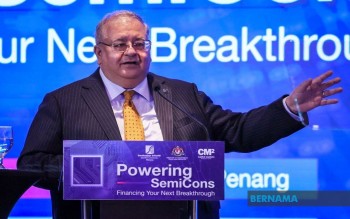
The Securities Commission Malaysia has signalled its readiness to assume regulatory oversight of Lembaga Tabung Haji's fund management and investment operations, contingent upon government approval. SC chairman Datuk Mohammad Faiz Azmi made the statement in George Town on Monday, confirming that the regulatory role would only be implemented should authorities deem it suitable. The proposal forms part of broader recommendations stemming from the Royal Commission of Inquiry into TH, which has been systematically reviewed by officials across multiple regulatory bodies.
Currently, a tri-partite task force comprising the SC, Bank Negara Malaysia, and TH itself is evaluating the feasibility of implementing the RCI's recommendations. Azmi clarified that while the SC remains prepared to execute its assigned responsibilities, the ultimate authority rests with the government. He explained that the commission would only proceed with the regulatory mandate once it receives formal direction from Putrajaya. This cautious stance reflects the delicate balance between independent regulatory bodies and political oversight in Malaysia's financial governance framework, particularly concerning religiously-mandated savings institutions.
The proposal to expand SC's jurisdiction over TH represents a significant structural change for the hajj savings entity, which currently operates under a different regulatory umbrella. Azmi emphasised that the scale of TH's investment portfolio warrants serious consideration of enhanced oversight mechanisms. Given that Tabung Haji manages savings accumulated over decades for millions of Malaysian Muslims planning to perform the hajj pilgrimage, the quantum of funds under its stewardship justifies heightened regulatory scrutiny. The institution's investment decisions directly impact the retirement prospects and savings security of its depositors, making governance improvements a matter of considerable national importance.
The RCI's recommendations emerged following concerns about TH's financial management and investment practices in recent years. The inquiry sought to identify structural weaknesses and recommend reforms to strengthen institutional governance and protect depositor interests. Enhanced SEC oversight could theoretically provide additional layers of professional scrutiny, given the commission's established expertise in supervising investment activities across Malaysia's financial sector. However, questions remain about whether adding another regulatory layer would genuinely improve outcomes or simply create administrative complexity.
Minister in the Prime Minister's Department (Religious Affairs) Dr Zulkifli Hasan had previously indicated that the SC was being considered as a supervisory body for TH's fund management. This proposal reflects growing recognition among policymakers that sophisticated investment oversight requires specialist expertise. The SC possesses established frameworks for monitoring fund managers, ensuring compliance with investment guidelines, and protecting investor interests—frameworks that could potentially be adapted for TH's unique context as a religiously-affiliated savings institution.
The involvement of Bank Negara Malaysia in the task force adds another dimension to the review process. BNM's participation suggests that broader financial stability considerations are also at play. As Malaysia's central bank, BNM maintains oversight of systemic risks within the financial system, and TH's investment decisions could potentially have sector-wide implications if mismanaged at scale. The tri-partite composition reflects an understanding that modernising TH's regulatory structure requires coordination across multiple regulatory agencies with complementary mandates and expertise.
For Malaysian Muslims who have entrusted their hajj savings to TH, these governance reforms carry immediate practical significance. Enhanced regulatory oversight could theoretically reduce risks of investment losses, improve transparency regarding fund performance, and strengthen accountability mechanisms. Many depositors have expressed concerns following instances of poor investment returns or governance lapses, making institutional reforms a legitimate focus for policy attention. The government's willingness to seriously consider RCI recommendations demonstrates responsiveness to public concerns about managing sacred financial trusts.
The broader context involves Malaysia's ongoing efforts to strengthen financial regulation and governance standards across diverse institutions. Sectoral regulators like the SC have progressively expanded their purview over recent decades as financial markets have grown in sophistication and interconnectedness. The potential inclusion of TH within the SC's regulatory ambit would represent a natural extension of this trend, aligning a major savings institution with broader financial sector oversight standards.
Regional observers note that Southeast Asian countries have varied approaches to supervising religiously-mandated financial institutions. Some jurisdictions integrate them fully within national financial regulatory frameworks, while others maintain hybrid models with sector-specific oversight. Malaysia's approach to TH governance could offer insights to other Muslim-majority nations wrestling with similar challenges of balancing religious institutional identity with modern financial regulation requirements.
The timeline for government decision-making remains unclear. Azmi's comments suggest the task force is still in the deliberative phase, evaluating practical implementation challenges and assessing whether proposed reforms would meaningfully enhance institutional performance. Government approval could come within months or extend further depending on bureaucratic processes and other policy priorities competing for ministerial attention. Once the government signals its decision, implementation would likely require legislative amendments or regulatory framework adjustments to formally transfer supervisory responsibilities to the SC.
Stakeholder responses will prove important as the government considers its position. TH management, depositors, Islamic finance scholars, and financial sector professionals may all weigh in on whether expanded SC oversight serves institutional interests effectively. The SC's demonstrated willingness to accept the regulatory responsibility reflects confidence in its ability to manage such oversight, though questions about resourcing and coordination mechanisms between the SC and TH's existing leadership structure remain to be addressed. Ultimately, the government's decision should prioritise depositor protection and institutional sustainability over administrative convenience or political considerations.

