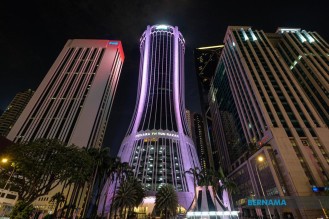
The government's decision to place Tabung Haji's fund management under Securities Commission Malaysia oversight represents a watershed moment for the country's largest Islamic savings institution, addressing years of governance failures that left hundreds of thousands of ordinary Malaysians financially exposed. On August 11, the administration announced this significant structural reform, marking the culmination of a comprehensive review that began in 2021 and resulted in a 211-page Royal Commission of Inquiry report containing 25 recommendations for systemic improvement.
Dr Mohd Faisol Ibrahim, a senior lecturer in Islamic Economics and Banking at Universiti Sains Islam Malaysia, emphasises that the Securities Commission's direct involvement in overseeing Tabung Haji's investment decisions is not merely administratively prudent but strategically indispensable. The challenge facing regulators is multifaceted: Tabung Haji must simultaneously achieve competitive dividend returns for its depositors, protect accumulated capital, maintain sufficient liquidity for haj operations, and operate under strict Islamic financing principles. These objectives, while not inherently contradictory, require sophisticated oversight mechanisms to prevent the conflicts of interest and risk-taking behaviours that characterised the institution's troubled period from 2014 to 2020.
Under the existing framework, Tabung Haji operated as a non-banking financial intermediary without the regulatory constraints applied to conventional banking institutions. This regulatory gap, combined with weak governance structures, created conditions where investment decisions could be influenced by non-commercial considerations. The Royal Commission identified that political appointees and external pressure contributed to poor investment choices that ultimately eroded depositor value. The new arrangement addresses this by subjecting Tabung Haji to investment governance standards comparable to those imposed on major institutional investors regulated by the Securities Commission, fundamentally changing how the institution approaches capital deployment.
Dr Mohd Faisol recommends that the Securities Commission become a permanent member of Tabung Haji's investment committee, equipped with veto authority over proposals deemed excessively risky or commercially unsound. This would represent a departure from the previous model where management had considerable autonomy in investment decisions. The proposed integration should extend to comprehensive governance protocols covering solvency requirements, reserve adequacy, profit distribution mechanisms, and disclosure standards. Such measures would create transparency that depositors can verify independently, rather than relying on management assurances that proved hollow during the previous crisis.
The academic advocates for establishing dual oversight committees—an investment committee and a risk committee—to create multiple approval checkpoints before significant capital commitments proceed. This architecture would require consensus across diverse stakeholder representatives, including Securities Commission officials, Bank Negara Malaysia representatives, and Ministry of Finance personnel. The involvement of multiple regulatory bodies creates inherent tension that, while sometimes cumbersome administratively, serves as a crucial safeguard against unilateral decision-making by any single faction within Tabung Haji's leadership. This distributed authority model prevents concentrated power and forces rigorous justification of every major investment based on commercial merit rather than political expediency or personal connections.
Bank Negara Malaysia's strengthened advisory role proves particularly significant given its expertise in financial risk assessment and macroeconomic analysis. Tabung Haji's previous investment debacles often reflected inadequate appreciation of currency exposure, interest rate risks, and sectoral vulnerabilities. Bank Negara can ensure that strategic risk management extends beyond individual transaction analysis to encompass portfolio-level concentration risks and systemic exposures that threaten the institution's long-term viability. This expertise proves especially valuable given Malaysia's exposure to regional economic volatility and currency fluctuations that directly impact haj costs for depositors.
Dr Mohd Faisol identifies financial restructuring as essential to ensure Tabung Haji's balance sheet remains fundamentally sound. This could involve incrementally increasing minimum savings requirements for haj pilgrimage participation, calibrated carefully to account for ringgit strength fluctuations and global economic conditions. The current structure, where savings minimums have remained static for years despite inflation and rising international haj costs, creates structural vulnerability. Depositors contribute inadequate capital to sustain operations, investment returns, and regulatory compliance simultaneously. A recalibrated savings framework would distribute costs fairly between current and future pilgrims while strengthening institutional reserves.
The Royal Commission report identified governance deficiencies extending beyond investment decisions to board composition and political interference. The recommended ban on active politicians serving as board directors directly addresses the conflicts of interest that plagued recent years. When sitting parliamentarians and political appointees populate governing boards, their loyalty becomes divided between Tabung Haji's interests and political party interests. The separation of powers between the Religious Affairs Ministry and Finance Ministry ensures that haj operations and investment management follow distinct reporting lines and decision-making processes, preventing any single political entity from dominating both functions.
Implementing these recommendations requires careful sequencing and coordination between multiple government agencies with distinct mandates. The Religious Affairs Ministry retains responsibility for haj logistics and pilgrim support services—functions requiring specialised knowledge of hajj procedures, accommodation arrangements, and spiritual guidance. The Securities Commission assumes financial regulation responsibility, bringing institutional investor expertise to capital deployment decisions. Bank Negara provides macroeconomic and financial stability perspectives. The Ministry of Finance contributes fiscal and budgetary discipline. This tripartite or quadripartite arrangement, while potentially bureaucratic, creates the institutional checks that Tabung Haji previously lacked.
For Malaysian depositors—predominantly middle-income Muslim workers saving methodically for life's most important pilgrimage—these reforms carry profound significance. The previous crisis damaged confidence not merely in Tabung Haji specifically but in government-administered savings schemes generally. Rebuilding that confidence requires demonstrable commitment to governance excellence, transparent operations, and placing depositor interests above all other considerations. The Securities Commission's expanded role signals that commercial and regulatory standards will supersede political patronage and non-commercial considerations.
The international dimension merits attention as well. Islamic finance globally scrutinises Malaysian institutions' adherence to Shariah principles and fiduciary standards. Tabung Haji's previous difficulties raised questions internationally about whether Islamic financial institutions in Muslim-majority countries could maintain governance standards comparable to conventional financial institutions. The Securities Commission's oversight helps reassure international Islamic finance participants that Malaysia maintains rigorous supervisory frameworks protecting all investor categories.
Dr Mohd Faisol's emphasis on comprehensive standards concerning solvency, reserves, investment management, and profit distribution reflects best practices in global institutional asset management. Tabung Haji should adopt disclosure practices allowing independent analysis of portfolio composition, risk exposure, and performance attribution. Quarterly reporting to depositors regarding investment performance, risk metrics, and regulatory compliance would establish accountability mechanisms currently absent. Such transparency enables depositors to assess whether dividends reflect genuine investment performance or represent capital depletion masked through accounting mechanisms.
The institutional learning from Tabung Haji's crisis should extend to other government-administered savings and investment schemes. If similar oversight mechanisms prove effective for Tabung Haji, expanding these models to other social security or retirement schemes could improve governance across the sector. The Securities Commission has demonstrated capacity to oversee complex institutional investors; codifying these supervisory relationships through formal regulatory frameworks would strengthen Malaysia's overall financial governance architecture and depositor protections.

