The Sejahtera MADANI initiative continues its expansion across Perak, building on the success of reaching 2,000 beneficiaries with RM2.3 million in combined support. The government has now committed an extra RM3 million to deepen the programme's reach, signalling a renewed push to translate policy promises into tangible community assistance. This incremental funding boost comes as part of the MADANI Government's broader strategy to sharpen its welfare delivery mechanisms and demonstrate concrete returns on social investment.
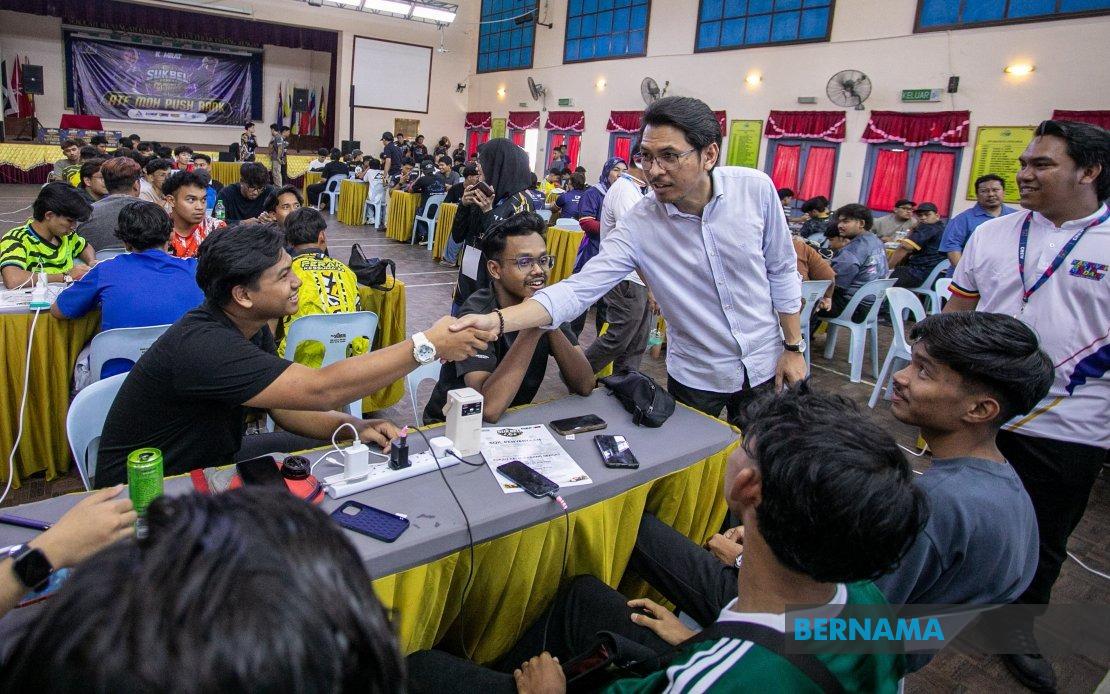
Muhammad Kamil Abdul Munim, the Finance Minister's political secretary, unveiled the fresh allocation during a roadshow event held at the Millennium Hall in Lubok Merbau within the Padang Rengas parliamentary constituency. He framed the initiative not merely as a disbursement mechanism but as a multifaceted support system designed to address interconnected challenges facing Malaysia's vulnerable segments. The additional funds represent a calculated step to broaden the safety net while simultaneously injecting capital and resources into micro-level economic activity.
The expansion will prioritise three overlapping beneficiary groups, each facing distinct challenges within Malaysia's development landscape. Micro-entrepreneurs, who often lack collateral and formal banking relationships, stand to receive business equipment and tools to enhance operational efficiency. Low-income earners will access direct financial assistance aimed at plugging immediate household shortfalls. Meanwhile, high-performing students entering tertiary education will benefit from laptop distribution, an intervention designed to level digital access disparities that increasingly determine educational and career outcomes.
During the Padang Rengas roadshow, the initiative demonstrated its implementation model in action. Thirteen SPM students heading to higher education received laptops, while five small-scale business operators were presented with equipment packages. These tangible handovers serve dual purposes: they provide immediate material support while generating visible evidence of government action that officials can point to in explaining programme efficacy to sceptical or indifferent constituencies.
Yet beneath the programme's expansion lies acknowledgment of serious structural weaknesses that have undermined public confidence in similar initiatives. Muhammad Kamil disclosed that the government intends to impose substantially tighter oversight mechanisms, explicitly referencing earlier project failures and the leakage of public funds through mismanagement. This candid admission reflects growing political pressure around fiscal accountability, particularly acute given Malaysia's narrow fiscal space and competing demands on the federal budget.
The original Sejahtera MADANI framework devolved project prioritisation to local communities, a design philosophy rooted in subsidiarity principles and grassroots engagement. However, this decentralised approach created accountability gaps and implementation vulnerabilities. The government now recognises that community ownership, while theoretically appealing, cannot function effectively without commensurate supervisory infrastructure and enforcement capacity. This represents a significant pivot in governance philosophy, moving from trust-based delegation toward verification-based accountability.
Muhammad Kamil's emphasis on stepped-up monitoring reflects lessons learned from comparable programmes across Southeast Asia and domestically. India's NREGA scheme, Indonesia's Village Fund programme, and the Philippines' Conditional Cash Transfer system have all encountered implementation challenges when local management capacity proved insufficient relative to programme ambition. Malaysia's prior experience with similar schemes demonstrates that design elegance matters far less than execution rigour, and that public servants must accept the administrative burden of close supervision rather than optimistically assuming beneficiary communities will police themselves.
For Malaysian residents and policymakers, this recalibration carries important implications. The RM3 million injection signals government determination to sustain the initiative despite setbacks, rather than abandoning it as administratively unworkable. Simultaneously, the tightened oversight acknowledges that state capacity remains the fundamental constraint on social spending effectiveness. Citizens in Perak and potentially other states can anticipate slower but more reliable delivery as bureaucratic checks intensify.
The initiative's evolution also illustrates how Malaysia's political system increasingly demands immediate, visible redistribution to demonstrate governmental legitimacy. The laptop distribution and business equipment handover represent theatre alongside substance, but theatre that reinforces public comprehension that assistance is genuinely flowing. In an environment where electoral competition hinges partly on tangible benefits delivery, such demonstrations carry real political weight beyond their symbolic dimensions.
Regionally, Malaysia's approach reflects a broader Southeast Asian trend toward structured, targeted welfare programmes that blend safety-net functions with productivity enhancement. Unlike pure cash transfers, the Sejahtera MADANI model combines immediate relief with medium-term capacity building. For low-income households, the distinction matters considerably: equipment for an entrepreneur or a laptop for a student creates potential avenues for income or credential generation rather than merely alleviating current deprivation.
The programme's expansion to Padang Rengas specifically carries electoral resonance, as parliamentary constituencies remain important political battlegrounds where visible spending can influence voter behaviour. The timing and location of the roadshow suggest calculation around upcoming electoral cycles, though officials would frame such sequencing as rational allocation matching community demand patterns.
Moving forward, sustained programme success depends on whether the government can institutionalise oversight sufficiently to prevent fraud and mismanagement without creating such burdensome compliance requirements that implementation becomes paralysed. This balance point differs across contexts, and Malaysian officials must learn from implementation experience whether their chosen monitoring intensity will prove appropriate. The RM3 million injection therefore represents not merely additional funds but a test of whether the government can marry ambition with administrative discipline—a challenge that has defeated many development initiatives across Asia.

