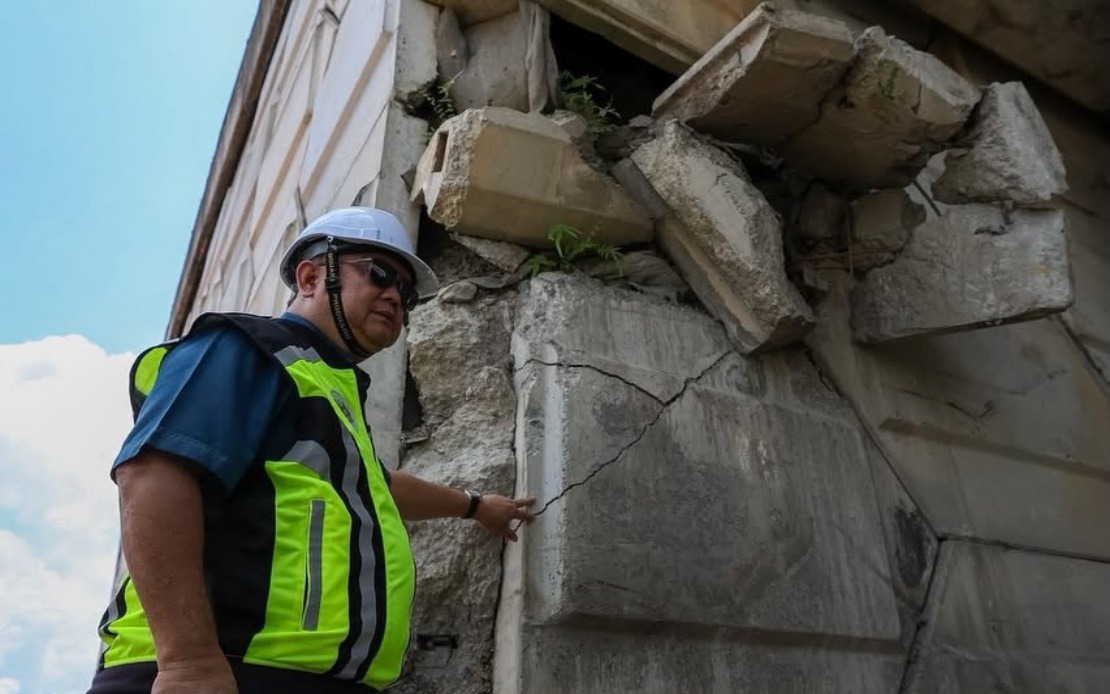
Malaysia's Works Minister Datuk Seri Alexander Nanta Linggi has pledged that repair works at the damaged Ramp 1 of the Selangau-Mukah Interchange Flyover on the Pan Borneo Highway will adhere to rigorous safety protocols before traffic is permitted to resume. The minister made the commitment during an on-site inspection in Sibu on July 6, acknowledging the significant disruption the closure has imposed on regional travel patterns whilst emphasising that restoring safe passage must take absolute precedence.
The flyover remains closed following a collision with a palm oil tanker that compromised the structural integrity of Ramp 1. Technical assessments conducted on location have revealed that the impact damaged part of the retaining wall structure, necessitating comprehensive repair operations before the route can safely accommodate vehicles. The scale of the damage warranted immediate cessation of traffic flow to prevent potential accidents and further deterioration of the infrastructure.
Nanta outlined a phased reopening strategy that prioritises risk mitigation across the interchange. Routes currently deemed safe will be gradually returned to service, while sections still presenting structural concerns will remain sealed off until reconstruction efforts reach completion. This measured approach reflects the ministry's commitment to balancing the urgent need to restore connectivity with the non-negotiable requirement to guarantee commuter safety.
The closure has proven particularly inconvenient for residents and regular users of the Bintulu-Mukah-Sibu corridor, who face extended travel times and alternative routing challenges. Nevertheless, Nanta reiterated that temporary inconvenience represents an acceptable cost when weighed against the risks posed by premature reopening of a structurally compromised facility. The minister acknowledged community frustration whilst defending the decision to prioritise thoroughness over speed.
Recognising the power of public discourse in shaping infrastructure policy, Nanta committed to taking community feedback seriously, whether expressed through conventional media channels or social media platforms. This responsiveness reflects evolving standards of ministerial accountability, particularly regarding critical infrastructure that directly affects daily mobility and economic activity across Sarawak's central region.
Three operational priorities have been established to guide the recovery process. First, the ministry will maintain absolute fidelity to safety standards governing road user protection on the Pan Borneo Highway. Second, oversight mechanisms will be implemented to ensure the repair schedule remains on track, preventing indefinite delays that would compound commuter hardship. Third, transparent communication protocols will keep the public continuously informed regarding affected routes, current closure zones, and reconstruction progress.
The Selangau-Mukah Interchange represents a critical node within the Pan Borneo Highway network, which has substantially enhanced regional connectivity since its completion. The facility's temporary unavailability underscores infrastructure vulnerabilities in Southeast Asia's developing highway systems, particularly the risks posed by heavy commercial vehicles to elevated structures. Palm oil production remains central to Sarawak's economy, and the region's logistics networks must accommodate high volumes of industrial traffic whilst maintaining structural soundness.
Nanta's personal involvement in oversight demonstrates ministerial recognition of the flyover's importance to Sarawak's transport corridor. His commitment to monitor reconstruction efforts directly and ensure reopening occurs only upon confirmation that safety standards have been fully restored signals determination to prevent recurring incidents. The minister's public accountability stance helps manage stakeholder expectations and reinforces the government's commitment to evidence-based decision-making regarding infrastructure safety.
For Malaysian commuters and businesses relying on the Bintulu-Mukah-Sibu route, the phased reopening approach offers modest reassurance that disruption will not persist indefinitely. However, the incident raises broader questions about inspection protocols and preventive maintenance measures that should be applied across Malaysia's extensive highway network. Heavy vehicle collisions with elevated infrastructure remain an ongoing challenge requiring enhanced traffic management, enforcement strategies, and perhaps structural modifications across comparable facilities nationwide.
The broader implications of this incident extend to supply chain resilience for Sarawak's resource-dependent economy. Temporary closures of critical transport corridors can disrupt just-in-time logistics, affecting industrial operations and export schedules. While safety must remain paramount, the incident underscores the importance of redundant route options and diverse transport infrastructure to ensure that single-point failures do not cripple regional economic activity.
Nanta's emphasis on balancing multiple competing demands—safety, timeliness, transparency, and economic continuity—reflects the complex governance challenges facing Malaysian infrastructure management. The coming weeks will prove instructive regarding the ministry's capacity to execute efficient repairs whilst maintaining uncompromised safety standards. Successful resolution would strengthen confidence in Malaysia's infrastructure governance; any further complications would raise uncomfortable questions about technical capacity and oversight effectiveness across the highway network.

