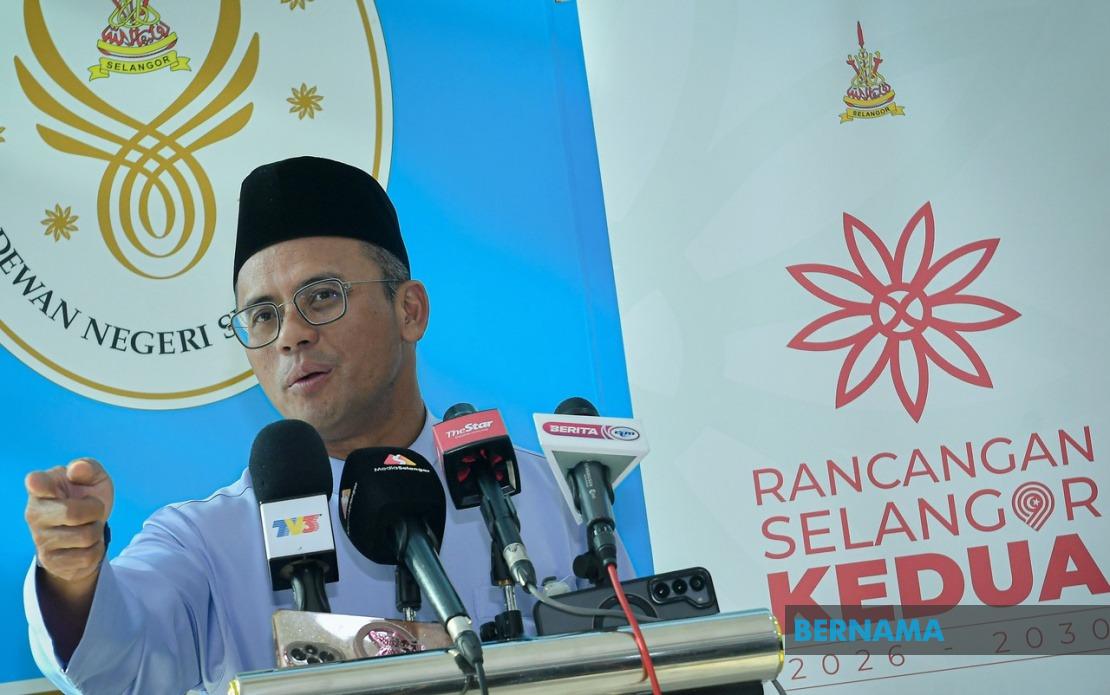
Selangor is pursuing one of Malaysia's most expansive affordable housing programmes, with Menteri Besar Datuk Seri Amirudin Shari announcing that the state government intends to construct 200,000 affordable homes under its second-generation scheme, known as RS-2. Unveiled during the Selangor State Legislative Assembly sitting in Shah Alam, the initiative addresses a persistent challenge across the country: enabling middle and lower-income families to transition from rental living to homeownership in an increasingly expensive property market.
The scale of what Selangor has already accomplished underscores the momentum behind this agenda. To date, 64,188 units have been completed across various developments, while a further 69,014 units are currently under construction, bringing the cumulative total to 133,202 units. This means the state has effectively rolled out nearly two-thirds of its target, positioning Selangor ahead of many other states in providing accessible housing options for its growing population. The remaining units represent approximately 66,798 homes still in the pipeline, a substantial commitment that will require sustained government investment and coordination with developers over the coming years.
A defining feature of RS-2 is its innovative rental-to-ownership pathway, which acknowledges that many families lack the financial capacity for an immediate down payment despite earning steady incomes. Under this arrangement, the Selangor Housing and Property Board (LPHS) will accumulate 30 per cent of tenants' monthly rental payments into an escrow-like account. When residents feel financially prepared and eligible to purchase a home, these accumulated savings are returned to them as a housing deposit, effectively converting their rental payments into equity. This mechanism removes a significant barrier to homeownership and incentivizes long-term residence within Selangor's housing developments.
Beyond bricks and mortar, the Selangor government is implementing a comprehensive monitoring framework to ensure that affordable housing programmes deliver genuine social impact. A new statistical unit will establish an index specifically designed to evaluate the effectiveness of household assistance and support programmes across the state. Rather than a one-time assessment, this index will conduct evaluations at 12-month and 24-month intervals, enabling officials to track how recipients' circumstances improve and identify which interventions prove most effective. This data-driven approach positions Selangor as a leader in evidence-based policymaking within the housing sector.
Recognizing that affordable homes remain inaccessible without reliable transportation links, the state has made public transport connectivity a cornerstone of its planning. Selangor plans to increase the frequency of bus, LRT, and MRT services to make commuting to employment centers more efficient and affordable for residents. Every Rumah Selangorku Harapan and Rumah Selangorku Idaman development will be required to include a dedicated bus stop, ensuring that even in newly constructed estates, residents have immediate access to public transport. This requirement transforms housing development from a siloed exercise into part of an integrated urban ecosystem.
The state's ambition extends further into the realm of urban design and walkability. Selangor is pursuing a vision of cities where residents can accomplish daily tasks on foot, supported by infrastructure such as covered walkways at every LRT and MRT station. These walkways serve multiple purposes: they protect commuters from the region's intense tropical weather, encourage pedestrian movement, and activate public spaces. The covered walkway initiative also demonstrates a sophisticated understanding that affordable housing residents, often with lower disposable incomes, benefit disproportionately from accessible public amenities.
Implementing this integrated vision requires technological sophistication that many state governments have yet to embrace. Amirudin emphasized that the government must deploy data analytics and geographic information systems to identify areas experiencing the highest traffic volumes and concentrations of public gathering points. By mapping these hotspots against residential estates, planners can strategically position small bus stops and transport hubs where demand will be greatest. This technology-enabled approach prevents the inefficiencies of one-size-fits-all planning and ensures resources are deployed where they generate maximum benefit.
The RS-2 programme carries significant implications for the broader Malaysian housing market and regional urban development patterns. Selangor, as the wealthiest state and economic engine of Malaysia, sets benchmarks that other states observe closely. Its commitment to affordable housing at scale, combined with integrated public transport and urban design considerations, suggests that the government recognizes housing as interconnected with economic mobility, health outcomes, and social stability. For residents across Southeast Asia's fastest-growing metropolis, access to affordable homes within well-serviced neighborhoods remains the difference between economic advancement and perpetual precarity.
The financial and logistical challenge of delivering 66,798 additional units should not be underestimated. Construction costs have risen substantially in recent years, land availability in urban Selangor remains constrained, and the state must balance affordability with developer profitability to ensure project viability. Furthermore, the rental-to-own scheme will require sophisticated management systems to track accumulating deposits and prevent administrative errors. Success will depend on sustained political commitment beyond electoral cycles and the willingness to allocate budgetary resources consistently.
For Malaysian policymakers and residents nationwide, Selangor's RS-2 programme serves as a reference point for what comprehensive affordable housing strategy might look like. The integration of homeownership pathways, public transport networks, urban design principles, and performance monitoring suggests that effective housing policy requires departments to operate in concert rather than isolation. As Southeast Asian cities grapple with affordability crises and informal settlement expansion, Selangor's approach of combining supply-side interventions with demand-side support mechanisms and neighborhood-level infrastructure offers lessons for government officials across the region seeking to make homeownership accessible to working families.

