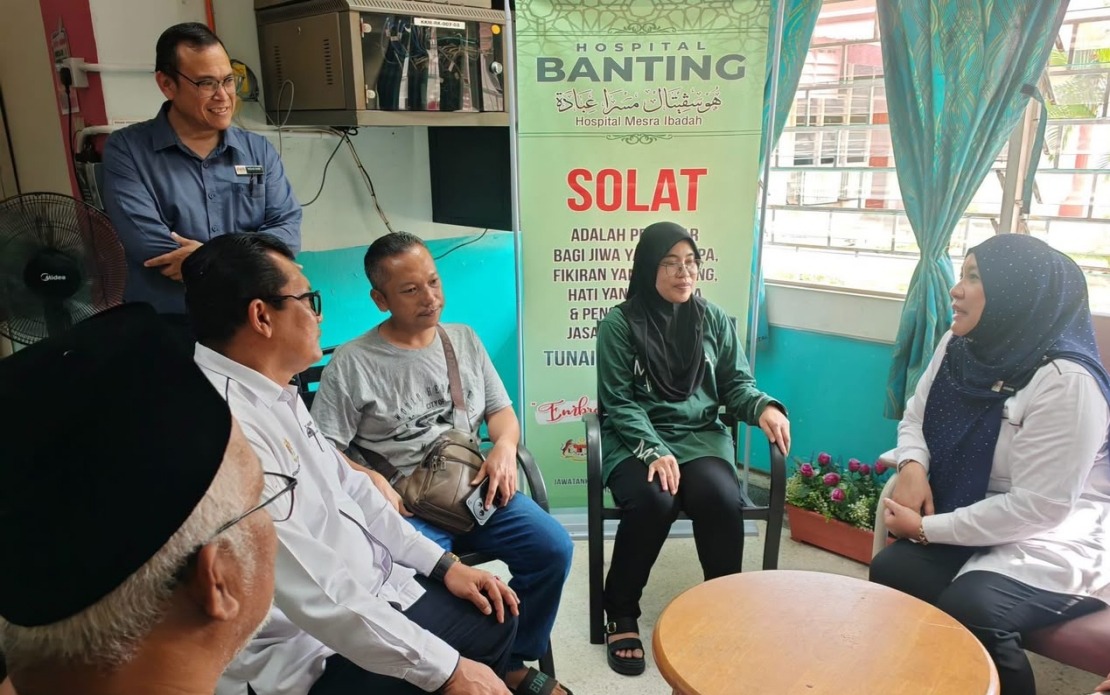
The Selangor State Education Department (JPN) has made an official visit to a female secondary school student who was stabbed at a school in Banting, Kuala Langat, underscoring the seriousness with which state authorities are treating this violent incident within the education sector. The visit, carried out on July 7, took the form of a solidarity gesture aimed at reassuring both the student and her family during this traumatic period.
The department's director, Wan Nor Ashikin Abu Kassim, led the delegation to Banting Hospital, where the injured student is currently undergoing treatment. This high-level engagement signals institutional acknowledgment of the severity of the situation and reflects a commitment to supporting victims of school violence. The director's presence at the hospital also served to strengthen communication between the education authorities and the medical team overseeing the student's care.
During the hospital visit, Wan Nor Ashikin personally met with the student's parents to convey the department's concern and provide encouragement as they navigate their daughter's recovery journey. Such direct engagement from senior officials is particularly important in cases involving minors, as it reassures families that their children's welfare remains a priority for state institutions. The JPN's public statement emphasised that the department stands ready to cooperate with the family, healthcare providers, and all other relevant agencies involved in addressing this incident.
The severity of the injuries sustained by the student became apparent through details shared by her father. The 15-year-old victim, a Form Three pupil, suffered a lung injury and endured 16 stab wounds during the attack. These figures underscore the violent nature of the assault and raise urgent questions about student safety protocols within Malaysian schools. The fact that a student could sustain injuries of this magnitude points to a critical breakdown in security measures at the institution.
In response to the incident, law enforcement moved swiftly to apprehend a suspect believed to be responsible for the stabbing. The individual was detained by police and subsequently remanded for four days effective July 7, indicating that investigations into the circumstances surrounding the attack are ongoing. The four-day remand period allows investigators time to gather evidence, conduct interviews, and determine whether additional charges or extensions may be necessary.
The identity and background of the suspect remain a matter of investigation, though authorities have not yet disclosed whether the individual is a student, former student, or outside party. This information gap reflects standard police procedure in ongoing cases, but it also highlights the uncertainty that surrounds such incidents—uncertainty that often extends to the broader school community as they seek to understand how violence of this nature could occur on their campus.
School stabbings, while relatively uncommon in Malaysia, carry significant implications for the education sector and for public perceptions of student safety. This incident in Banting becomes part of a broader pattern of concern regarding violence in educational institutions across the region. Stakeholders including parents, administrators, and policymakers will likely scrutinise whether existing safety protocols are adequate and whether additional measures are necessary to prevent similar occurrences.
The Selangor JPN's response reflects broader institutional efforts to balance immediate pastoral care with longer-term systemic improvements. The department's public commitment to prayer for the student's recovery and its expression of hope that all matters will be eased for the affected family demonstrate awareness of the emotional and psychological dimensions of trauma for both the victim and those close to her.
Moving forward, this incident will likely prompt discussions about mental health support for students who have witnessed or been directly affected by violence on school premises. The psychological impact of such attacks extends beyond the immediate victim to encompass classmates, teachers, and staff who may develop heightened anxiety about school safety. The JPN's continued engagement with the family and relevant agencies will be crucial in supporting holistic recovery for all affected parties.

