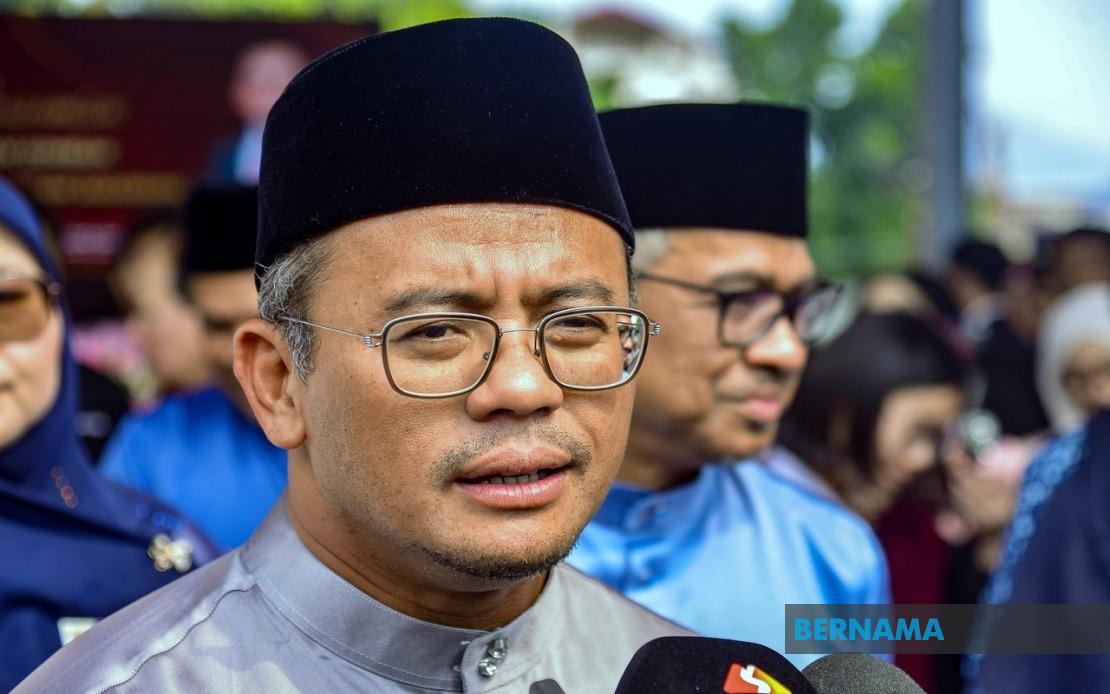
Selangor is set to undertake a comprehensive review of its education support infrastructure, with the state government committing substantial resources in the 2027 budget to elevate student performance in Science, Technology, Engineering and Mathematics. Menteri Besar Datuk Seri Amirudin Shari unveiled the strategic direction during an address following the opening of Gombak Form Six College and the 2026 Academic Excellence Awards ceremony, signalling that educational development has become a central pillar of state governance.
The initiative comes at a critical juncture when Malaysia faces mounting pressure to develop a knowledge-driven economy capable of competing globally. With approximately one million students enrolled across Selangor's education system, the state represents a substantial talent pool whose academic trajectory will directly influence the nation's future competitiveness. Amirudin recognised this multiplicative effect, arguing that improvements in educational outcomes among Selangor's cohort would produce cascading benefits throughout Malaysian society and bolster the country's international standing.
The budget allocation will concentrate on three interconnected objectives: consolidating strong examination performance across traditional academic disciplines, expanding participation in STEM fields among secondary and pre-university students, and creating meaningful pathways for young people to contribute meaningfully to community development. This holistic approach reflects an understanding that educational excellence cannot be measured solely through examination scores but must encompass the cultivation of skills aligned with contemporary labour market demands and civic engagement.
Addressing infrastructure concerns, the Menteri Besar indicated that detailed assessments of school facilities and upgrading requirements are currently underway, with finalisation of expenditure allocations expected between September and October. This methodical approach, whilst potentially frustrating stakeholders seeking immediate certainty, suggests the state government is attempting to base investment decisions on comprehensive data rather than political expediency. School infrastructure across Southeast Asia remains chronically underfunded in many jurisdictions, making Selangor's deliberate inventory process noteworthy.
A particularly innovative element of Selangor's education strategy centres on the Himpunan Pelajar Tingkatan Enam Selangor (HIPSTERS) platform, which serves as a structured mentoring and resource ecosystem for Form Six students preparing for tertiary education. The programme goes beyond conventional support by providing material assistance, specifically book vouchers and complimentary internet data, recognising that socioeconomic barriers frequently constrain talented students from disadvantaged backgrounds. In 2026, the initiative distributed book vouchers to ten thousand Form Six students, representing a significant expansion from its original university-focused scope.
The tangible provision of learning resources carries particular significance across Malaysia, where digital divides persist between urban centres and rural areas, and where household purchasing power varies dramatically. By embedding book and data subsidies into formal educational support structures, Selangor addresses a commonly overlooked dimension of educational inequality. Students without reliable home internet access or family capacity to purchase textbooks face invisible friction that undermines their academic participation, a challenge the HIPSTERS programme seeks to mitigate systematically.
Amirudin's commitment to considering programme expansion reflects receptiveness to evidence-based scaling, dependent on demonstrated demand and logistical capacity. This conditional openness contrasts with both overly rigid bureaucratic inflexibility and uncontrolled programme sprawl. The signals suggest the state government is monitoring uptake metrics and satisfaction indicators, positioning itself to amplify successful initiatives across additional Form Six institutions. For Malaysian policymakers accustomed to centralised, one-size-fits-all approaches, Selangor's willingness to pilot and adapt represents a noteworthy departure.
The emphasis on STEM warrants particular examination within the Malaysian context. Historically, the nation's education system produced surpluses of graduates in humanities and social sciences whilst struggling to develop the engineering and technical talent that manufacturing and digital economy sectors require. Selangor's deliberate targeting of STEM participation addresses this imbalance, though questions remain regarding the quality of STEM instruction, the availability of suitably qualified educators, and whether the pipeline genuinely connects student participation to employment outcomes in high-value sectors.
Investment in education at the state level carries pronounced implications for inter-state equity within Malaysia. Selangor, as the most economically developed state and principal driver of national GDP, possesses greater fiscal capacity than most federal territories and other states. While the Selangor government's commitment is commendable, it underscores the disparities between well-resourced states and those with more constrained budgets. This concentration of educational investment in already-prosperous regions risks compounding regional inequality unless complementary federal initiatives address less advantaged areas.
The timing of these announcements assumes additional significance given broader regional conversations about education quality across Southeast Asia. Vietnam, Thailand, and Indonesia are all pursuing science and technology workforce development strategies, creating competitive pressure on Malaysian states to retain and attract talent. Selangor's STEM initiatives and student support systems position the state competitively but suggest federal coordination might amplify impact. The absence of reference to collaboration with federal education authorities or sister states raises questions about whether Selangor is operating within a coherent national framework or charting independent territory.
Implementation challenges will prove critical to determining whether these policy commitments translate into tangible improvements. Political announcements of educational reform frequently outpace actual resource deployment, curriculum redesign, and teacher training. Selangor's credibility will depend on the fidelity with which budget allocations match stated priorities and whether HIPSTERS expansion occurs substantively rather than nominally. Close monitoring of 2027 budget execution will reveal whether this represents transformative investment or incremental adjustment dressed in reformist rhetoric.

