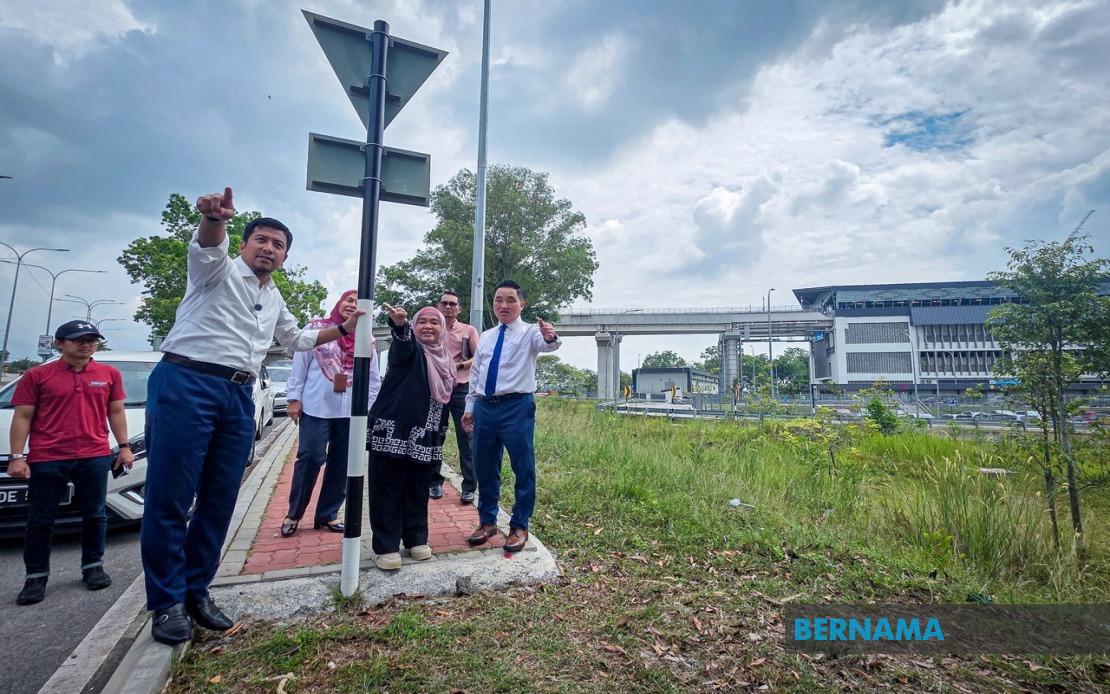
The Selangor State Government has committed to completing connectivity infrastructure improvements around the Shah Alam Line LRT3 stations, acknowledging that despite the transport network's successful launch, several accessibility gaps require immediate attention. State Local Government and Tourism Exco Datuk Ng Suee Lim disclosed during a site inspection that officials are concentrating efforts on resolving deficiencies at two critical interchange points: Dato' Menteri Station and Shah Alam Stadium Station, where pedestrian pathways and crossing facilities remain incomplete or substandard.
The challenges faced at these two stations exemplify broader teething problems common to major infrastructure rollouts across Southeast Asia. At Dato' Menteri Station, the delays stem from administrative hurdles including permit approvals and licensing procedures. Ng announced that Prasarana, the state-owned transit operator, has been given a firm two-month deadline to finalize all connectivity features at this location. This timeframe reflects the government's determination to move beyond preliminary assessments and deliver tangible improvements for daily commuters who have grown accustomed to navigating incomplete facilities since the line's commencement of operations.
Shah Alam Stadium Station presents a more complex scenario, as the outstanding work involves third-party developers in the surrounding commercial and residential precinct. Rather than a straightforward government remediation project, the station's completion depends on coordinating multiple private entities through a formal tender process. Ng indicated that while this developmental approach extends the timeline, the state government intends to monitor progress actively and maintain pressure on stakeholders to accelerate the pace. The acknowledgment that even completed infrastructure projects may reveal operational shortcomings once passenger usage begins reflects a pragmatic understanding that real-world conditions often expose design or implementation flaws invisible during the planning phase.
The Shah Alam City Council (MBSA) has been tasked with overseeing the execution of these improvements, working in concert with Prasarana and external developers. Additionally, a broader coordinating framework will bring together all relevant municipal and local authorities to ensure systematic problem-solving across the entire LRT3 network. This multi-stakeholder governance approach recognizes that connectivity extends beyond station premises into the broader urban environment, encompassing pedestrian routes, traffic management, and accessibility standards that fall under various jurisdictional domains.
The state government's expanded directive requires all local authorities (PBT) operating stations within their respective districts to conduct comprehensive reviews identifying any remaining infrastructure deficiencies. Datuk Ng framed this as a proactive measure to prevent further complaints and establish a standardized baseline for user experience across the system. By mobilizing city councils including the Royal Klang City Council (MBDK), alongside district-level feedback mechanisms involving council members and state assemblymen, the government is attempting to create accountability channels that translate ground-level complaints into actionable policy responses.
This initiative reflects broader regional trends in Malaysian transport planning, where ambitious infrastructure projects occasionally launch before surrounding ecosystem features are fully operational. The LRT3 Shah Alam Line represents significant investment in expanding Klang Valley's public transit capacity, yet the initial phases exposed gaps between project completion and passenger-ready conditions. For Malaysian travelers accustomed to well-maintained transport networks in other developed cities, incomplete pedestrian facilities and inadequate crossing infrastructure can erode confidence in public transportation alternatives and reinforce reliance on private vehicles.
The two-month timeline for Dato' Menteri Station improvements carries symbolic importance beyond the specific location. It signals that the state administration takes infrastructure accountability seriously and will not allow projects to remain indefinitely in transitional states. Setting explicit deadlines, with public officials taking named responsibility, establishes clearer expectations for residents and creates measurable benchmarks against which political performance can be evaluated.
For businesses and property developers surrounding these stations, timely completion of connectivity infrastructure translates directly into property values and commercial viability. Pedestrian walkways and safe crossing points determine whether commuters will patronize adjacent retail and dining establishments or bypass them entirely. Therefore, the state government's push to accelerate these improvements serves broader economic objectives beyond passenger convenience alone, potentially unlocking additional development around strategic nodes within the metropolitan transport network.
The engagement of Exco Youth, Sports and Entrepreneurship Mohd Najwan Halimi during the inspection suggests the government views LRT3 improvements as part of a holistic urban development agenda. Youth mobility and accessibility to sports and entrepreneurship opportunities increasingly depend on functional public transportation. By addressing connectivity gaps now, the state positions itself to support younger demographic's engagement with public transit and commercial zones adjacent to stations.
Selangor's approach to LRT3 infrastructure completion also carries implications for other Malaysian states planning major transit expansions. The transparency about post-launch shortcomings and the structured response framework may inform best practices for upcoming projects. Rather than treating infrastructure defects as temporary embarrassments, acknowledging them and establishing timeline-bound remediation may build public confidence in government's capacity to deliver completed, functional transport systems rather than merely impressive opening ceremonies.

