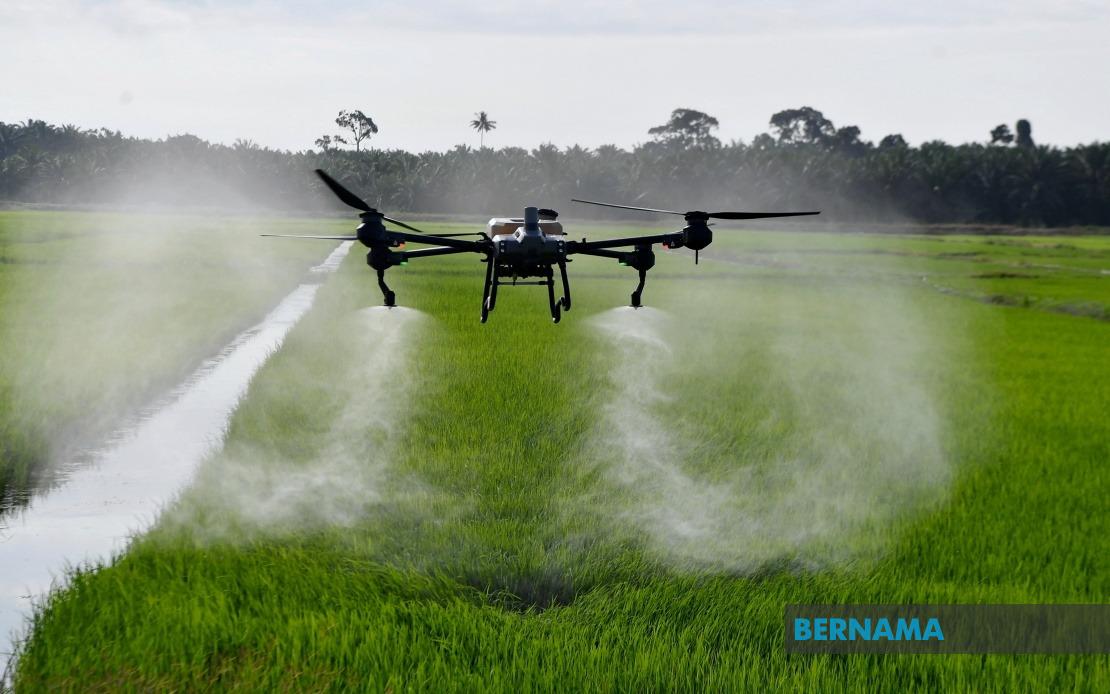
Selangor has pledged RM500,000 in development funding to catalyse growth in its emerging drone technology sector, marking a significant escalation in the state's commitment to establishing itself as a regional hub for unmanned aerial systems and related innovations. The allocation will support infrastructure improvements and strategic initiatives designed to position the state competitively within Southeast Asia's rapidly expanding aerospace and technology landscape. This investment reflects Selangor's ambition to transform drone technology into a cornerstone of economic diversification by 2027, creating new employment opportunities and attracting multinational corporations seeking to base operations in the region.
Dr Mohammad Fahmi Ngah, who chairs Selangor's Islamic Affairs and Innovation Culture Committee, emphasised that the funding commitment represents a substantial increase on previous allocations, signalling accelerated momentum behind the initiative. Speaking at the pre-launch of the Droneport-1000 facility at Universiti Selangor's Bestari Jaya campus, Dr Mohammad Fahmi outlined a strategic roadmap centred on completing crucial facility upgrades whilst simultaneously launching targeted programmes to boost private-sector engagement. The government's approach combines infrastructure development with business attraction strategies, recognising that sustainable industry growth depends on fostering collaborative ecosystems where research institutions, technology companies, and innovators interact productively.
The Droneport-1000 project represents Selangor's flagship initiative in this space, distinguished by its scale and regulatory framework. Covering 24 square kilometres of designated airspace with operational ceilings reaching 1,000 metres, the facility ranks as Malaysia's largest designated drone operating zone. Currently advancing towards full certification from the Civil Aviation Authority of Malaysia (CAAM), the project promises to create a controlled, legitimate environment where companies can conduct research, development, and commercial operations without the regulatory uncertainties that constrain the sector elsewhere. This infrastructure advantage positions Selangor ahead of other Malaysian states competing for drone industry investment.
Beyond physical infrastructure, Selangor recognises that competitive advantage in aerospace technology depends on cultivating entire value chains. The state is developing capabilities spanning software engineering, artificial intelligence applications, and semiconductor chip manufacturing—particularly the supply chains being established in Puchong. This vertical integration strategy mirrors successful technology clusters globally, where supportive ecosystems encompassing hardware, software, and complementary services create multiplier effects that attract additional investment. By treating drones not as isolated products but as components within broader digital transformation systems, Selangor enhances its appeal to sophisticated international operators.
The state government is actively deploying financial incentives to accelerate industry participation, offering matching grants and other mechanisms designed to reduce investment barriers for both domestic and foreign enterprises. This competitive approach reflects the reality that drone technology centres are emerging globally, with countries from Singapore to South Korea aggressively competing for talent and capital. Selangor's incentive structure aims to differentiate the state within this crowded landscape, particularly by emphasising its geographic advantages—the monitoring area available in Selangor is up to ten times larger than Singapore's territory, providing vastly greater opportunities for testing, validation, and operational scaling.
The practical applications animating this investment strategy extend beyond commercial drone operations. State officials highlight environmental monitoring as a critical use case, where drone technology coupled with artificial intelligence can track forest encroachment, coastal erosion, and bund breaches across Selangor's diverse terrain far more efficiently than traditional manual surveillance. These capabilities address longstanding governance challenges whilst demonstrating tangible value propositions that justify technology adoption. By showcasing solutions to real-world problems facing Malaysian administrators, Selangor builds political support for the sector whilst establishing proof-of-concept examples that persuade private companies of the market opportunity.
Universiti Selangor plays a pivotal institutional role within this ecosystem strategy. The university provides academic credibility, research capacity, and access to young talent essential for sustaining long-term sector growth. Selangor Aviation & Technology Innovation (SELATI), the project's chief executive, articulates this explicitly as a bridging function—connecting academic research with commercial applications, theoretical knowledge with market-ready products, and emerging graduates with career pathways. This university-industry collaboration model has proven highly effective in established technology clusters, where students undertake research addressing real business problems, acquiring practical experience whilst generating innovation pipelines that companies can draw upon.
The involvement of established technology firms including Aerodyne strengthens confidence in the initiative's viability. Rather than relying exclusively on government direction, Selangor has secured private-sector participation from companies with demonstrable track records in drone development and deployment. This diversity of actors—spanning the state government, academic institutions, public subsidiaries like Geospatial SmartSel (SELGEM), and commercial enterprises—distributes risk whilst ensuring that decision-making incorporates market discipline and technical expertise. The public-private partnership model also creates accountability mechanisms that pure government initiatives sometimes lack.
The timing of this investment aligns with broader Southeast Asian economic trends. The region is experiencing rapid urbanisation, infrastructure expansion, and digital transformation, creating substantial demand for drone-enabled services across agriculture, logistics, construction, and environmental management sectors. Companies seeking to establish regional bases often evaluate several potential locations, assessing factors including regulatory clarity, infrastructure readiness, talent availability, and cost structures. Selangor's comprehensive approach—simultaneously building physical facilities, regulatory frameworks, incentive structures, and institutional partnerships—addresses these evaluation criteria comprehensively, positioning the state ahead of regional competitors.
The investment's economic implications extend beyond the drone sector itself. Success in attracting drone industry players typically catalyses broader technology ecosystem development, as supporting services, component suppliers, and related specialisations naturally concentrate around established clusters. Malaysian policymakers increasingly recognise that high-value industries congregate in locations offering advantages beyond basic manufacturing cost, particularly regulatory stability, skilled workforces, and collaborative infrastructure. Selangor's RM500,000 commitment represents strategic thinking aligned with these realities, targeting not merely incremental growth but structural repositioning within Asia's evolving technology landscape.
The initiative also reflects recognition that Malaysia cannot compete on labour cost alone in an era of advanced automation and artificial intelligence. Instead, the country must establish niches where innovation, regulatory clarity, and talent concentration combine to create defensible competitive advantages. Drone technology, with its applications spanning agriculture, construction, environmental monitoring, and emerging urban air mobility, represents exactly such a niche. Selangor's commitment to developing this sector comprehensively—rather than fragmentarily—signals that state and national policymakers are thinking systematically about future-oriented economic development.
Moving forward, the critical variable will be execution. The state has articulated clear objectives: complete facility upgrades, obtain CAAM certification, attract multinational participation, and establish Selangor as Southeast Asia's premiere drone technology centre. Achieving these targets requires sustained focus, coordination across government agencies, and responsiveness to private-sector needs. If Selangor successfully navigates these implementation challenges whilst maintaining political support through inevitable setbacks, the RM500,000 allocation may catalyse returns many multiples larger, creating employment, generating tax revenues, and positioning Malaysia advantageously within Asia's high-technology economy.

