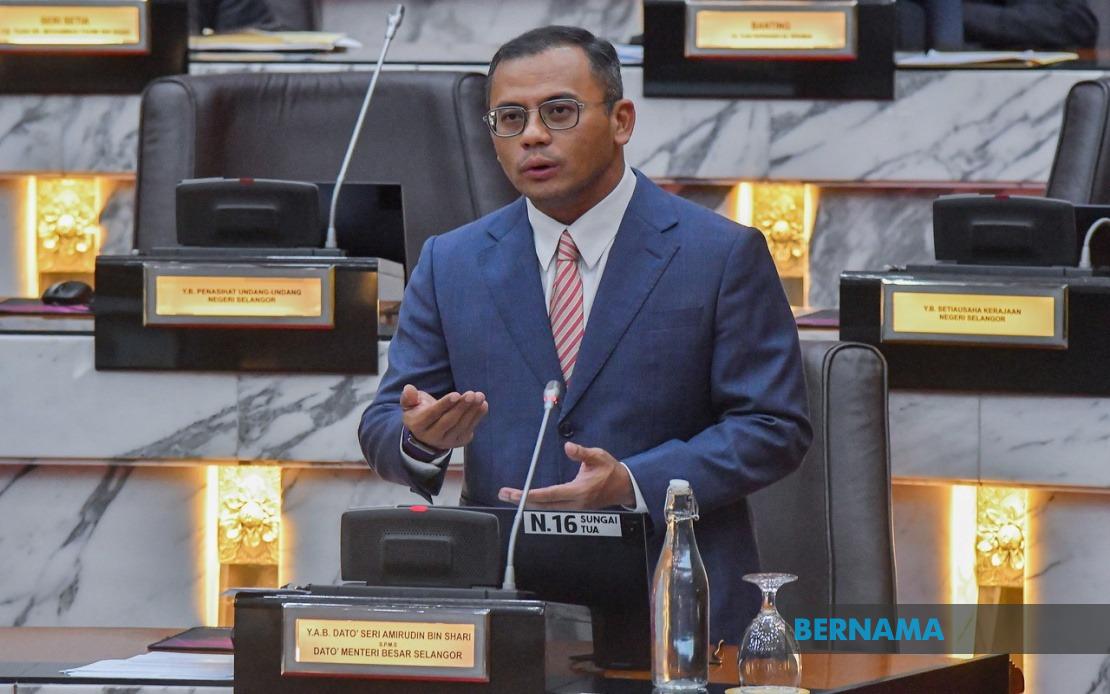
Selangor's top administrator has ordered the state's local authorities to conduct a comprehensive review of public transport accessibility infrastructure, signalling growing concern over connectivity failures that have surfaced on social media. Menteri Besar Datuk Seri Amirudin Shari issued the directive during a state assembly sitting, confirming that the government stands ready to inject more resources into improving pedestrian pathways and transport interchange facilities across the region.
The move addresses a mounting frustration among commuters over the so-called first-mile and last-mile problem—the critical but often neglected journey from residential areas to transport hubs and onwards to final destinations. Residents have increasingly voiced complaints online about poor walking conditions, inadequate signage, and limited feeder services near major transit points, particularly around the LRT3 line and other rapid transit corridors. Rather than allowing these grievances to fester in the digital sphere, Amirudin emphasised that local authorities must take the initiative to identify and resolve such issues proactively.
The Menteri Besar stressed that while the state government is prepared to allocate additional funds, the interventions must be cost-effective and strategically designed to encourage greater reliance on public transportation. He outlined a philosophy where improvements should not burden taxpayers excessively, yet must meaningfully enhance the user experience. This approach reflects a broader policy objective: shifting travel patterns away from private vehicles and toward mass transit systems that can ease congestion and reduce emissions across the densely populated state.
A significant portion of Amirudin's response focused on accountability, implicitly criticising local authorities for their reactive rather than proactive stance. He noted that municipal bodies should not wait for complaints to accumulate and spread across social platforms such as X and Threads before acting. Instead, they must engage directly with elected representatives and community stakeholders to gather feedback on ground-level challenges. This call for greater institutional responsiveness reflects frustration at bureaucratic inertia in addressing quality-of-life issues that directly affect residents' daily commutes.
The issue gained prominence after Danial Al-Rashid Haron Aminar Rashid, the Batu Tiga assemblyman representing Pakatan Harapan, highlighted connectivity shortcomings surrounding the LRT3 network during state assembly proceedings. His intervention resonated widely, with online discussion underscoring the disconnect between transport infrastructure investment and the unglamorous but essential services that link neighbourhoods to transit stations. The viral nature of these complaints demonstrates how social media has become a critical avenue for constituents to escalate local governance concerns.
In response, Amirudin tasked Ng Sze Han, chairman of the State Investment, Trade and Mobility Committee, with orchestrating a comprehensive mapping exercise across all public transport operators. This service audit aims to pinpoint service gaps and coverage deficiencies that discourage potential riders. The mapping process represents a data-driven approach to identifying where feeder bus routes, pedestrian improvements, or extended operating hours could most effectively enhance connectivity and ridership.
The Menteri Besar also signalled the state's willingness to use subsidy mechanisms as leverage to encourage operators to improve their service patterns. He explained that while subsidies can reduce operator costs, their effectiveness depends on how transport companies deploy those financial benefits. Subsidies alone, without corresponding adjustments to operating hours, route frequencies, or service quality, may fail to achieve the desired outcome of attracting motorists to public transport. This conditional approach suggests the state will tie future financial support to demonstrable improvements in accessibility and service coverage.
For Selangor residents and businesses, these directives carry practical implications. Improved pedestrian infrastructure around transport nodes could make journeys safer and more pleasant, particularly for elderly passengers, parents with young children, and persons with mobility challenges. Better feeder services would reduce travel times and increase predictability, making public transport a more competitive alternative to personal vehicle use. Enhanced connectivity could also support economic activity by improving access to employment centres, educational institutions, and retail districts accessible via public transit.
The announcement also reflects broader Southeast Asian trends in urban mobility governance. Across the region, cities such as Bangkok, Jakarta, and Singapore have grappled with similar first-mile and last-mile challenges, recognizing that even excellent trunk-line rapid transit loses appeal when the journey to and from stations is arduous or unsafe. Selangor's focus on this often-overlooked dimension suggests policymakers are learning from regional experiences and acknowledging that transport system success depends on seamless end-to-end connectivity.
Implementation will test whether local authorities and transport operators can translate political directives into tangible improvements. The service mapping exercise ordered by Ng Sze Han must yield specific, actionable findings rather than generic recommendations. Similarly, transport operators must move beyond compliance with subsidies to demonstrate genuine commitment to expanded or rearranged services. Public communication will also matter; residents must understand what improvements are underway and how to access new services.
The state's willingness to allocate additional funds suggests confidence in the political and fiscal case for public transport investment. However, success ultimately hinges on coordination between multiple agencies—local authorities responsible for pedestrian infrastructure, transport operators managing bus and feeder services, and state agencies overseeing rapid transit networks. The directive to local authorities to take a proactive, stakeholder-engaged approach represents an attempt to break down institutional silos and prioritize user-centric problem solving over bureaucratic routine.